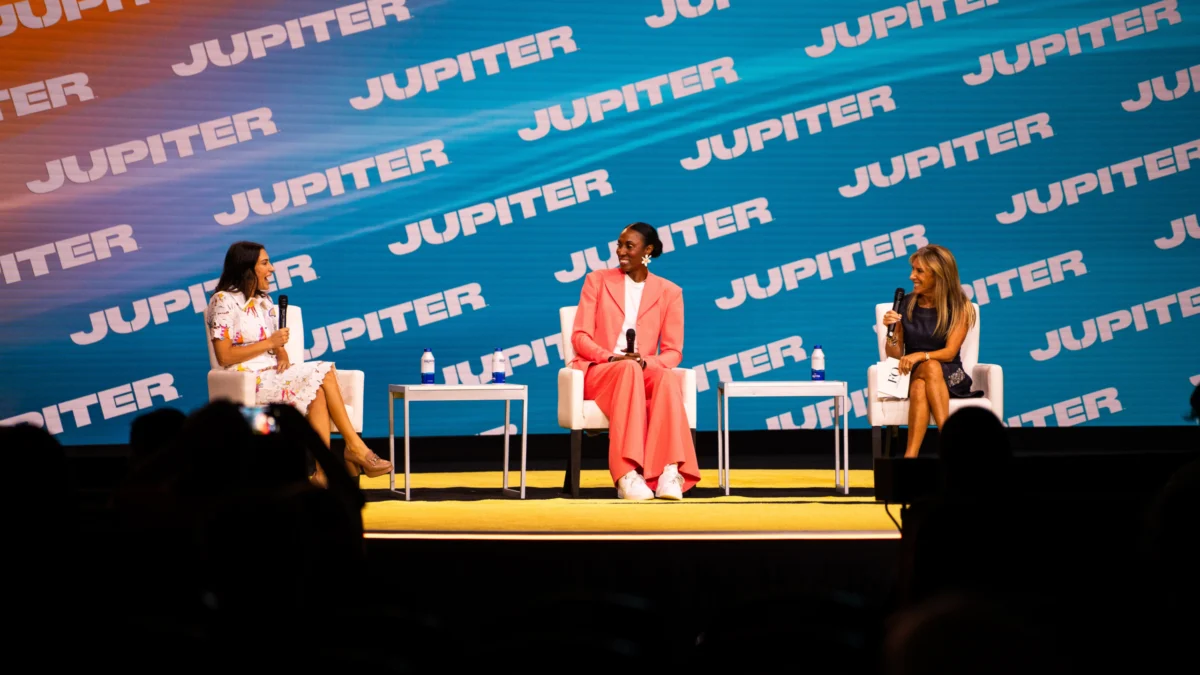
In the hyper-saturated world of professional networking and industry thought leadership, the emergence of a new "must-attend" event is typically met with skepticism. Yet, the debut of the Jupiter Festival in Miami Beach this week signaled something different. Founded by a powerhouse duo—Cannes Lions veteran William Mellis and former Fox Sports Media Group CMO Eric Markgraf—the festival arrived with the structural backing and intellectual weight typically reserved for legacy trade shows.
Spanning four days and utilizing three distinct stages, the Jupiter Festival positioned itself as the nexus where media, sports, entertainment, and advertising converge. Its mission: to decode the rapidly shifting mechanics of the attention economy, the evolving landscape of fandom, and the existential disruption posed by generative artificial intelligence.
The Genesis of an Ambitious Platform
The inaugural Jupiter Festival was not conceived as a grassroots endeavor but as a high-level strategic summit. By securing a partnership with MCH Group—the parent company of Art Basel, which retains a 20% equity stake in the venture—the festival signaled its intent to mirror the prestige and scale of the art world’s most significant gathering.
The event’s programming was designed to bridge the gap between legacy media giants and the digital-native creator economy. Throughout the week, speakers and attendees navigated a complex agenda that sought to reconcile the traditional metrics of television sports rights with the fragmented, high-engagement realities of platforms like YouTube and TikTok.
Chronology of the Inaugural Summit
- Day 1: The Foundations of Fandom. The opening sessions focused on the shift from passive spectatorship to active community building. Industry leaders discussed how sports franchises are moving beyond broadcast rights to own the direct-to-consumer relationship.
- Day 2: The Attention Economy and the Creator Crisis. As digital saturation reaches an all-time high, Day 2 explored the "creator fatigue" phenomenon. Sessions probed how brands can remain relevant without alienating audiences who are increasingly immune to traditional advertising.
- Day 3: The AI Revolution. The most heavily attended track, this segment featured deep dives into AI-driven discovery and creative production. The consensus was clear: the technology is no longer a gimmick but an foundational layer of the creative workflow.
- Day 4: The Path Forward. The closing day synthesized these themes, focusing on monetization strategies for a future where content is infinite but human attention is the scarcest commodity.
Strategic Backing and Industry Context
The Jupiter Festival entered an already crowded marketplace, competing against established heavyweights like SXSW, Cannes Lions, and Advertising Week. However, its roster of partners suggests a deliberate strategy to capture a specific cross-section of the industry.
Beyond MCH Group, the festival secured endorsements and sponsorship from Cannes Lions, YouTube, Boston Consulting Group (BCG), and the Interactive Advertising Bureau (IAB). This coalition is telling: by aligning with BCG, the festival adds a layer of management-consulting rigor; by partnering with YouTube and the IAB, it ensures that the conversations remain tethered to the current realities of digital ad spend and creator-led platforms.
For a new event to attract these heavy hitters, it must offer something the legacy circuit cannot: agility. While large-scale conferences often suffer from bloat and a lack of focus, Jupiter’s limited three-stage format allowed for a more curated, high-density exchange of ideas.
The AI Impact: A Data-Driven Disruption
A significant portion of the festival’s dialogue was dedicated to the integration of Artificial Intelligence. According to data presented by partners during the event, AI-driven discovery is fundamentally altering the path to purchase.
Industry analysts at the event pointed to a shift where "search" is being replaced by "generative recommendation." For brands, this means the traditional SEO playbook is becoming obsolete. The festival highlighted that in 2024, the primary challenge for marketers is no longer just "reach," but "relevance in the feed."
Furthermore, the discussion around AI’s role in creative production brought up significant ethical and legal questions. As large language models and generative video tools become standard, the definition of "original content" is being rewritten. Speakers from the entertainment sector emphasized that while efficiency is a primary driver, the "human touch"—the unique narrative voice—has become more valuable than ever in a sea of synthetic media.
Official Responses and Industry Sentiment
The reception among industry leaders was largely one of cautious optimism. William Mellis, in his opening remarks, noted that the festival was "born out of a necessity to streamline the noise."
"We didn’t want to build another trade show where people just exchange business cards," said Eric Markgraf during a private press briefing. "We wanted to build a forum where the people who own the rights to the content are sitting across the table from the people who own the platforms where that content is consumed. The friction between those two groups is where the most important innovation happens."
Partners from the IAB noted that the timing of the festival—positioned in the early part of the fiscal planning cycle for many major media buyers—was a masterstroke. By hosting the event in Miami, the festival tapped into a growing trend of decentralizing industry hubs away from New York and Los Angeles, providing a neutral ground for cross-sector collaboration.
Implications: The Future of Media and Advertising
The success of the Jupiter Festival will ultimately be measured by its longevity and its ability to influence industry standards. However, the themes discussed in Miami this week have immediate implications for stakeholders across the media landscape:
1. The Consolidation of Fandom
The era of broadcasting to a mass, anonymous audience is effectively over. The festival highlighted that sports and entertainment properties must move toward "membership models." This means that data ownership is now the most critical asset a media company can possess.
2. The Creator-Brand Symbiosis
We are witnessing a shift where creators are no longer just "influencers"—they are media houses in their own right. The implications for advertising agencies are stark: agencies must either pivot to become management firms for these creators or risk being bypassed entirely by brands looking for direct relationships with content engines.
3. The Commoditization of Content
As AI lowers the barrier to entry for content creation, the value of "content" itself is depreciating. The Jupiter Festival emphasized that value is shifting from the content itself to the community that surrounds it. The platform that hosts the community, rather than the content creator, may end up capturing the lion’s share of the profit.
4. A New Professional Circuit?
The question remains whether the industry can support another major festival. With travel budgets tightening and the demand for high-level networking remaining constant, the Jupiter Festival is essentially betting that its focus on the "attention economy" will make it an essential pilgrimage rather than a discretionary expense.
Conclusion: A Barometer for 2025 and Beyond
As the sun set on the final day in Miami, the prevailing sentiment was that the industry is in a state of permanent transition. The Jupiter Festival succeeded in capturing this volatility, providing a lens through which to view the convergence of technology and human interest.
Whether the festival becomes the premier destination for the intersection of media and sports remains to be seen. Its structural advantages—the backing of MCH Group and the pedigree of its founders—provide a formidable foundation. However, in an industry that demands constant reinvention, the festival’s greatest challenge will be maintaining its relevance in an environment where the "attention economy" is itself moving faster than the events designed to analyze it.
For now, the Jupiter Festival has established a clear beachhead. It has successfully framed the central questions of the next decade: How do we monetize attention in an AI-driven world? How do we build lasting fandom in a transient digital landscape? And, perhaps most importantly, how do we bridge the widening gap between the architects of technology and the creators of culture?
As industry professionals head back to their offices, the insights gathered in Miami will likely permeate boardrooms and creative briefs for months to come. If nothing else, Jupiter has proven that in the high-stakes world of media and advertising, the conversation is shifting from "what’s next" to "what’s essential."