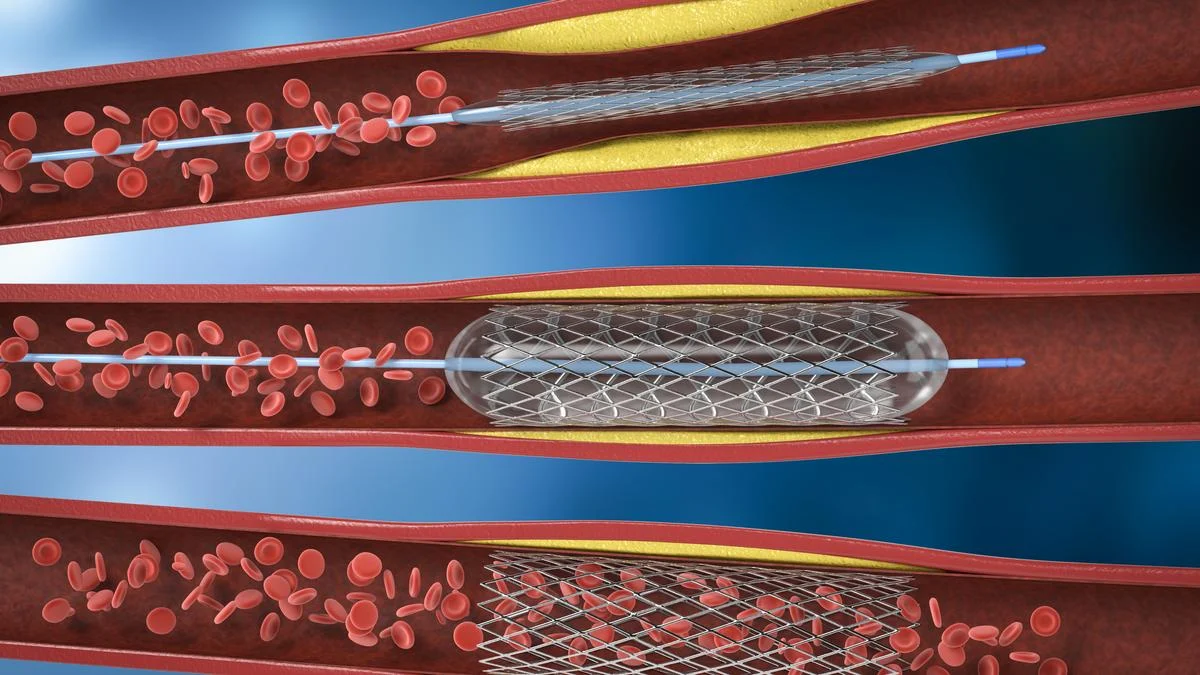
In the landscape of modern medicine, few procedures carry the weight and controversy of Percutaneous Coronary Intervention (PCI). Recently, a firestorm erupted in Kerala after state leader V.D. Satheesan questioned the necessity of the burgeoning number of angioplasty procedures performed across the region. While his remarks drew sharp rebukes from medical associations—who feared a erosion of public trust in the sanctity of the doctor-patient relationship—the discourse has inadvertently opened a vital, overdue dialogue on the standards of evidence-based cardiovascular care in India.
At the heart of the debate lies a fundamental tension: Is the six-fold increase in cardiac interventions a triumph of expanded healthcare access, or is it a symptom of a systemic preference for procedural solutions over long-term, evidence-based medical management?
The Clinical Divide: Emergency vs. Elective Care
To understand the controversy, one must distinguish between the two primary roles of PCI. In the context of an acute myocardial infarction—a heart attack—balloon angioplasty and stent placement are nothing short of life-saving. When a coronary artery is suddenly occluded, time is muscle. In these high-stakes emergencies, prompt intervention is the gold standard of care. There is no room for debate, and the necessity of the procedure is rarely questioned.
However, the medical community finds itself on shakier ground when dealing with stable coronary artery disease. In these cases, an angiogram might reveal a narrowing (stenosis) in an artery, but a visual narrowing does not automatically equate to a clinical mandate for a stent. A patient’s symptoms, the degree of ischemia (restricted blood flow), and the overall burden of disease must be evaluated holistically. The critical question facing cardiologists today is whether every detected blockage requires a mechanical fix, or whether conservative, evidence-based medical therapy provides an equally effective, and less invasive, path to longevity.
The Evidence: What the ISCHEMIA Trial Taught Us
For decades, the medical community relied on the intuitive assumption that "opening the pipe" was always the best way to prevent future heart attacks. This assumption was challenged profoundly by the landmark ISCHEMIA trial, published in the New England Journal of Medicine in 2020.
The study, which enrolled 5,179 patients across 37 countries, sought to settle the debate between an invasive strategy (angiography followed by PCI or bypass surgery) and a conservative strategy (optimal medical therapy). After a median follow-up of 3.2 years—and subsequently confirmed at the 5-year mark—the researchers found no significant difference in outcomes such as cardiac arrest, hospitalisation for unstable angina, or cardiovascular mortality between the two groups.
The core takeaway was transformative: for most patients with stable coronary artery disease, the diligent application of pharmaceutical therapy—cholesterol lowering, blood pressure control, and lifestyle modification—is as effective as, or superior to, elective stenting. The study demonstrated that a stent treats a specific lesion, but it does not address the underlying systemic disease of atherosclerosis, which affects the entire coronary arterial tree.
Chronology of a Trend: The Indian Paradox
The rise of the "stent culture" in India presents a striking contrast to global trends. Data from the National Interventional Council (NIC) reveals a staggering escalation: annual PCI procedures in India climbed from approximately 113,000 in 2008 to over 726,000 by 2024. This represents an increase of more than six-fold in under two decades.
This growth trajectory stands in stark contrast to the United States. Between 2003 and 2016, the U.S. saw a 40% decline in PCI procedures. This reduction was not the result of a collapse in cardiac care, but rather a deliberate shift in clinical practice toward prevention and the rigorous adoption of optimal medical therapy (OMT). As the U.S. embraced a "prevention-first" model, India continued to accelerate its reliance on procedural interventions.

Critics argue that India’s growth is fueled by a perfect storm of factors:
- The Burden of Disease: India faces a unique epidemic of premature coronary artery disease, which naturally necessitates more care.
- Access and Infrastructure: The proliferation of private cardiac care centres has made advanced procedures accessible to millions who were previously underserved.
- Financial Incentives: A fee-for-service model often rewards procedures more handsomely than the time-intensive process of chronic disease management and lifestyle counseling.
- Knowledge Gaps: There is a lingering lag in the adoption of updated clinical guidelines that emphasize OMT over intervention for stable patients.
Supporting Data and the Cost of Care
While proponents of the current trend argue that the increased volume is simply a response to a massive, previously undiagnosed patient population, the sheer velocity of the increase warrants scrutiny. If, as the ISCHEMIA trial suggests, stable disease can be managed effectively without stents, then a significant portion of these 726,000 procedures may be elective in nature.
The economic implications are profound. An angioplasty is not merely a clinical event; it is a financial one. For the average Indian family, the cost of a stent—and the associated hospital stay—can be catastrophic. If these costs are incurred for procedures that offer no long-term mortality benefit over medication, the public health burden is compounded.
Furthermore, a stent is not a "cure." It is a localized intervention. A patient who receives a stent but fails to maintain strict LDL-cholesterol control or blood pressure management remains at high risk for future cardiac events elsewhere in the coronary arteries. The focus on the stent often distracts the patient from the reality that they are living with a chronic, systemic condition that requires lifelong, diligent medical management.
Official Responses and Professional Standards
The reaction to V.D. Satheesan’s critique from various medical associations was defensive, characterizing the remarks as an attempt to undermine the medical profession. However, such defensive posturing risks ignoring the legitimate concerns of the public.
Professional medical organizations have a duty to self-regulate. When the head of a state government questions the integrity of medical practices, the appropriate response is not a blanket denial, but a transparent review of current practice patterns. Many leading cardiologists have quietly acknowledged that "defensive medicine"—performing procedures to avoid accusations of negligence or to satisfy patient expectations—plays a role in the high volume of interventions.
The medical establishment must move toward a model of Shared Decision Making (SDM). In an SDM model, the patient is fully informed of the ISCHEMIA findings, the risks of the procedure, and the efficacy of medical therapy. When the patient understands that a stent may not improve their survival rate compared to medicine, they are better equipped to make a choice that aligns with their values and lifestyle.
Implications: A Path Forward
The path forward for Indian cardiology requires a paradigm shift. It is not a call for the condemnation of the interventionalist, but a call for the restoration of the physician-scientist.
- Prioritize Optimal Medical Therapy (OMT): OMT must be the foundation of care. This includes aggressive LDL-cholesterol lowering, anti-platelet therapy, blood pressure management, and evidence-based diabetes care.
- Audit and Transparency: Hospitals should engage in clinical audits of their PCI volumes, specifically separating emergency, life-saving procedures from elective, stable-disease interventions.
- Reform Incentives: Health insurance and government schemes must rebalance the payment structure to compensate physicians adequately for the long-term management of chronic cardiovascular disease, rather than disproportionately rewarding the "surgical" fix.
- Patient Education: Public health initiatives should demystify the stent, emphasizing that it is a tool, not a cure, and that the patient’s lifestyle remains the primary determinant of their long-term health.
The ultimate test of a healthcare system is not found in the number of high-tech procedures it generates, but in the sustained health and well-being of the population it serves. By aligning Indian practice patterns with the best available evidence, the medical community can ensure that every stent placed is truly necessary, and every patient is receiving the right treatment at the right time. The "stent dilemma" is not a crisis of medicine, but an opportunity to refine it, ensuring that innovation remains a servant to, rather than a master of, patient care.