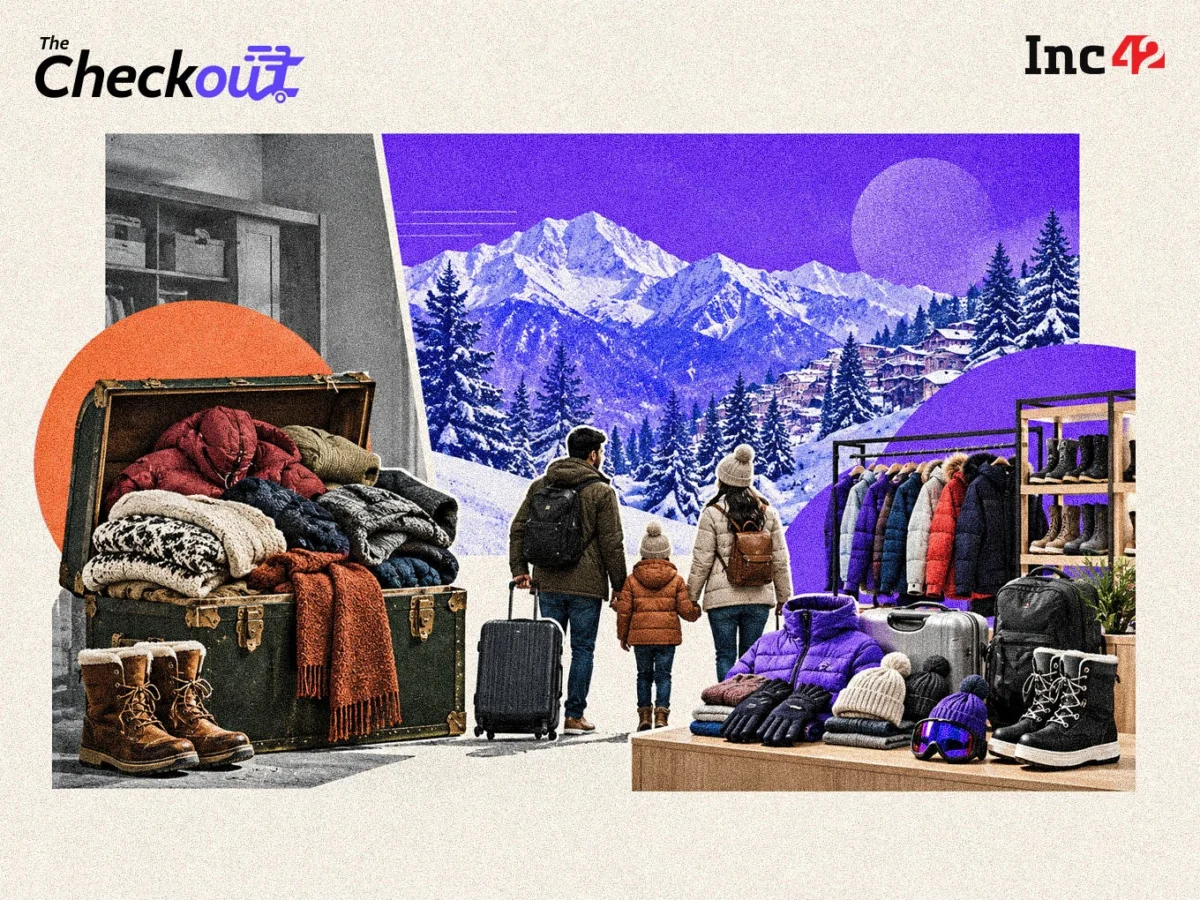
As the mercury begins to dip and the frost settles on the mountain peaks, millions of Indian households are engaging in a familiar, somewhat cumbersome ritual: rummaging through attics and trunks to excavate woolen sweaters, heavy jackets, and moth-eaten shawls. For families living in India’s temperate metros—like Mumbai, Chennai, or Bengaluru—where winter is little more than a mild dip in temperature, the burden of owning high-performance winter gear is increasingly viewed as an unnecessary logistical and financial headache.
In an era defined by the circular economy and a growing aversion to "fast-fashion" clutter, a new wave of startups is asking a provocative question: Why buy a ₹7,000 parka that will spend 350 days a year gathering dust in a suitcase?
The High Cost of Cold-Weather Gear
For the average urban Indian, winter wear is a classic case of low-frequency, high-cost utility. When a family plans a biennial trip to the Himalayas or a rare European winter holiday, the upfront investment required to outfit everyone is staggering. A quick scroll through mainstream e-commerce giants like Myntra or AJIO reveals that a decent, functional snow jacket can easily set a shopper back by ₹6,000, while a high-end parka can push towards ₹7,000 or more.
When you aggregate this for a family of four, the holiday budget swells before the travelers have even booked their flight tickets. Beyond the initial capital expenditure, there is the silent, ongoing cost of ownership: the specialized dry cleaning, the climate-controlled storage to prevent fungal growth, and the inevitable reality that children will outgrow these items long before they are worn out.
The Rise of the Rental Model
The concept of renting, which has already disrupted the wedding couture and high-end furniture markets in India, is now making a tactical pivot toward winter travel. Startups like Mumbai-based Kosha, Bengaluru’s SharePal, and the travel-wardrobe specialist Roamwear are betting on the idea that urban consumers would rather pay a fraction of the retail price for a premium, technical-grade coat than invest in one they won’t use again for years.

The pricing models are designed to be "travel-budget friendly." Kosha offers rental packages for high-performance winter layers starting at roughly ₹990 for a week. SharePal, meanwhile, has aggressive daily rates starting at as low as ₹50 per day for an assortment of gear. This shift is symptomatic of a broader trend: Gen Z and Millennial travelers are increasingly prioritizing experiences over asset ownership, aligning with a global movement toward "access over ownership."
A Global Perspective vs. The Indian Experiment
It is important to distinguish the Indian rental model from its global counterparts. In markets like Finland, Sweden, and Japan, winter gear rental is a mature industry, dominated by players like Winterent, SkiStar, and Soranoshita. However, these platforms primarily serve tourists who arrive at ski resorts without their heavy equipment. They are destination-centric.
In India, the model is origin-centric. These startups are targeting the customer before they leave their homes in Delhi, Mumbai, or Bengaluru. The challenge, therefore, is not just inventory management but logistics—ensuring that a jacket, cleaned and checked to a rigorous 10-point standard, arrives at a customer’s door in pristine condition, and is collected immediately upon their return.
The Economic Paradox: Why Renting Wins
Ujwal Sutaria, founder and managing partner at TDV Partners, highlights a critical threshold for this industry. "Fashion renting works when the item costs above ₹6,000–8,000 and the customer expects two or fewer trips," he explains.
The math is compelling. If a high-quality, weather-proof jacket retails for ₹10,000, renting it for ₹1,490 a week represents a clear economic victory for the consumer. However, if the rental price approaches 40–50% of the purchase price, the consumer’s psychological barrier shifts back toward ownership.

A report by Indiahikes, specifically regarding their "Crosstrek" initiative, illustrates the stark divide: renting a full, professional-grade trekking kit—including shoes, parkas, rain jackets, and backpacks—costs roughly ₹2,435 for a six-day trek. To buy that same gear? An investment of ₹18,250. For the infrequent trekker, the rental saving is not just a discount; it is a financial liberation.
Scaling the "Frozen" Market
The growth of this sector is intrinsically tied to the explosive rise in Indian outbound tourism. With over 32 million overseas departures reported in 2025 and a massive surge in Indian travelers visiting Japan, Scandinavia, and Northern Europe, the demand for specialized, high-performance gear is at an all-time high.
However, founders face a unique "frequency paradox." If a customer travels frequently enough to become a "power user" of winter gear, they will eventually find it cheaper to buy their own kit. Consequently, rental platforms cannot rely on the "frugality" narrative alone. They must sell the "lifestyle" narrative.
As Yuktie Jhangiani Verma, founder of Kosha, notes: "When you rent, you have the flexibility of a changing wardrobe with every itinerary. You get a sleek trench for a city break, a technical parka for sub-zero trips, and a vibrant ski jacket for the slopes." By emphasizing the ability to curate one’s aesthetic for social media and varied climates, these platforms are evolving from simple utility providers into lifestyle facilitators.
Operational Hurdles: The "Rentals-per-SKU" Metric
The ultimate viability of these startups hinges on the grueling operational reality of reverse logistics. Unlike a retail sale, which ends at the point of purchase, a rental transaction is a cycle.

- Quality Control: Every garment must be inspected, dry-cleaned, and repaired after every single use.
- Asset Lifecycle: A wool sweater or a Gore-Tex jacket has a finite shelf life compared to a piece of hardwood furniture.
- Inventory Utilization: The business model relies on maximizing the number of rentals per SKU.
If we look at the parallel of furniture rental giant RentoMojo, which has seen items earn back 5.12X their cost over a decade, we see the blueprint for success. However, winter wear is seasonal. A heavy parka that is rented out four times during the winter season is "dead stock" for the rest of the year. To offset this, some platforms are exploring secondary revenue streams, such as the resale of retired rental stock to a captive, bargain-hunting audience.
The Road Ahead
As of late 2026, the winter rental market in India remains in a "pilot" phase. No single player has yet achieved the scale required to dominate the national consciousness, but the demand signals are unmistakable. The next two years will be the "litmus test." If platforms can successfully navigate the complexities of reverse logistics and maintain high-quality inventories, they may well redefine how Indians travel.
For the modern traveler, the dream of "traveling light" is becoming a reality. The ability to land in Iceland or Shimla with a wardrobe that is both stylish and functionally superior—without the need for a storage unit back home—is a luxury that is finally becoming affordable. Whether this business model can sustain the volatility of seasonal demand remains to be seen, but as the first snows of the season approach, the rental racks are, for the first time, looking fuller than the closets of the consumers they serve.
Quick Snapshot: The E-commerce Landscape
- Nat Habit: Scaling offline with a ₹142 Cr infusion; targeting 2 lakh stores.
- Bewakoof: Revenue crossing ₹200 Cr, though battling a 19% rise in net losses.
- KISAH: Entering the big leagues with a ₹35.9 Cr round, targeting a 100-outlet expansion.
- DailyObjects: Valued at ₹1,050 Cr after a ₹332 Cr funding round, eyeing a massive retail footprint.
- Swish: Disrupting the quick-delivery space by pivoting to third-party restaurant sourcing.
- Lumio & Beyond Appliances: Both startups are securing significant capital to bolster manufacturing and product portfolios in the consumer electronics and smart-home segments.