Digital marketing has long been trapped in a paradox: as the sophistication of consumer data has increased, so too has the burden of manual execution. For years, the industry’s solution to growing complexity—more channels, more segments, and more content requirements—has been to throw more headcount at the problem. However, a new paradigm is emerging. AI agents are no longer just tools for content creation; they are becoming autonomous architects of the digital marketing lifecycle, capable of planning, deciding, and executing across multi-step workflows.
The Evolution of Marketing Automation: From Rules to Reasoning
To understand the shift toward AI agents, one must first look at the limitations of traditional automation. For decades, marketing teams relied on "if-then" logic. If a user clicked a link, then send email B. If a user opened an email, then tag them as a lead. This model requires a developer or marketer to map out every conceivable path in advance. It is brittle, static, and notoriously difficult to maintain as a brand’s footprint grows.
AI agents represent a fundamental departure from this "fixed sequence" model. Unlike traditional tools, AI agents are designed to possess a degree of agency. They interpret context, adapt to real-time information, and coordinate across disparate software tools to achieve a high-level goal without requiring constant human intervention.
A Chronology of the Shift
- The Manual Era (Pre-2015): Teams relied on spreadsheets and manual scheduling. Every campaign was a Herculean effort of configuration.
- The Automation Era (2015–2022): The rise of marketing automation platforms (MAPs) allowed for basic rule-based sequences. However, "maintenance mode" became the default state for many teams, as they spent more time fixing workflows than creating strategies.
- The Generative AI Inflection (2023–2024): Generative AI allowed for the rapid creation of copy and images, but it remained a "human-in-the-loop" process.
- The Agentic Era (2025–Present): AI agents began to integrate planning, execution, and monitoring. These agents don’t just write an email; they monitor the success of the campaign and autonomously adjust the flow based on performance data.
The Core Capabilities of AI Agents
The transformation of digital marketing is defined by three primary pillars: autonomous workflow orchestration, hyper-personalization at scale, and proactive performance management.
1. Autonomous Workflow Orchestration
A modern campaign is a dense web of dependencies. Trigger logic, nurture sequences, wait steps, and branch variations must be perfectly aligned. In the past, this was a "set it and forget it" process that usually resulted in failure because real-world variables—like a shift in market sentiment or a change in product availability—would render the rigid plan obsolete.

HubSpot’s campaign agents are leading this shift by allowing marketers to define the "intent" of a campaign rather than the "mechanics." By inputting primary goals, target personas, and channel preferences, the agent builds and manages the workflow. It handles the enrollment logic and timing, ensuring that if a prospect moves from one segment to another, the campaign adapts automatically. This frees the team from the drudgery of administrative upkeep, effectively ending the era of the "marketing maintenance tax."
2. Hyper-Personalization Beyond the "First Name"
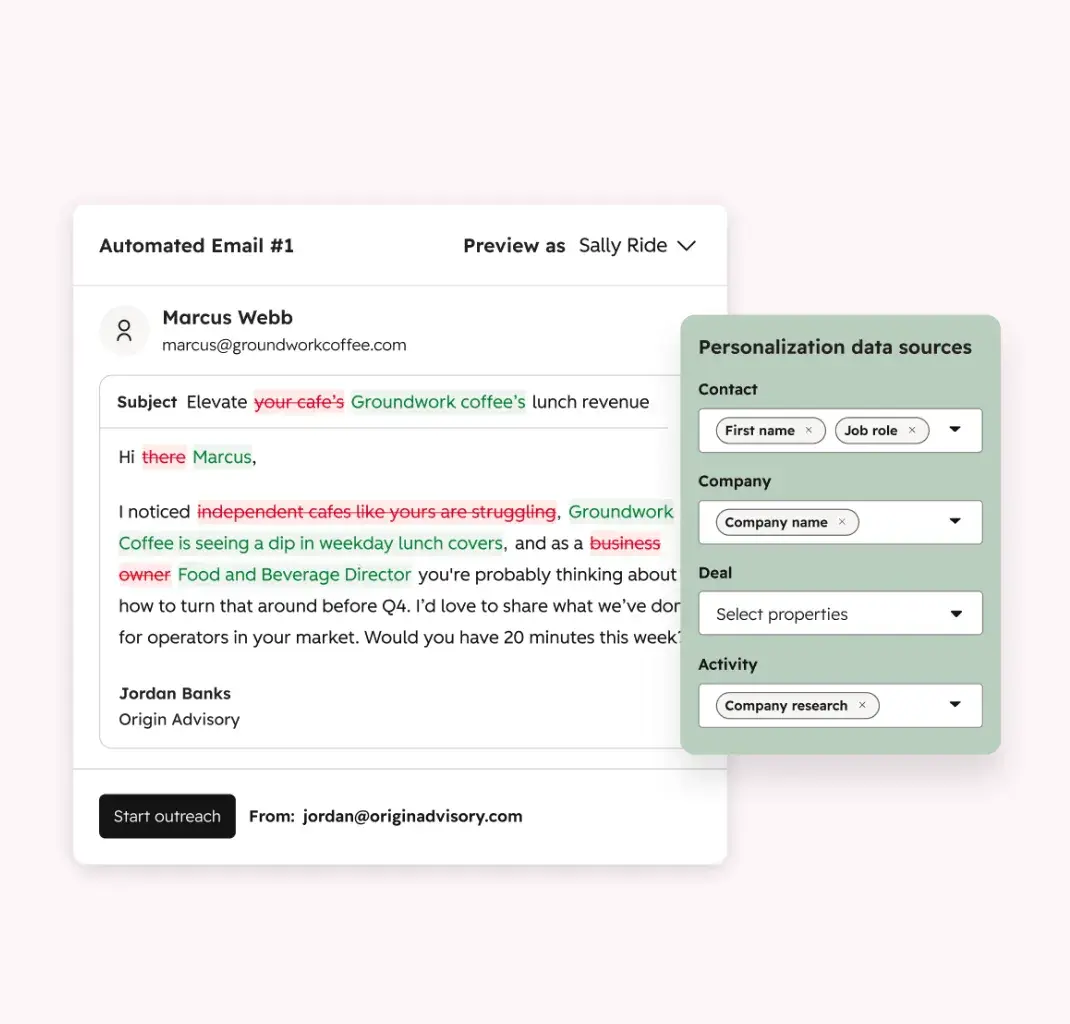
For years, personalization was a buzzword that rarely went beyond a salutation in an email subject line. True personalization—the kind that moves the needle—requires deep integration with CRM data. It necessitates an understanding of a lead’s behavioral intent, their specific industry role, and their historical interactions with the brand.
Manually creating variations for every customer journey is an impossible task for a human team. If a company wants to tailor messaging for five different personas across four stages of the buying journey, they are looking at 20+ variations of content. Most teams settle for two because they lack the capacity for more.
AI agents change this math. By utilizing tools like HubSpot’s nurture agent and Breeze Assistant, companies can now generate content variations that align with specific engagement histories. The agent analyzes the contact’s journey and dynamically drafts messaging that reflects their unique context, ensuring that the right message reaches the right person at the precise moment of relevance.
3. Proactive Performance Monitoring
Perhaps the most significant impact of AI agents is the shift from "post-mortem" reporting to real-time course correction. In traditional workflows, marketers often discover a campaign is underperforming only after a weekly review. By then, the damage is done—the budget has been spent, and the opportunity is lost.

AI agents act as a persistent monitoring layer. They scan for anomalies—a sudden drop in open rates, a spike in unsubscribes, or a decline in lead quality—and alert the team immediately. This "early warning" capability turns a potential disaster into a minor adjustment, preserving the health of the sender reputation and the integrity of the sales pipeline.
Implications for Marketing Strategy and Headcount
The rise of AI agents invites a critical question: If agents do the work, what do the humans do? The answer lies in a redefinition of the "marketer’s role."
The Move Toward "Strategic Orchestration"
When execution is automated, the value of a marketer shifts from doing to directing. The skill set of the future will be less about mastering the UI of a specific software and more about strategic problem-solving. Marketers will act as "Architects of Intent," defining the goals, the tone, and the ethical guardrails within which the agents operate.
Supporting Data and Industry Trends
According to recent productivity studies, marketing teams spend approximately 60% of their time on manual tasks, such as data entry, campaign configuration, and reporting. By offloading these to agents, companies are seeing a 30-40% increase in output volume without a corresponding increase in staff. More importantly, the quality of engagement often rises because the AI can iterate on messaging based on data faster than a human team can brainstorm.
Official Perspectives
Industry leaders are increasingly viewing AI agents as a "force multiplier." As one executive noted, "The goal isn’t to replace the marketing team; the goal is to remove the ‘execution ceiling.’ Most teams have brilliant strategies that are currently capped by the sheer physical limitation of how many hours they have to push buttons."

The Ethical and Operational Frontier
As we embrace this autonomous future, there are challenges to address. Data privacy and brand voice consistency are at the forefront. Because AI agents rely on CRM data, ensuring that this data is clean, accurate, and compliant with global regulations is more important than ever. Furthermore, maintaining a brand’s unique voice in an age of AI-generated content requires rigorous oversight.
Conclusion: Embracing the Future
The digital marketing landscape is reaching an inflection point. The teams that thrive in the next decade will be those that view AI agents not as a threat, but as a strategic asset. By shifting the execution load to intelligent software, companies can finally align their output with their ambitions.
The "execution tax" that has burdened marketing departments for years is being paid in full by AI. The result is a leaner, faster, and more creative function that is finally free to focus on the only thing that truly matters: connecting with the customer in a meaningful, human way. The technology is here; the question is no longer whether you can scale, but how high you are willing to aim.