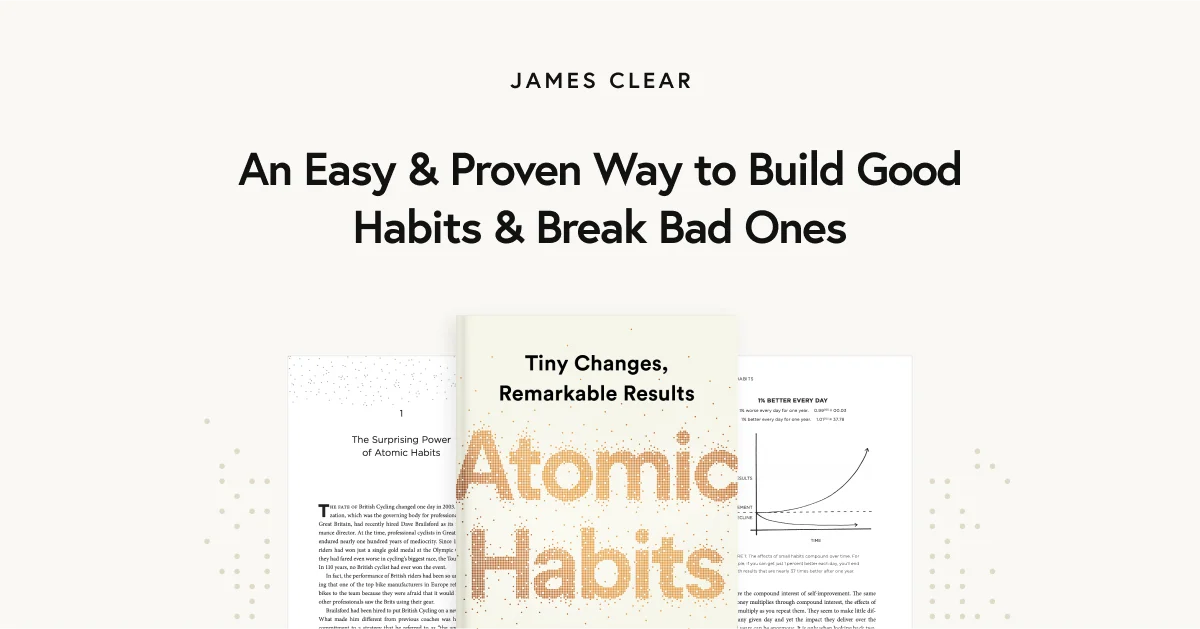
In the quest for self-improvement, the common narrative often focuses on willpower, discipline, and the internal struggle to "do better." However, modern behavioral science suggests that the most effective way to change your life isn’t found in a gym or a meditation app, but in the physical environment you inhabit. As James Clear, the author of the New York Times bestseller Atomic Habits, argues, the secret to consistent performance lies in "resetting the room"—a simple, yet profound strategy for engineering a life where good habits become the path of least resistance.
The Genesis of the "Reset" Strategy
The concept of "resetting the room" was brought to light through the habits of Oswald Nuckols, an IT developer based in Natchez, Mississippi. While researching his seminal book, Clear encountered Nuckols’ minimalist yet high-impact approach to domestic management.
For Nuckols, the act of "resetting" is not merely about tidiness; it is an exercise in proactive preparation. When he finishes watching television, he does not simply turn it off and walk away. He places the remote back on the stand, fluffs the couch pillows, and folds the blanket. Before showering, he cleans the bathroom while the water warms up.
"When I walk into a room, everything is in its right place," Nuckols observed. "Because I do this every day in every room, stuff always stays in good shape. People think I work hard, but I’m actually really lazy. I’m just proactively lazy. It gives you so much time back."
The Chronology of Behavioral Priming
The shift from cleaning to "priming" represents a major turning point in habit formation. To understand this, one must look at how environments influence our daily decision-making cycles:
- The Trigger Phase: You encounter a cue in your environment (e.g., a messy desk or a misplaced tool).
- The Friction Phase: You attempt to perform a task. If the environment is disorganized, you encounter friction (e.g., "I need to cook, but the stove is dirty and I can’t find the pan").
- The Decision Phase: Faced with friction, the brain often opts for the path of least resistance, leading to the abandonment of the goal.
- The Reset Phase: By "resetting the room" after the last action, you remove the friction for the next cycle, effectively priming the environment for success.
This chronological loop is the cornerstone of behavior design. When you organize a space for its intended purpose—like placing a skillet on the stove and setting out utensils the night before—you are essentially performing a service for your "future self." By the time you wake up, the "friction" that would normally cause you to skip a healthy breakfast has been surgically removed.
Supporting Data and the Psychology of Friction
Psychologists have long understood that human behavior is profoundly situational. In his research, Clear points to the "power of the environment" as a primary driver of habit success.
Consider the case of greeting cards. Many individuals, like Clear himself, often fail to maintain the habit of sending cards because the process involves too many steps: finding a store, selecting a card, buying a stamp, and finding a mailbox. By contrast, a person who maintains a box of presorted cards—organized by occasion—has reduced the "friction" of the habit to nearly zero. The behavior becomes almost automatic because the environment provides the necessary tools at the exact moment of intent.
The Inversion: Creating Barriers to Bad Habits
The inverse of this principle is equally powerful: if you want to break a bad habit, you must maximize the friction until the behavior is no longer worth the effort.
- Mindless Consumption: If you watch too much television, unplug it after every use. If that fails, remove the batteries from the remote. The extra ten seconds required to restore functionality creates a "pause" in which the conscious brain can decide if the activity is actually desired.
- Digital Distraction: For those struggling with smartphone addiction, keeping the device in another room during working hours is a high-friction strategy that yields immediate results. Research into "distraction-free environments" shows that when a phone is out of sight, the cognitive load of resisting the urge to check it drops significantly.
- Subtle Obstacles: Simple tactics—such as hiding unhealthy snacks in the back of a cupboard or deleting social media apps to require a login process—act as psychological speed bumps. They force the user to transition from an "impulse" state to a "deliberate" state.
Official Perspectives and Expert Implications
Behavioral experts and life coaches often emphasize that "designing your world" is a form of self-leadership. When you curate your environment, you are essentially setting boundaries for your own behavior.
The implication here is that we should stop viewing productivity as a battle of willpower. Instead, we should view it as an engineering problem. If your goal is to be a consistent reader, place a book on your pillow. If your goal is to practice music, leave your instrument on its stand rather than in a case.
"Whether we are approaching behavior change as an individual, a parent, a coach, or a leader, we should ask ourselves the same question: ‘How can we design a world where it’s easy to do what’s right?’" Clear writes.
The Broader Implications for Modern Living
The "resetting the room" strategy extends far beyond home organization. It has profound implications for corporate efficiency, education, and public policy.
In the Workplace
For professionals, "resetting" can look like closing all browser tabs at the end of the day, leaving a notepad open to the first task for the next morning, or clearing the desk of clutter. This "pre-work" removes the morning fog and allows the brain to transition directly into deep work without the "startup cost" of cleaning up the previous day’s mess.
In Education
Teachers who "reset the classroom"—ensuring that learning materials are visible, accessible, and organized—find that student engagement increases. By removing the logistical barriers to learning, the environment itself becomes an educator.
In Personal Development
The cumulative impact of these micro-changes is exponential. If an individual makes ten small adjustments to their environment to lower the friction for good habits, the total reduction in daily decision fatigue is immense. Over weeks and months, this creates a "compounding effect" where the individual is performing high-value actions with the same mental effort that previously led to procrastination.
Conclusion: Mastering the Art of Preparation
The story of Oswald Nuckols serves as a reminder that the most sophisticated life hacks are often the most fundamental. We are prone to romanticizing the "hustle," the late-night work sessions, and the sheer grit required to change our habits. Yet, the data suggests that those who consistently succeed are not necessarily those with the most willpower, but those who have mastered the art of preparation.
"When you master habits of preparation, habits of execution become easy," says Clear. By viewing our physical surroundings not as static scenery, but as an active partner in our daily habits, we can shift the focus from who we are to how we live.
Ultimately, the power to change is not found in the desire to be different, but in the willingness to arrange our surroundings so that the better version of ourselves is the inevitable outcome of our daily environment. Whether you are folding a blanket, organizing a kitchen, or hiding a smartphone, you are building the architecture of your future. Start by resetting the room, and the rest will follow.