In the competitive landscape of the Indian mid-size motorcycle segment, few names carry the weight and heritage of the Royal Enfield Classic 350. As the bedrock of the Chennai-based manufacturer’s domestic sales, the Classic 350 has long been a masterclass in balancing nostalgia with modern reliability. However, one perennial request from the riding community has remained unfulfilled: the marriage of authentic wire-spoke aesthetics with the practical convenience of tubeless tires. Recent sightings at dealership floors suggest that Royal Enfield is finally ready to bridge this gap.
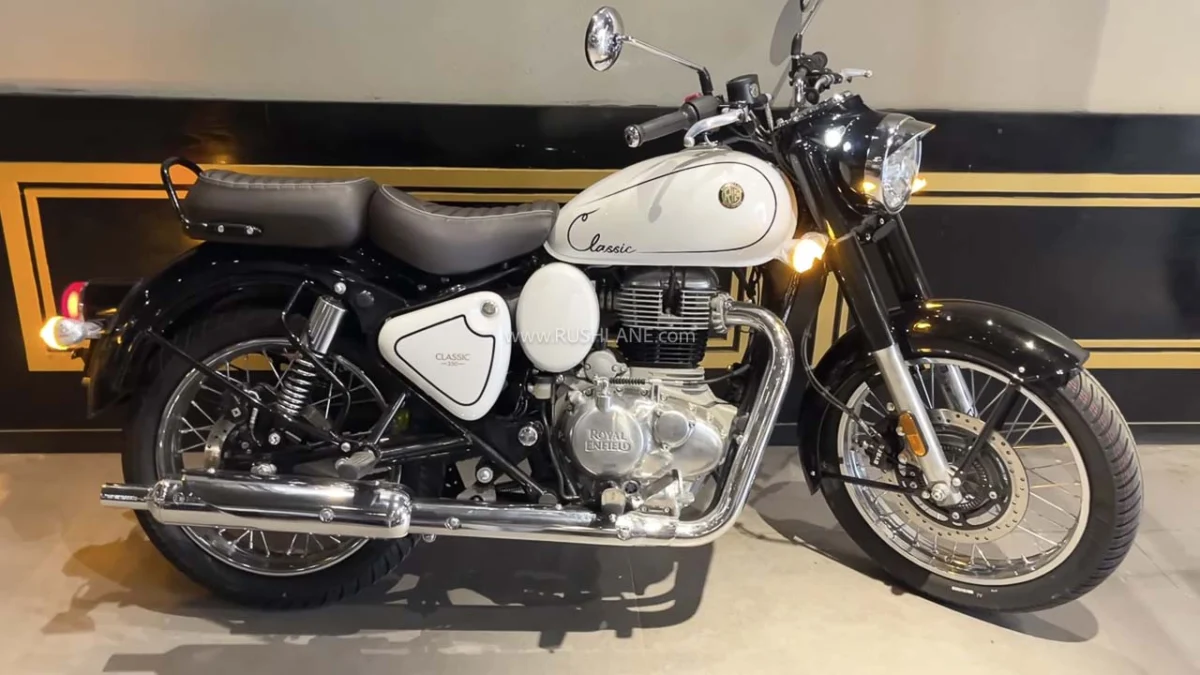
New spy images have emerged, showcasing a Medallion Bronze Classic 350 equipped with a sophisticated, tubeless-compatible spoke wheel setup. This development marks a significant shift in the motorcycle’s evolution, promising to address the primary inconvenience associated with classic-styled motorcycles: the tedious process of on-road puncture repairs.
Main Facts: The Evolution of the Wheel
The core of this anticipated update lies in the wheel construction itself. Traditionally, wire-spoke wheels require an inner tube because the spoke nipples penetrate the rim bed, creating an airtight seal impossible to maintain. The units spotted on the upcoming Classic 350, however, feature a distinct "side-laced" or "flange-mount" design.
In this configuration, the spokes do not pass through the central drop-center of the rim. Instead, they attach to a raised outer flange on the rim’s edge. By keeping the center of the rim solid and unpunctured by spokes, the tire bead can seat perfectly against the rim, allowing for a genuine, factory-approved tubeless setup.

This design mirrors the technology seen on the Royal Enfield Meteor 350 "Sundowner" edition, moving away from the more experimental side-laced configurations seen on some of the manufacturer’s other niche models. For the purist, this is the "holy grail"—the classic, mechanical look of chrome or black spokes without the roadside anxiety of a traditional tube-type tire.
A Chronology of Continuous Improvement
The year 2026 has been nothing short of a busy one for the Royal Enfield product development team. The brand has adopted a strategy of "incremental excellence," ensuring the J-series platform remains at the forefront of the market through constant, calculated upgrades.
- July 2026: Royal Enfield signaled its intent to keep the Classic 350 modern by introducing an assist-and-slipper clutch, significantly reducing rider fatigue in urban stop-and-go traffic. Simultaneously, USB Type-C fast-charging ports were integrated into the dual-channel ABS variants, acknowledging the modern rider’s reliance on navigation and connected devices.
- August 2026: The manufacturer expanded the lineup with the rugged "Gorkha Edition," emphasizing the platform’s versatility and capability for customization.
- September 2026: A new, clean white color scheme was introduced, further broadening the demographic reach of the motorcycle.
- October 2026: The discovery of the tubeless-spoke wheels at dealerships indicates that the final quarter of the year is being dedicated to solving the most persistent functional complaint among owners.
This rapid-fire succession of updates is not merely a marketing tactic; it is a tactical response to an increasingly crowded 350cc-to-450cc segment.
Supporting Data: Why the Classic 350 Remains King
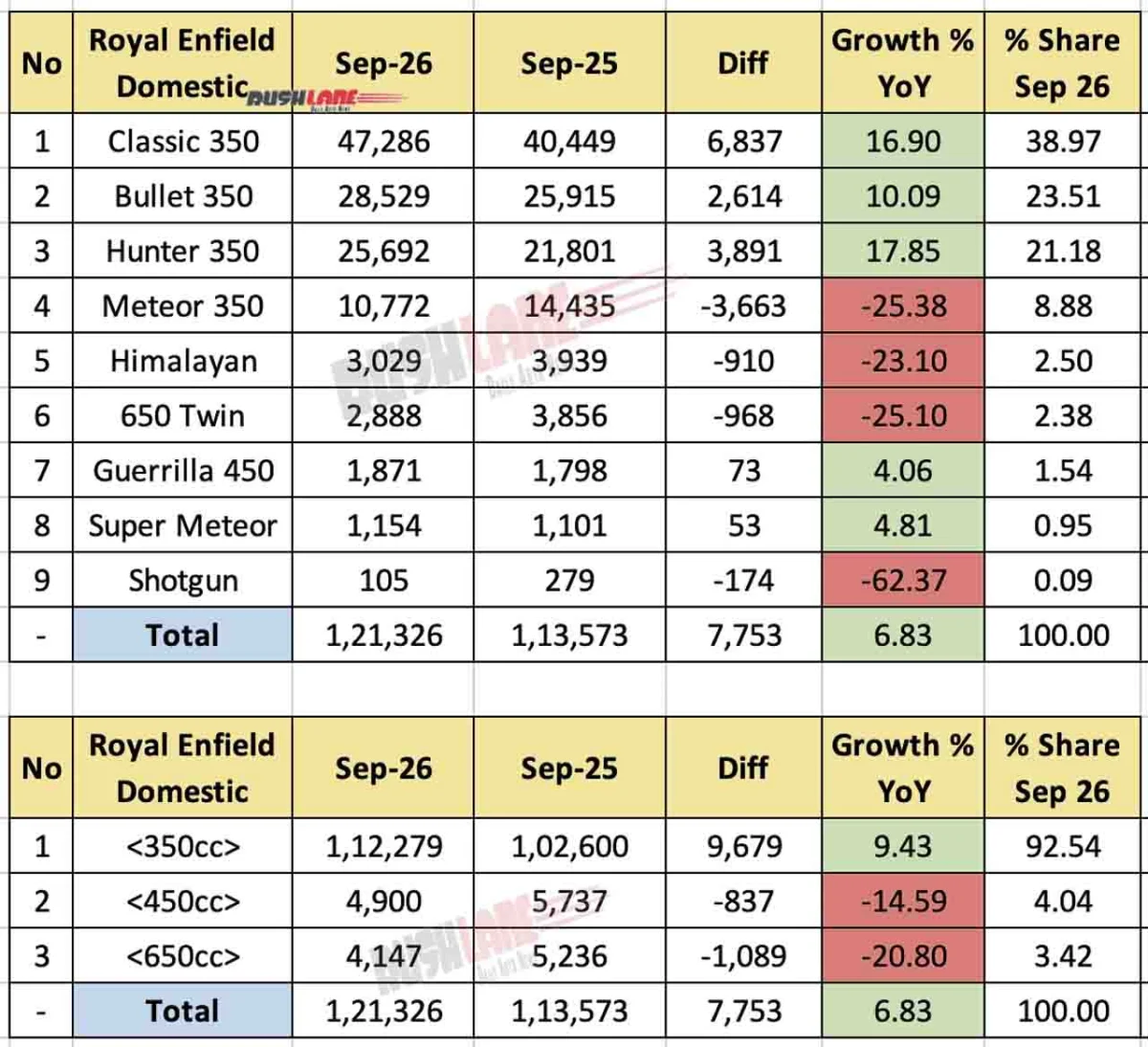
The necessity of these updates is backed by the hard data of market dominance. In September 2026, the Classic 350 solidified its position as the undisputed bestseller in the Royal Enfield stable. The company reported 47,286 units sold domestically, a staggering 16.90% growth compared to the 40,449 units sold during the same period in 2025.

To put this into perspective, the Classic 350 accounts for nearly 39% of Royal Enfield’s total domestic volume. While the brand’s overall domestic growth sits at a healthy 6.83%, the Classic 350 is outperforming the average by nearly 10 percentage points. This indicates that buyers are not just buying the bike for its heritage, but are actively responding to the functional upgrades the company continues to provide. By introducing tubeless spoke wheels, Royal Enfield is essentially removing the last major barrier for potential buyers who might have otherwise opted for alloy-wheel variants solely for the sake of tire maintenance.
The Competitive Landscape: Rising Pressure
The retro-classic market is no longer a monopoly. Royal Enfield’s dominance is being challenged from multiple fronts, necessitating a proactive approach to product refinement.
Honda has been aggressive with its CB350 range, offering the CB350, CB350RS, and the newly launched CB350C, which directly target the aesthetic and performance benchmarks set by the Classic 350. Honda’s reputation for reliability, combined with a modern engine architecture, has forced Royal Enfield to sharpen its edge.
Furthermore, the anticipation surrounding the upcoming Triumph Bonneville 350 has added a layer of premium pressure to the segment. Triumph, backed by its partnership with Bajaj, is expected to bring a level of build quality and brand cachet that will likely attract "upgraders" from the entry-level 350cc space. By offering a high-utility feature like tubeless spoke wheels, Royal Enfield is not only satisfying current owners but is also fortifying its product against these incoming market entrants.

Implications for the Rider and the Market
The move to tubeless-spoke wheels has significant implications for the ownership experience.
The Practicality Factor
For the long-distance tourer or the daily commuter, a puncture is the most common cause of a ruined journey. With tube-type tires, a puncture usually mandates a full wheel removal, tire bead breaking, and tube repair—a task that is difficult to perform on the side of a highway without professional tools. Tubeless tires, conversely, allow for the use of simple, compact "mushroom plug" kits. This allows a rider to fix a puncture in minutes without even taking the wheel off the motorcycle, restoring the bike to full functionality instantly.
The Aesthetic Dilemma
For years, owners have had to choose between two mutually exclusive desires: the classic, nostalgic look of spokes or the modern, puncture-free reliability of alloy wheels. Many opted for alloy wheels purely for the peace of mind they offered. With this new, factory-approved tubeless-spoke option, Royal Enfield effectively offers the best of both worlds. It preserves the "Classic" silhouette while modernizing the underpinnings.
The "Accessory or Variant" Debate
Industry experts are currently debating whether these wheels will arrive as a top-tier "Special Edition" variant or as a modular accessory available across the existing range. Given the modular nature of the J-series platform, the latter is a distinct possibility. Offering these as an accessory would be a masterstroke for customer retention, allowing existing 2024-2026 Classic 350 owners to upgrade their machines, thereby deepening their investment in the brand.

Conclusion: A Strategy of Resilience
Royal Enfield’s decision to continue refining the Classic 350 rather than just letting it rest on its laurels is a testament to the company’s understanding of its audience. The motorcycle is more than just a product; it is a cultural icon in India. By listening to the feedback loop—evidenced by the consistent updates throughout 2026—the company has managed to keep the Classic 350 relevant in an era of rapid technological transition.
As we await the official launch, the message from the dealership floor is clear: Royal Enfield is not interested in merely holding onto its market share; it is interested in evolving the very definition of a "modern classic." The introduction of tubeless-spoke wheels is not just a change in hardware—it is a promise that, no matter how much the market changes, the Royal Enfield Classic 350 will continue to be the motorcycle that defines the road ahead, one puncture-free mile at a time.