
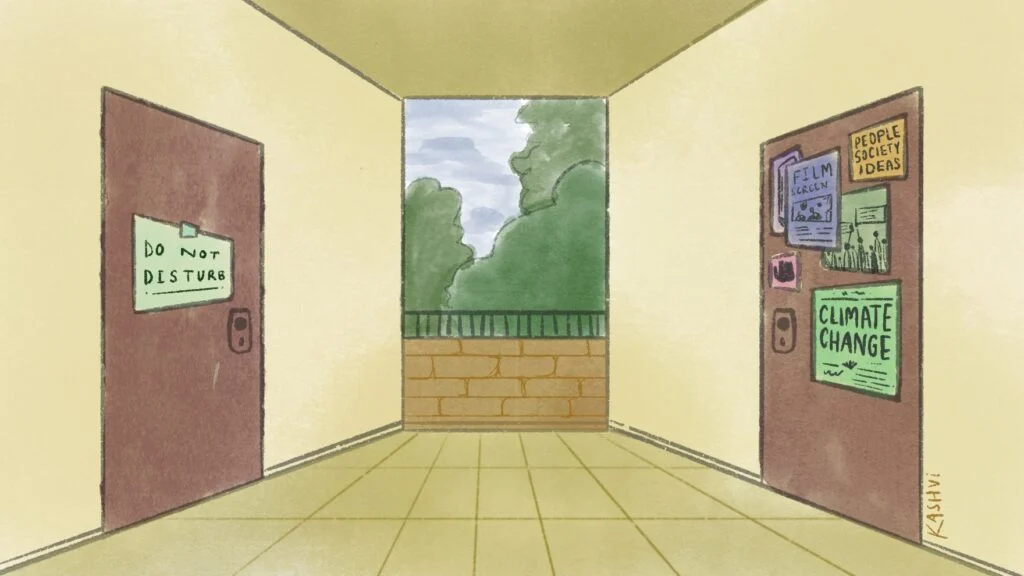
The Indian Institutes of Technology (IITs), long celebrated as the gold standard of technical education and the cradle of India’s global tech diaspora, are currently grappling with a crisis that has nothing to do with thermodynamics or algorithms. Across the prestigious campuses—from the bustling, rain-slicked streets of Powai to the serene expanses of Chennai—a profound ideological rift has emerged. It is a friction between the hyper-rationalist, meritocratic ethos of engineering and the growing, vocal presence of the Humanities and Social Sciences (HSS) departments.
What was once a quiet academic coexistence has morphed into a public, sometimes hostile, "culture war." This schism, increasingly visible on social media and within student councils, poses fundamental questions about the role of elite institutions in a rapidly polarizing India.
The Trigger: When Politics Met the Campus
The tensions reached a boiling point in the wake of a tragic incident: the death by suicide of Sahil Wakode, an IIT Bombay student. While the loss of a student is always a moment of profound institutional grief, the reaction at IIT Bombay was markedly different from previous tragedies.
Following the death, protests erupted across the campus. These were not generic student grievances; they were pointed, political, and systemic. The demonstrations were largely led by HSS doctoral students and centered on allegations against a specific professor, eventually leading to the invocation of the SC/ST (Prevention of Atrocities) Act. The aftermath was swift and consequential: the professor was removed from his deanship and placed on leave.
However, the ripple effects of the protest were not confined to the administration’s response. Online, the response was visceral. On the IIT Bombay community pages, the discourse turned vitriolic. "Leave IITs for the top brains of India, people who excel in STEM and management only," one user wrote in September. "We don’t want stupid narrative-pushing socio-drama queens on this campus anymore!"
This sentiment, while blunt online, mirrors a more coded exclusion on the ground. Students across various campuses have reported that "HSS" has become a pejorative adjective. To be "HSS" is to be perceived as "woke," "socially aware," or, in the eyes of many engineering peers, "distracting."
The Chronology of Discontent
The divide is not a new phenomenon, but it has accelerated over the last decade as the demographic and ideological makeup of the Indian student body has shifted.

- The Integration Era: For years, HSS departments existed as "service" departments—providing basic communication skills or ethics electives to engineers.
- The Rise of Research: As IITs expanded their PhD programs in the social sciences, the number of humanities scholars on campus grew. These students brought with them critical inquiry, activism, and a focus on social justice.
- The Social Media Catalyst: The advent of anonymous campus confession pages and platforms like Reddit allowed the latent annoyance between "tech-brains" and "humanists" to manifest as a public spectacle.
- The Post-Suicide Climax: The death of Sahil Wakode acted as a catalyst. The protests that followed were the first time the "HSS identity" was mobilized effectively against the status quo, drawing the ire of a student body that prides itself on being "apolitical."
The "Hyper-Apolitical" Engineering Ethos
To understand the hostility, one must understand the environment in which an average IITian is forged. Most students spend two to four years in intense, high-pressure coaching environments, often isolated from their families and the broader socio-political realities of India. They are taught to view the world through the lens of objective problem-solving.
"Politics is the fastest way to lose friends here," says one engineering student. "We are here for placements, for the career, for the future. When a group of students starts a protest that disrupts exams or brings media attention to the campus, it is seen as an attack on our collective stability."
This "hyper-apolitical" stance is not merely a lack of interest; it is a defensive mechanism. The IIT brand is built on a promise of meritocracy. If social justice narratives suggest that the playing field is not level—or that the institute itself is complicit in systemic bias—it threatens the foundational myth that the students have worked so hard to believe in.
Supporting Data: The Shifting Purpose of the IITs
The irony of the current conflict is that the IITs are no longer purely "engineering" schools. The data reveals a significant drift in the career trajectories of its graduates.
- The Consulting Pivot: In the latest available data from IIT Bombay, a staggering number of graduates did not go into engineering at all. Instead, they moved into high-paying consulting, finance, and data management roles.
- The Demographic Shift: With the expansion of interdisciplinary courses and dual-degree programs, the boundaries between the "hard" sciences and "soft" humanities are blurring, yet the cultural wall remains as thick as ever.
- The Cost of Silence: A survey of student council activity shows that in early October, the IIT Bombay student council officially distanced itself from the protesting groups. Their reasoning was pragmatic: the protests were disrupting the "rhythm" of the campus—specifically exams and placements.
Official Responses and Internal Schisms
The faculty, too, is split. Humanities professors often characterize the hostility as a failure of the education system, noting that the students’ myopia is a direct result of a curriculum that prioritizes technical competence over civic education.
"They see education as a transaction," one sociology professor noted. "When you remove the ‘human’ element from education, you are left with technicians who are brilliant at solving equations but incapable of navigating the complex, often messy, reality of social existence."
Yet, even the faculty admits to the failure of their own departments. Some HSS scholars concede that their side has often held a holier-than-thou attitude, prioritizing "moral purity" over meaningful dialogue with the engineering cohort. By isolating themselves into echo chambers, the HSS students have inadvertently reinforced the "drama queen" stereotype they were trying to dismantle.

Implications for the Future of Elite Education
What does this mean for the future of the IITs? The implications are three-fold:
1. The Erosion of Institutional Unity
If the student body is divided into two mutually hostile camps, the sense of community—the "IIT spirit"—is effectively dead. When a tragedy occurs, the response should be one of collective mourning; instead, it is now one of political maneuvering.
2. The Professional Disconnect
The corporate world, which absorbs these graduates, is increasingly demanding "soft skills"—empathy, communication, and ethical decision-making. If the IITs cannot bridge the gap between their technical rigor and the social sciences, they risk producing engineers who are technically capable but socially illiterate.
3. The National Narrative
The IITs are a microcosm of the larger Indian national discourse. The "culture war" within these campuses is a precursor to the polarization happening in the broader job market and political sphere. The question is whether these institutes can serve as a space where these divergent worldviews can actually engage, or if they will continue to mirror the echo chambers of the internet.
Conclusion
The conflict between the engineering core and the humanities scholars at the IITs is not just about a few protests or an online spat. It is a fundamental identity crisis. Can a premier technological institution accommodate the critical, questioning, and often uncomfortable nature of the social sciences?
As long as the "hyper-apolitical" engineers see the humanities as an inconvenience to their professional advancement, and as long as the humanities scholars see the engineering culture as inherently regressive, the divide will only deepen. The tragic death of Sahil Wakode has highlighted a reality that the IIT administration can no longer ignore: the institutes are not just training grounds for the next generation of CEOs and coders; they are sites of intense human struggle where the politics of India are being fought in real-time.
To bridge this divide, the IITs must move beyond viewing HSS as an elective add-on. They must find a way to integrate the "why" of the humanities with the "how" of engineering. Until then, the campuses will remain fragile, fractured, and far from the unified, meritocratic utopias they are advertised to be.