Mumbai — As the dust settles on the landmark implementation of the Comprehensive Economic and Trade Agreement (CETA) between the United Kingdom and India, the focus of bilateral relations has shifted from the broad strokes of tariff reductions to the granular, technical realities of market access. In a high-level push to solidify the partnership, UK Secretary of State for Environment, Food and Rural Affairs, Angela Eagle, arrived in India this week, leading a robust delegation of ministerial colleagues and representatives from North England.
The visit, which underscores a newfound urgency to move beyond the signing ceremony and into the operational phase of trade, aims to dismantle the "nitty-gritty" regulatory hurdles that continue to impede the flow of premium British food and drink products into the burgeoning Indian market.
Main Facts: The Post-CETA Landscape
The current trade dynamic between the UK and India is defined by a paradox: while the implementation of CETA two months ago successfully slashed duties on a wide array of goods, the actual movement of certain high-value commodities remains stifled.
The UK is aggressively marketing its heritage products—specifically premium whiskies, artisanal cheeses, and Atlantic salmon—to the Indian consumer. However, a significant disconnect persists in the meat sector. Despite the lowering of import tariffs, British lamb and other meat products remain largely absent from Indian shelves, blocked not by financial levies but by complex, non-tariff barriers (NTBs) related to sanitary and phytosanitary (SPS) standards, certification protocols, and inspection requirements.
Secretary Eagle’s mission is the first of its kind in the post-CETA era to address these "behind-the-border" obstacles. By bringing together seven mayors from North England and a suite of business leaders, the UK is signaling that it is prepared to engage at both the state and central government levels to harmonize regulatory frameworks.
Chronology: A Path to Partnership
The trajectory of this relationship has been marked by methodical, if cautious, progress:
- Pre-2026: Years of negotiation characterized by balancing the UK’s desire for market access with India’s protective stance toward its domestic agricultural sector.
- August 2026: The official implementation of the UK-India Comprehensive Economic and Trade Agreement (CETA). The agreement marked a significant reduction in duties on imported luxury goods and agricultural products.
- Early October 2026: British cookie brand Ben’s Cookies marks a success story in the retail sector, having imported over 70 tonnes of dough since May, signaling a growing appetite for premium Western food items.
- October 12, 2026: Secretary Angela Eagle meets with India’s Union Minister for Fisheries, Animal Husbandry, and Dairying, Rajiv Ranjan Singh, to discuss veterinary cooperation and regulatory alignment.
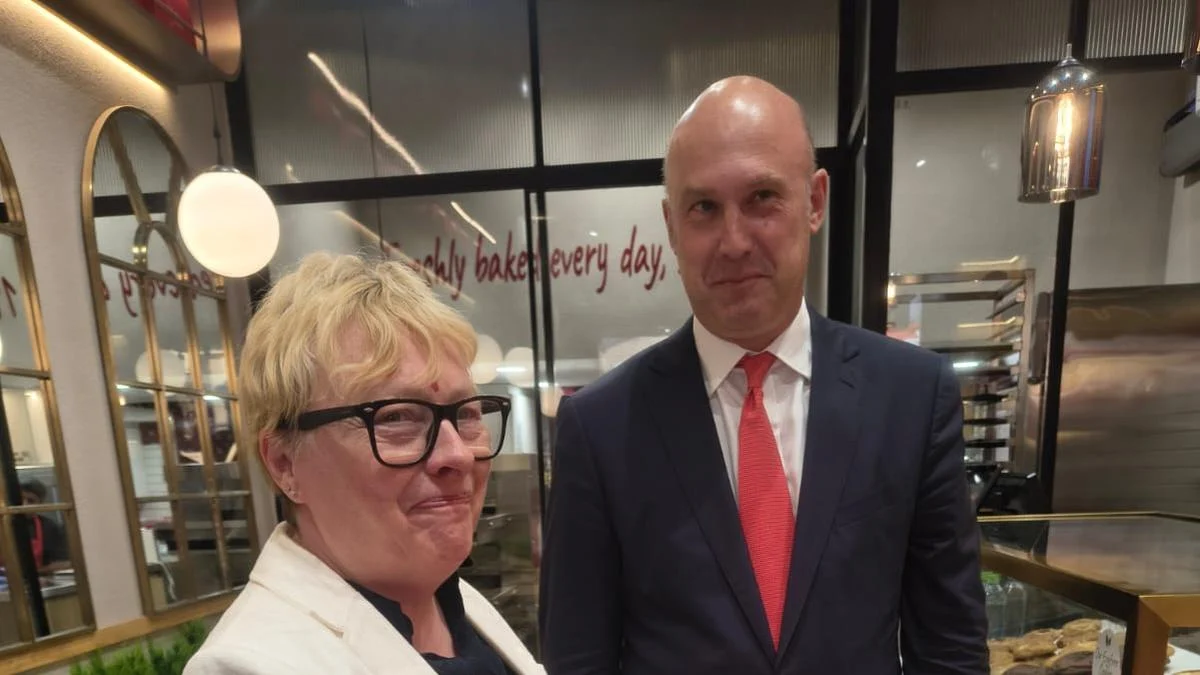
- October 13, 2026: Secretary Eagle holds high-level talks with Maharashtra Chief Minister Devendra Fadnavis in Mumbai to discuss regional trade facilitation and visits retail outlets to assess the consumer demand for British goods firsthand.
Addressing the "Nitty-Gritty": The Regulatory Hurdle
During her visit, Secretary Eagle was candid about the challenges faced by British exporters. The transition from theoretical market access to actual market presence is rarely seamless.
"A whole lot of people want to export lamb but can’t get through the borders yet," Eagle stated during an interview in Mumbai. "We are talking to resolve it. These are practical, nitty-gritty things that you come across when you start doing business in a place you haven’t done regularly before. There is goodwill in both directions to try and get them sorted."
These non-tariff barriers often involve technical certifications, labeling requirements, and cold-chain infrastructure compatibility. For many UK meat producers, the cost of meeting these varied Indian compliance standards can be prohibitive without a simplified "fast-track" mechanism. The UK government is currently lobbying for a mutual recognition agreement regarding these standards, which would allow British products to enter India without redundant testing.
Supporting Data: Early Signs of Success
While the meat sector faces headwinds, other segments of the food and beverage industry are seeing early signs of success, suggesting that the Indian middle-class appetite for global brands is resilient.
The most prominent example is the success of Ben’s Cookies. By importing 70 tonnes of cookie dough since May, the brand has demonstrated that the Indian market is highly responsive to quality, provided the supply chain is functional. This success serves as a blueprint for other exporters: if the regulatory path is clear, demand is sufficient to support sustained growth.

Furthermore, the involvement of seven mayors from North England highlights a strategic shift toward regional cooperation. By connecting Northern UK businesses directly with state-level counterparts in India, the UK government is attempting to bypass the inertia often found in purely federal negotiations. This "city-to-state" model is expected to accelerate the exchange of agricultural technology and food processing expertise.
Official Responses and Strategic Intent
The diplomatic reception in India has been largely positive. In her meeting with Union Minister Rajiv Ranjan Singh, the focus was on deepening cooperation in the fisheries and dairy sectors. Both sides acknowledged that while tariffs have been lowered, the "administrative friction" at the ports of entry needs to be reduced to fulfill the vision of the CETA.
Chief Minister Devendra Fadnavis, in his meeting with Eagle, emphasized the potential for Maharashtra to serve as a gateway for British goods. The state’s robust retail infrastructure and high concentration of urban, affluent consumers make it the ideal test market for the products Eagle is championing.
"From a food and drink point of view, it is important that we ensure our producers can actually make good use of the free trade agreement," Eagle emphasized. "There is a great deal of interest in the Indian market, which is why this trade visit is so important because it gives people the chance to forge friendships and relationships with their counterparts here."
Implications: The Road Ahead
The implications of this diplomatic mission extend far beyond the trade of lamb or cheese. If the UK and India can successfully navigate these non-tariff barriers, it will serve as a template for future trade negotiations between India and other Western nations.
1. Regulatory Harmonization
The success of this initiative depends on whether the two nations can establish a "green lane" for compliant food products. This would require India to accept certain international food safety certifications in lieu of additional domestic testing—a move that would significantly lower costs for British exporters.
2. Strengthening the "Global Britain" Strategy
For the UK, the success of CETA is a litmus test for its post-Brexit trade strategy. Securing a foothold in the world’s fastest-growing large economy is vital for the UK’s long-term export strategy. Failure to resolve these NTBs could be perceived as a failure of the CETA itself, potentially cooling enthusiasm among other UK manufacturers looking to enter the Indian market.
3. Impact on Indian Consumers
For the Indian consumer, the easing of these barriers means greater choice and the potential for lower prices on premium imported goods. As the Indian retail landscape becomes increasingly sophisticated, the integration of global supply chains will likely drive innovation in the local food processing sector as well, as domestic firms are forced to compete with high-quality imports.
4. Bilateral Goodwill
The most critical takeaway from Secretary Eagle’s visit is the tone of the discourse. By characterizing the barriers as "nitty-gritty" and emphasizing the "goodwill" on both sides, the UK is choosing a collaborative approach rather than a confrontational one. This bodes well for the long-term stability of the trade relationship.
Conclusion
The path to realizing the full benefits of the CETA is clearly paved with administrative, rather than economic, obstacles. As Secretary Eagle and her delegation conclude their mission, the focus remains on transforming the theoretical openness of the trade agreement into practical, daily commerce.
If the UK can successfully streamline the regulatory requirements for its food and drink exporters, it will not only solidify its position in the Indian market but also set a new standard for international trade cooperation. The next few months will be crucial as both governments work to translate these high-level discussions into actionable policy changes at the borders. For now, the sentiment remains one of cautious optimism—a belief that the "nitty-gritty" of trade can indeed be smoothed over in the spirit of a burgeoning, mutually beneficial partnership.