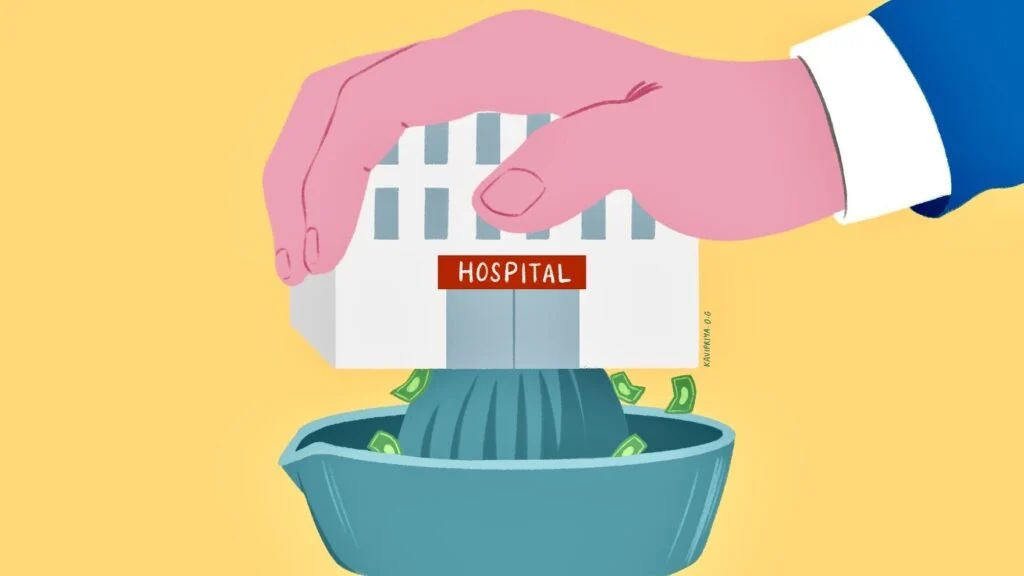
The clinical silence of a hospital corridor is being replaced by the frenetic hum of high-stakes finance. In India, the healthcare sector—once a fragmented landscape of family-run clinics and standalone trusts—is undergoing a profound metamorphosis. Driven by an unprecedented influx of private equity (PE) capital, the industry is transitioning from a service-oriented model to a "platformized" corporate machine, where the patient is increasingly viewed through the lens of EBITDA multiples and scale-based efficiency.
For the casual observer, the shift might be subtle. For those within the industry, it is seismic. As global and domestic PE firms aggressively acquire, merge, and expand hospital chains, the traditional pillars of Indian medicine are beginning to crack under the weight of capital-intensive competition.
The Financial Engine: Why Hospitals?
The allure of the Indian hospital sector for private equity is not merely philanthropic; it is mathematical. India’s healthcare demand is vast, under-served, and increasingly willing to pay for quality. With a growing middle class and a rising burden of lifestyle diseases, the "bed-to-population" ratio remains abysmally low, creating a massive supply-demand gap that PE firms are eager to exploit.
"It’s a potent combination; insurance is the least insidious player now—to give the devil its due—but it won’t be for long," remarks the co-founder of a 150-bed hospital in southern India. Despite building a standalone institution that was widely regarded as both financially and reputationally successful, the founders were eventually forced to divest. They found themselves unable to compete with the "blank cheques" offered by PE-backed chains to top-tier medical talent. In this new economy, talent poaching has become the primary weapon of expansion.
Chronology of a Takeover
The consolidation trend has accelerated significantly over the last two years. The industry has witnessed a shift from "greenfield" projects—building hospitals from the ground up—to an aggressive "brownfield" strategy of acquisition.
- 2023: PE firms intensified their focus on mid-sized regional chains, identifying them as prime candidates for "platformization"—the process of integrating disparate hospitals into a single, centralized management structure.
- September 2025 (Mid-Month): The industry saw a flurry of activity. Integrated healthcare provider Aster DM Healthcare announced a staggering Rs 6,900-crore expansion plan, signaling a move toward dominance in key markets.
- September 2025 (Late-Month): Global giant Advent International acquired nearly a quarter of Yatharth Hospitals in a deal that valued the National Capital Region (NCR)-based chain at a staggering 33X its EBITDA. To put this in perspective, the average public-market multiple for listed Indian hospital chains hovers around 27X.
This valuation, while a boon for existing promoters, has left many industry veterans baffled. "This is an unrealistic valuation; how do you ever justify that?" questions the CEO of a mid-sized Bengaluru hospital, who opted to sell his business to a larger chain earlier this year.

The Data Behind the Disruption
The numbers confirm a trend that is impossible to ignore. Over the last six years, approximately 14,000 new beds have been added to the listed hospital universe in India. However, the nature of this growth is telling: 55% of these beds were acquired or leased from existing operators.
This suggests that growth is no longer coming from expanding the total healthcare infrastructure of the country, but from consolidating the existing footprint. By buying out smaller players, PE firms are eliminating competition, standardizing pricing, and creating "moats" around their regional clusters.
| Metric | Industry Standard (Pre-2020) | Current PE-Driven Trend |
|---|---|---|
| Growth Strategy | Greenfield (New Construction) | Brownfield (Acquisitions) |
| Talent Acquisition | Tenure-based hiring | Competitive bidding/Poaching |
| Valuation Multiples | 15x – 20x EBITDA | 25x – 35x EBITDA |
| Operational Focus | Patient Outcomes/Reputation | Operating Efficiency/Scale |
The Human Cost: A Crisis of Care?
As the industry pivots toward corporate efficiency, the relationship between doctor and patient is undergoing a subtle, yet dangerous, transformation. The pressure to justify high valuations forces hospitals to optimize for Average Revenue Per Occupied Bed (ARPOB).
Doctors, once the primary decision-makers in hospitals, now find themselves navigating a corporate hierarchy where KPIs (Key Performance Indicators) and revenue targets are paramount. When a PE firm pays a premium for a hospital chain, they expect returns. Those returns often manifest in increased diagnostic testing, optimized surgical throughput, and the aggressive pursuit of higher-paying insurance segments.
The co-founder of the southern hospital noted that the "poaching" of doctors is not just about salary; it’s about control. When a hospital offers a surgeon a massive signing bonus and a performance-linked contract, the doctor’s autonomy often takes a backseat to the hospital’s need to meet revenue targets.
Implications: The Road Ahead
The long-term implications of this PE-led "platformization" are twofold.

1. The Death of the Standalone Model
Standalone, family-owned hospitals are effectively becoming an endangered species. Without the access to capital that PE firms provide, small-to-mid-sized players cannot match the technology, infrastructure, and salary packages of the large chains. This will likely lead to a highly oligopolistic market, where 4-5 massive entities control the majority of tertiary and quaternary care in urban India.
2. The Insurance Paradox
As PE firms gain control over the supply side of healthcare, they are also positioning themselves to negotiate more aggressively with the demand side—health insurance companies. While this might lead to better standardized pricing in the short term, it creates a risk of "price-gouging" in the long term. If a hospital chain becomes the sole provider of specialized care in a city, they gain immense leverage over insurance networks, potentially driving up premiums for the average citizen.
Official Responses and Market Sentiment
While the market cheers the influx of capital as a validation of India’s growth story, the internal sentiment is divided. Investors argue that consolidation is the only way to professionalize an industry that has been plagued by opacity and uneven quality standards. By bringing in institutional governance, they claim to be improving patient safety and operational excellence.
However, critics argue that "professionalization" is a euphemism for the prioritization of shareholder value over patient health. The current "stomach-churning experiment," as some industry insiders describe it, remains in its early stages.
Conclusion: A New Reality
India’s hospital industry is at a crossroads. The transition from a cottage industry to a corporate powerhouse is inevitable, but the speed of this change is creating friction. As private equity continues to tighten its grip, the ultimate question remains: Will the promise of "better scale" translate into better healthcare, or will it simply lead to a more expensive, colder, and more bureaucratic system?
For now, the deals keep happening. Every quarter brings a new headline of an acquisition, a new valuation record, and a new group of doctors moving to the "platform." The tango between finance and medicine is in full swing, and in this dance, the capital-heavy partner is clearly leading the way. The question for the Indian patient is whether they are still the partner being looked after, or merely the customer being served by the machine.