Main Facts: The Evolution of a Modern Classic
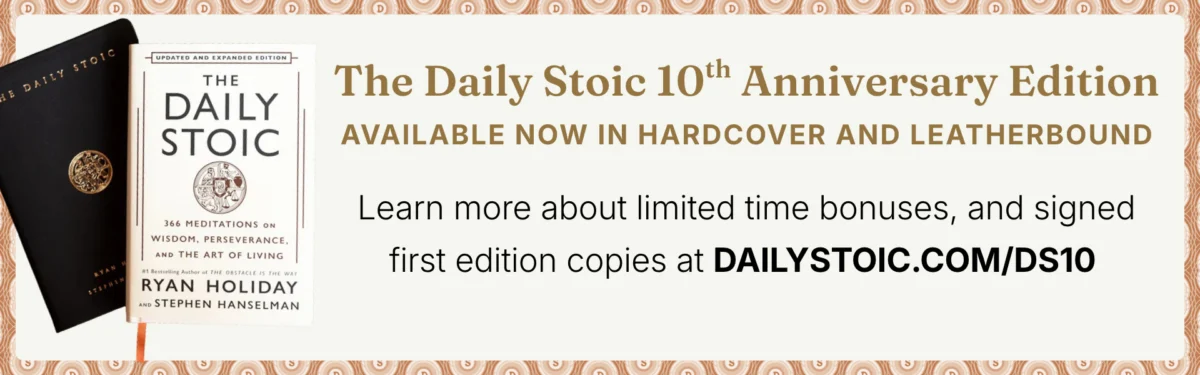
Ten years ago, Ryan Holiday, then 29, published The Daily Stoic, a compendium of daily meditations designed to distill the wisdom of ancient thinkers like Marcus Aurelius, Seneca, and Epictetus for a contemporary audience. Today, as he releases the 10th Anniversary Edition, Holiday marks a significant milestone: 175,056 hours of continuous engagement with Stoic philosophy.
The anniversary edition is not merely a reprint; it is a profound revision. Collaborating with his longtime co-author Steve Hanselman, Holiday has updated the text with fresh translations, new quotes, and a decade’s worth of personal growth. The core thesis of the project remains unchanged—that Stoicism is not a book to be read once, but a practice to be lived daily—yet the author’s relationship with those words has shifted from intellectual pursuit to a lived, weathered experience.
Chronology: From Ambition to Stewardship
The journey from the book’s inception to its current status as a cultural phenomenon can be mapped through a series of distinct life phases:
- The Inception (2016): With 482 weeks of formal study behind him, Holiday condensed the wisdom of the Stoics into 366 daily entries. At the time, his motivation was driven by the youthful ambition common to many who approach the philosophy: the desire for productivity, resilience, and personal success.
- The Crucible (2016–2021): The intervening decade brought global upheavals, including the COVID-19 pandemic and significant political instability. During this period, Holiday’s perspective began to pivot. The abstract concepts of "adversity" and "justice" became tangible realities as he navigated the challenges of parenthood, business ownership, and loss.
- The Realization (2022–2026): Now in his late thirties, Holiday has transitioned into a mindset of "stewardship." His focus has shifted from what Stoicism can provide to him, to how he can serve the philosophy and his community. The release of the 10th Anniversary Edition marks a transition from author to lifelong student.
Supporting Data: The Metrics of Mindfulness
While the success of The Daily Stoic is often measured in sales and bestseller lists, the true metrics for Holiday are internal and qualitative. The author notes that the book has evolved alongside its readers. Through 1,042 weeks of dedicated study, the project has grown from a singular manuscript into a multi-channel educational platform.

The data of his life reflects the philosophy: the "no" written on his wall as a reminder to prioritize family over professional vanity; the Memento Mori coin held as a tangible reminder of transience; and the deliberate decision to shutter his marketing agency to focus on essential work. These are the "data points" of a life optimized not for capital, but for tranquility (euthymia).
Official Responses: The Philosophy of "Enough"
In reflecting on the immense success of the book, Holiday addresses the common pitfalls of ambition. He cites his friend Mark Manson, author of The Subtle Art of Not Giving a F*ck, noting that in the publishing world, there is always someone who has sold more or achieved higher acclaim.
"Knowing what enough is, what you were actually after, what’s in your control, is important," Holiday writes. He warns against the "poverty of wanting more," a concept he derives from Seneca. For Holiday, the financial security brought by his writing has provided the freedom to step away from the treadmill of constant expansion. He now views success through the lens of duty: "Am I being a good steward of Stoicism? Am I living up to my obligations and responsibilities?"
Implications: The Four Pillars of Modern Stoicism
As the 10th Anniversary Edition hits shelves, Holiday outlines four critical shifts in his understanding of the philosophy that define his current practice:

1. Stoicism Demands Service
When he was younger, Holiday viewed Stoicism as a tool for personal optimization. Today, he views it as a social contract. He points to Marcus Aurelius’s Meditations, where the concept of the "common good" appears over 80 times. The implication for the modern reader is clear: virtue is not a private endeavor. It is the practice of being a better neighbor, a more just citizen, and a more present parent.
2. Obstacles as Moral Training Grounds
Holiday famously wrote The Obstacle Is the Way to explain how to turn adversity into advantage. Ten years later, his definition has deepened. The "opportunity" in a crisis is not just a chance to "win," but a chance to practice the four cardinal virtues: practical wisdom, self-discipline, courage, and justice. Whether facing a terminal diagnosis or a minor professional setback, the response—not the outcome—is where the virtue lies.
3. The Power of "No"
Reflecting on his career trajectory, Holiday emphasizes the necessity of narrowing one’s focus. He describes his mid-career epiphany during the pandemic, where the sudden removal of extraneous professional commitments revealed the true cost of "saying yes to everything." He posits that discipline is not merely the ability to work hard, but the courage to reject the non-essential to protect what is truly meaningful.
4. The Wisdom of Rereading
Heraclitus famously stated that one never steps in the same river twice. Holiday applies this to literature, arguing that we never read the same book twice because we are constantly changing. His experience revising the book was a humbling process; he encountered passages he had written in his twenties that now felt "cringe" or "mortifying." This realization reinforces the core Stoic tenet that one never "graduates" from philosophy.

Conclusion: The Student Forever
The 10th Anniversary Edition of The Daily Stoic stands as a testament to the idea that wisdom is not a destination. Holiday’s reflection on his own development serves as a blueprint for the reader: stay curious, remain a student, and understand that life’s hardships—the pandemics, the losses, the chaos—are the very things that shape our capacity for goodness.
As he looks toward the future, Holiday does not see a finished project. He sees a work in progress. He quotes the story of Marcus Aurelius, who, even as a powerful ruler, would leave his palace to visit his teacher, simply to "learn that which I do not yet know."
For the modern reader, the implication is both comforting and demanding: your current struggles are not evidence of failure, but the raw material for your growth. The goal is not to reach a state of perfection, but to wake up each morning, consult the wisdom of the past, and try to be, in some small way, better than you were the day before. Because, as the Stoics remind us, we are here for a limited time—why rush through it? Why not slow down, savor the moment, and act with the courage and justice that our shared humanity demands?