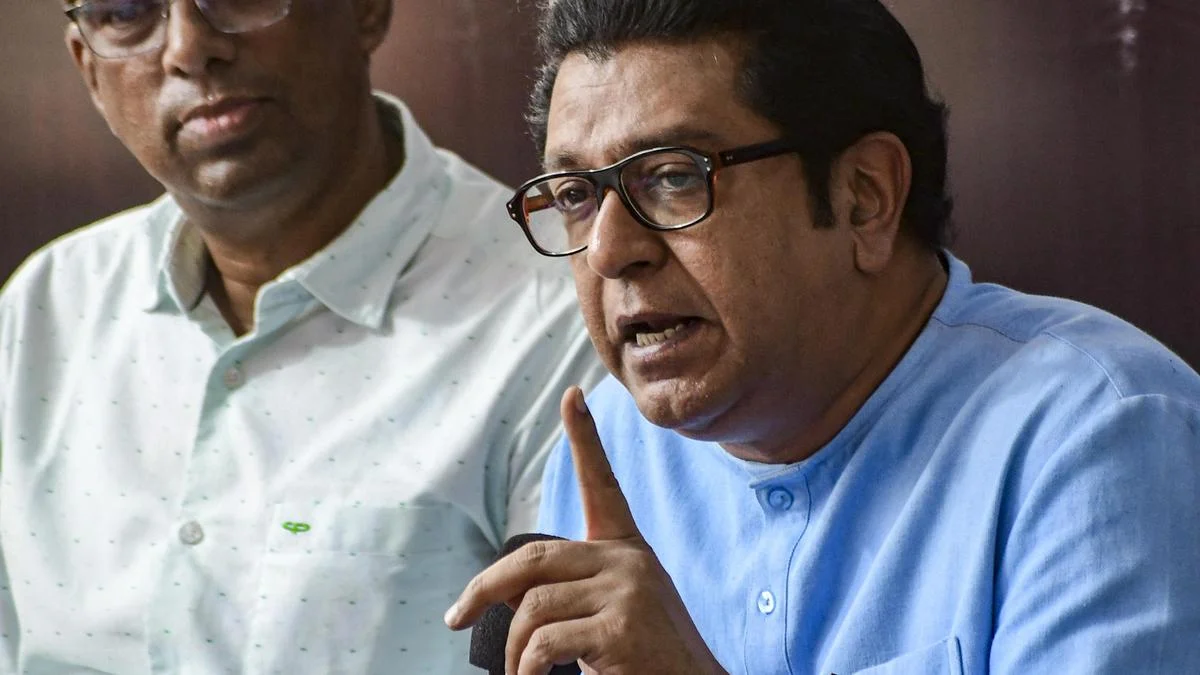
MUMBAI — Maharashtra Navnirman Sena (MNS) founder and chief Raj Thackeray removed a controversial documentary post linking Prime Minister Narendra Modi with industrialist Gautam Adani from his official social media handles following a direct request from the Mumbai Police Commissioner. Despite deleting the video, the MNS leader asserted that his political campaign against corporate monopolies and the concentration of national assets will continue unabated, declaring that the documentary had already achieved its primary goal of igniting nationwide public discourse.
The post, originally shared on platform X (formerly Twitter) on October 22, featured a documentary produced by tech entrepreneur and Hotmail co-founder Sabeer Bhatia. The video examined the long-standing economic relationship between PM Modi and the Adani Group while raising sharp questions regarding market concentration across key industrial sectors in India. Before its removal, the video accumulated over 4.8 million views on X alone, alongside extensive circulation on Facebook, YouTube, and WhatsApp groups across Maharashtra and the broader national landscape.
Main Facts: Digital Intervention and Political Resistance
The deletion of the high-profile video highlights growing tensions at the intersection of political messaging, digital platform governance, and law enforcement in Maharashtra. According to a detailed multi-paragraph statement issued by Mr. Thackeray on October 25, the intervention came directly from top law enforcement officials in Mumbai.
While acknowledging that the request to take down the post came from Mumbai Police Commissioner, Mr. Thackeray emphasized that his decision to comply was motivated by institutional respect for the state police force rather than political intimidation or a reversal of his ideological stance.
+-----------------------------------------------------------------------------------+
|                            KEY DEVELOPMENTS AT A GLANCE                           |
+-----------------------------------------------------------------------------------+
| • MNS Chief Raj Thackeray takes down viral documentary post on PM Modi & Adani.    |
| • Action taken following a direct appeal by the Mumbai Police Commissioner.       |
| • Video created by Sabeer Bhatia crossed 4.8 million views on X before removal.   |
| • Thackeray reiterates stance against state-backed corporate monopolies.           |
| • New allegations raised regarding transfer of Bhimashankar forest land.          |
+-----------------------------------------------------------------------------------+
Key elements of Mr. Thackeray’s public clarification include:
Compliance Without Compromise: The MNS chief stated that he deleted the video solely to honor the administrative request of the Mumbai Police, which he described as one of the country’s most disciplined and efficient police forces. However, he warned critics not to mistake compliance for defeat, stating, "The fire has already been lit."
Policy Critique vs. Personal Animus: Clarifying his position on big business, Mr. Thackeray asserted that his opposition is not targeted at individual wealth creators or specific conglomerates per se, but rather at state policies that foster monopolistic economic structures favoring select corporate entities over broad-based market competition.
Expansion of Economic Charges: Beyond the Adani issue, Mr. Thackeray extended his critique to include broader asset allocation decisions in Maharashtra, alleging that state forest reserves in Bhimashankar were being improperly diverted to the Gujarat-based Torrent Group.
Chronology: The Journey from Shivtirth to the Digital Takedown
The controversy surrounding Mr. Thackeray’s social media post is part of an evolving political campaign against corporate asset concentration that the MNS leader initiated earlier in the year.
+-----------------------------------------------------------------------------------+
|                              CHRONOLOGY OF EVENTS                                 |
+-----------------------------------------------------------------------------------+
|  Jan 2026    | MNS Shivtirth Rally                                                |
|              | Raj Thackeray delivers detailed presentation at Shivaji Park       |
|              | criticizing corporate concentration and central economic policies. |
+--------------+--------------------------------------------------------------------+
|  Oct 22, 2026| Documentary Shared Online                                          |
|              | Thackeray posts Sabeer Bhatia's documentary on X and Facebook;     |
|              | video rapidly garners millions of views within 72 hours.           |
+--------------+--------------------------------------------------------------------+
|  Oct 24, 2026| Police Intervention                                                |
|              | Mumbai Police Commissioner contacts MNS leadership, requesting      |
|              | deletion of the content citing public order & administrative reasons. |
+--------------+--------------------------------------------------------------------+
|  Oct 25, 2026| Content Deletion & Statement                                       |
|              | Video is taken down; Thackeray publishes statement reiterating     |
|              | opposition to monopolies and levelling new land-transfer charges.  |
+-----------------------------------------------------------------------------------+
1. The January 2026 Shivtirth Address
The groundwork for the current dispute was laid in January 2026 during a large-scale public rally at Shivtirth (Shivaji Park) in Mumbai. Addressing thousands of party workers, Mr. Thackeray delivered an audio-visual presentation outlining the rapid expansion of the Adani Group across key infrastructure sectors—including port management, airport operations, power distribution, renewable energy, and urban redevelopment projects such as Dharavi.
He argued that excessive market share in crucial public utilities by a single corporate group creates systemic national risks and diminishes economic opportunities for regional businesses.
2. Digital Amplification via Sabeer Bhatia’s Documentary
In October 2026, entrepreneur Sabeer Bhatia released a short-form digital documentary compiling public records, news archives, and economic data detailing the post-2014 growth of select industrial houses in India. The documentary incorporated key data points, charts, and video clips from Mr. Thackeray’s January Shivtirth address.
Recognizing the overlap between the documentary’s findings and his party’s stance, Mr. Thackeray published the video on his social media handles on October 22, propelling the content into national digital trends.
3. Rapid Virality and Law Enforcement Escalation
Between October 22 and October 25, the video experienced exponential distribution. On platform X alone, view counters exceeded 4.8 million before the post was removed.
As the video sparked intense political debates across media platforms, senior officials in the Maharashtra government and law enforcement monitored the situation. By October 24, high-level administrative discussions resulted in the Mumbai Police Commissioner contacting Mr. Thackeray to request the immediate takedown of the media file, citing concerns regarding political volatility and public order.
Supporting Data: Virality Metrics and Economic Claims
The digital impact of the deleted documentary highlights the growing role of online video campaigns in shaping political rhetoric in Maharashtra.
The Economic Argument: Monopolies vs. Pluralistic Growth
In his follow-up statement, Mr. Thackeray framed his critique in free-market economic terms rather than traditional left-wing anti-capitalist ideology. He maintained that healthy market economies depend on robust competition, regulatory neutrality, and level playing fields for middle-tier enterprises.
"A Prime Minister should act as a custodian for the entire industrial ecosystem. The government ought to encourage dozens of competitive business leaders across various states to expand their footprints, generate mass employment, and build global footprints. When state policy appears customized to benefit a single conglomerate, it undermines investor confidence and restricts the growth of regional entrepreneurs," Mr. Thackeray argued.
To reinforce his point, the MNS leader noted that while he removed the third-party documentary out of deference to the police, his own primary presentation from the January Shivtirth rally remains publicly accessible across his official channels.
The Bhimashankar Forest Land Controversy
Expanding his critique beyond national infrastructure projects, Mr. Thackeray introduced fresh allegations targeting land allocation decisions within Maharashtra. He explicitly accused central and state authorities of diverting ecological assets to corporate bodies at the expense of regional governance.
+-----------------------------------------------------------------------------------+
|               BHIMASHANKAR FOREST LAND TRANSFER ALLEGATIONS                       |
+-----------------------------------------------------------------------------------+
| • Location: Bhimashankar Wildlife Sanctuary / Forest Zone (Pune/Thane border).    |
| • Area Involved: Several hundred hectares of ecologically sensitive land.         |
| • Beneficiary Alleged: Torrent Group (Gujarat-headquartered conglomerate).         |
| • Key Grievance: Lack of legislative scrutiny and local leadership silence.       |
+-----------------------------------------------------------------------------------+
Allegations of Ecological and Resource Transfer
Specifically, Mr. Thackeray claimed that the Union Ministry of Environment, Forest and Climate Change, in coordination with state departments, directed the transfer of several hundred hectares of forest land in the environmentally sensitive Bhimashankar region—home to one of the twelve sacred Jyotirlingas and rich biodiversity—to the Gujarat-based Torrent Group for industrial and infrastructure development.
He directed sharp criticism toward Maharashtra’s cross-party elected representatives, questioning why local Members of Parliament (MPs), Members of Legislative Assembly (MLAs), and state ministers remained silent regarding the transfer of natural resources out of the state’s public trust.
"Political leaders across parties routinely invoke the legacy of Chhatrapati Shivaji Maharaj to rally voters, yet they remain silent when Maharashtra’s land, natural forests, and economic opportunities are quietly transferred to outside private interests," Mr. Thackeray stated.
Official Responses and Political Reactions
The police request and subsequent video removal have triggered a wave of political reactions across Maharashtra’s political spectrum.
+-----------------------------------------------------------------------------------+
|                          STAKEHOLDER POSITIONS & RESPONSES                        |
+-----------------------------------------------------------------------------------+
|  Actor                  | Position / Main Argument                                |
+-------------------------+---------------------------------------------------------+
|  MNS (Raj Thackeray)    | Complied with police request; vows to continue campaign |
|                         | against monopolies and state land transfers.             |
+-------------------------+---------------------------------------------------------+
|  Mumbai Police          | Maintained that request was made to preserve public     |
|                         | order and prevent political escalation.                 |
+-------------------------+---------------------------------------------------------+
|  Ruling Alliance        | Rejected allegations; emphasized that investments drive |
|  (BJP / Eknath Shinde)  | state growth and infrastructure development.            |
+-------------------------+---------------------------------------------------------+
|  Opposition (MVA)       | Supported critique of central corporate patronage;      |
|                         | questioned police involvement in political content.    |
+-----------------------------------------------------------------------------------+
Law Enforcement Perspective
While the Mumbai Police Department did not issue a detailed press release, senior administrative sources confirmed that the request conveyed to Mr. Thackeray was a preemptive measure intended to maintain public order and prevent potential security escalations. Officials maintained that law enforcement routinely monitors high-impact social media content that could provoke public discord or volatile political demonstrations.
Ruling Coalition Defense
Spokespersons for the ruling coalition—comprising the Bharatiya Janata Party (BJP), the Shiv Sena (Eknath Shinde faction), and the National Congress Party (Ajit Pawar faction)—rejected Mr. Thackeray’s allegations of state-sponsored monopolization.
Government representatives argued that mega-infrastructure projects, including port modernization, highways, and energy distribution networks, are awarded through competitive bidding procedures. They contended that industrial investments from major corporate houses, regardless of their headquarters, are essential for modernizing Maharashtra’s infrastructure and generating employment.
Opposition Alignment
Opposition parties within the Maha Vikas Aghadi (MVA)—including the Shiv Sena (Uddhav Balasaheb Thackeray), Congress, and NCP (Sharadchandra Pawar)—expressed cautious support for Mr. Thackeray’s criticisms regarding corporate concentration, while questioning the state’s use of law enforcement agencies to request the deletion of digital political commentary.
Implications: Political Realignments and Federal Dynamics
The dispute over the deleted video carries political and regulatory implications for Maharashtra’s political environment and broader national discourse.
+-----------------------------------------------------------------------------------+
|                                BROADER IMPLICATIONS                               |
+-----------------------------------------------------------------------------------+
|  1. MNS Ideological Position                                                      |
|     • Shifts toward a dual platform combining regional identity politics with       |
|       explicit criticism of centralized corporate dominance.                      |
|                                                                                   |
|  2. Digital Content Regulation & Police Intervention                              |
|     • Highlights growing reliance on informal law enforcement channels to         |
|       manage viral political content without formal censorship orders.            |
|                                                                                   |
|  3. Regional Resource Governance                                                  |
|     • Re-ignites debates over state autonomy, land use policies, and local       |
|       economic interests in federal resource allocation.                          |
+-----------------------------------------------------------------------------------+
1. Recalibration of MNS Political Strategy
Raj Thackeray’s focus on market concentration and natural resource allocation marks a strategic expansion of the MNS platform. By combining traditional son-of-the-soil identity politics (Marathi Asmita) with economic critiques of central government policy, the MNS is seeking to position itself as a defender of regional economic self-determination.
2. Digital Governance Precedents
The informal intervention by police leadership to request content takedowns highlights evolving administrative tactics for managing viral digital messaging. Rather than pursuing formal judicial blocking orders under Section 69A of the Information Technology Act, authorities increasingly utilize direct dialogue with public figures to mitigate potential public order risks, raising ongoing questions regarding free expression and online political rhetoric.
3. Federalism and Regional Resource Allocation
The allegations surrounding the Bhimashankar forest land transfer add fuel to the broader debate regarding interstate economic competition and federal asset management. As states contend for private capital investments, issues regarding land acquisition, environmental clearances, and resource rights are likely to remain central to political disputes in Maharashtra and beyond.
While the documentary has been removed from Mr. Thackeray’s official accounts, the political discourse surrounding corporate concentration, digital communication, and state resource governance continues to develop rapidly across Maharashtra.
SABARKANTHA, GUJARAT — A devastating road accident turned a solemn religious pilgrimage into a scene of chaos and violence on Monday evening, September 21, 2026. […]
In a major shift for the Indian ultra-premium smartphone market, Samsung’s flagship Galaxy S26 Ultra has received a substantial price reduction on Amazon India. Unlike […]
NEW DELHI — The national capital has been placed under an unprecedented security lockdown, resembling a virtual fortress, as the Cockroach Janta Party (CJP) prepares […]