SABARKANTHA, GUJARAT — A devastating road accident turned a solemn religious pilgrimage into a scene of chaos and violence on Monday evening, September 21, 2026. A speeding Sports Utility Vehicle (SUV) allegedly rammed into a group of pedestrian pilgrims (padyatris) and a roadside service stall near Himmatnagar, leaving one person dead and eleven others seriously injured.
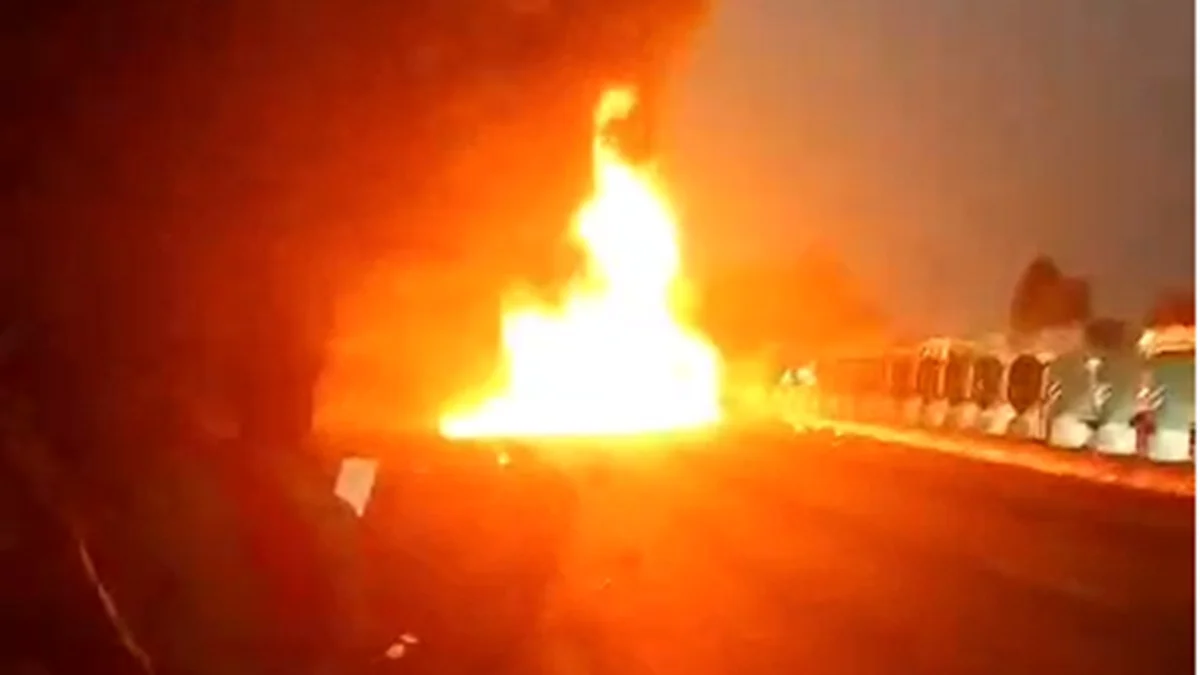
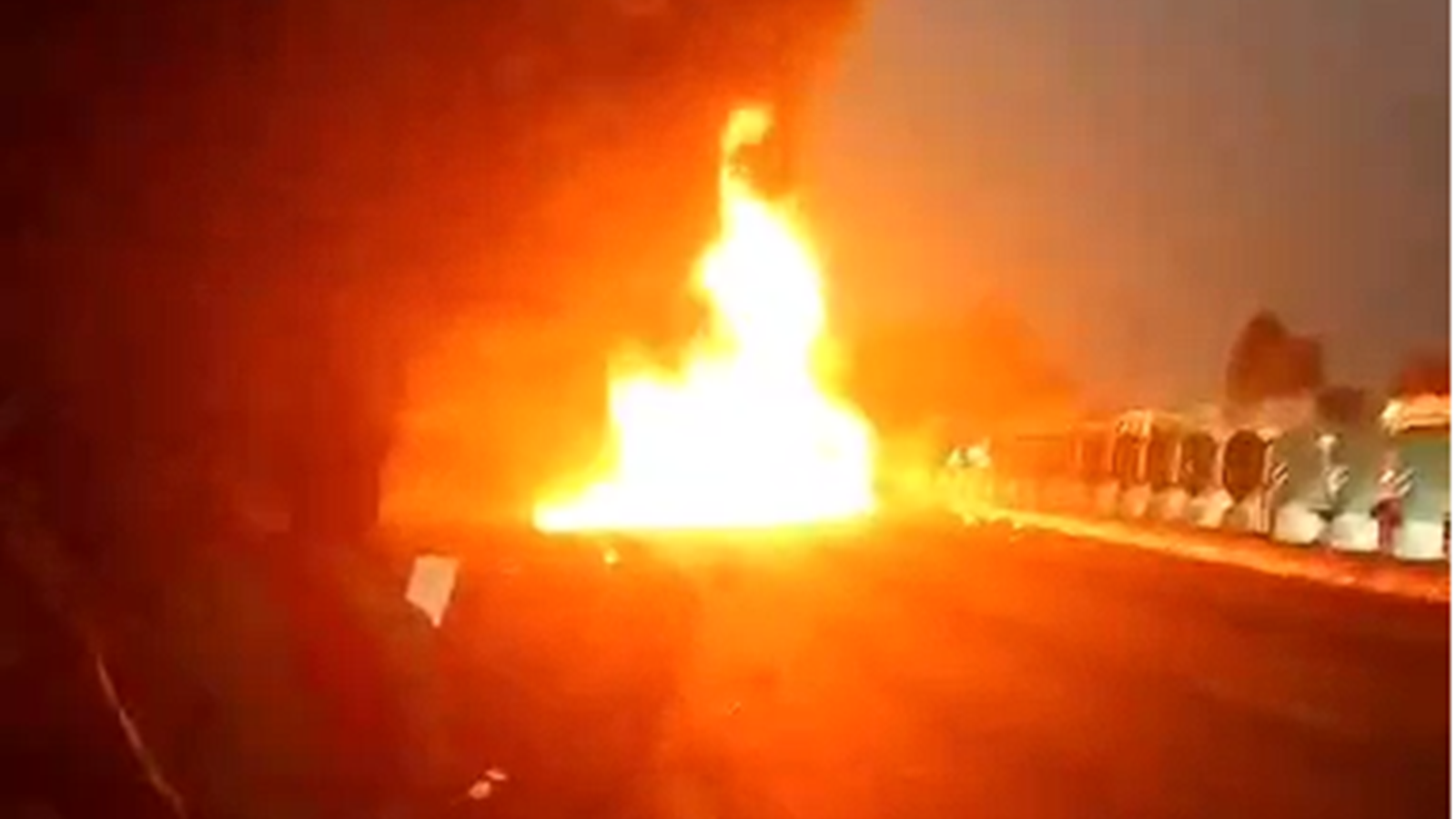
The incident, which occurred near Dolgadh village in the Sabarkantha district, triggered immediate outrage among onlookers and fellow devotees. In the volatile aftermath, an angry crowd cornered the driver, manhandled him, and set the offending SUV ablaze. Police authorities intervened to rescue the driver from the mob, detaining him for interrogation, while emergency services rushed the injured to a nearby state-run hospital.
Chronology of the Incident: A Sudden Turn into Chaos
The tragedy unfolded at approximately 6:30 PM on Monday, September 21, near Dolgadh, a small village situated roughly 11 kilometers north of the district headquarters of Himmatnagar. The village lies directly along the state highway leading to Ambaji, a major temple town located another 93 kilometers to the north.
During this time of the year, the highway is heavily populated by thousands of pilgrims walking on foot to attend the annual Bhadarvi Poonam fair. To cater to these travelers, local residents and volunteers set up temporary stalls along the roadside to offer water, tea, snacks, and resting areas.
[6:30 PM: SUV makes erratic U-turn near Dolgadh]
       │
       ▼
[SUV accelerates into roadside tea stall & pilgrims]
       │
       ▼
[Impact: Bharat Vaghela killed; 11 others injured]
       │
       ▼
[Onlookers intervene: Driver apprehended & manhandled]
       │
       ▼
[Mob sets SUV on fire; emergency services alerted]
       │
       ▼
[Police arrive: Driver detained; injured rushed to GMERS Hospital]
According to eyewitness accounts and police reports, the sequence of events was rapid and catastrophic:
- The Setup: Bharat Vaghela, a local resident, had established a roadside tea and refreshment stall on the highway shoulder to serve the passing pilgrims. A group of devotees had gathered near his stall to rest and rehydrate.
- The Maneuver: Witnesses reported seeing a fast-moving SUV perform an abrupt and erratic U-turn on the highway.
- The Impact: Instead of stabilizing after the turn, the vehicle accelerated sharply toward the shoulder of the road, plowing directly into Vaghela’s stall and the gathered crowd. The impact shattered the temporary structure and threw several people onto the asphalt.
- The Aftermath: Bharat Vaghela sustained fatal injuries and died at the scene. Eleven others, including pilgrims, local volunteers, and bystanders, suffered moderate to severe injuries.
- The Riot: Shock turned to anger as hundreds of nearby pilgrims and villagers rushed to the crash site. The driver was pulled from the vehicle and assaulted by the crowd. Moments later, members of the mob doused the SUV in fuel and set it on fire, sending thick plumes of black smoke into the evening sky.
Context and Data: The Bhadarvi Poonam Fair and Pedestrian Vulnerability
The accident highlights the recurring safety challenges associated with mass religious pilgrimages in India, particularly those involving long-distance pedestrian travel (padyatra).
The Significance of the Ambaji Pilgrimage
The Ambaji temple, located in the Aravalli hills of Banaskantha district, is one of the 51 revered Shakti Peethas of Hinduism. The annual Bhadarvi Poonam fair, scheduled from September 20 to September 26, 2026, is the largest festival celebrated at the shrine.
| Metric / Detail | Information |
|---|---|
| Festival Period | September 20 – 26, 2026 |
| Primary Route | State Highway via Himmatnagar to Ambaji (approx. 104 km) |
| Estimated Footfall | Over 1.5 to 2 million devotees annually |
| Primary Mode of Travel | On foot (padyatris) from various parts of Gujarat and Rajasthan |
| Infrastructure Support | Temporary seva camps (service stalls) along highway shoulders |
During this seven-day period, major highways leading to Ambaji are overwhelmed by a massive influx of pedestrian devotees. While the government frequently issues traffic advisories and deploys local police to manage the crowds, the mixing of high-speed vehicular traffic with thousands of walking pilgrims on undivided state highways remains a major safety hazard.
Road Safety Statistics and Pedestrian Risks
Pedestrians remain the most vulnerable road users in India. According to data from the Ministry of Road Transport and Highways (MoRTH):
- Pedestrians account for over 17% to 20% of all road traffic fatalities in India annually.
- State highways, which often lack physical barriers, dedicated pedestrian lanes, or adequate street lighting, are the sites of more than 25% of these fatal accidents.
- During major religious festivals—such as the Ambaji Bhadarvi Poonam, the Dakor pilgrimages, or the Kanwar Yatra in northern India—pedestrian casualty rates spike significantly due to driver fatigue, speeding, and the lack of segregated transit corridors.
Official Responses and the Judicial Process
Following the incident, local administrative and police machinery scrambled to restore order on the state highway and ensure medical treatment for the victims.
Medical Response and Casualties
Emergency medical services quickly arrived at the scene to transport the injured. Sabarkantha Superintendent of Police (SP) Parthrajsinh Gohil confirmed the casualty figures and the status of the injured.
"The incident took place at 6:30 PM near Dolgadh outside Himmatnagar. As many as 11 persons, including pilgrims, local residents, and volunteers, were injured and have been admitted to GMERS Himmatnagar Civil Hospital."
— SP Parthrajsinh Gohil, Sabarkantha
Hospital administrators at the GMERS Civil Hospital reported that while some patients suffered fractures and lacerations, most are currently in stable condition, though a few remain under close observation for internal trauma.
Police Investigation and Legal Actions
The police have launched a two-pronged investigation focusing on both the fatal accident and the subsequent arson by the mob.
- Investigation into the Driver: The driver of the SUV, who is also a local resident of the area, was rescued from the mob by police personnel. He has been detained and is undergoing rigorous interrogation. Police are conducting blood alcohol tests to determine if he was driving under the influence of alcohol or narcotics. Investigators are also looking into whether mechanical failure or distracted driving caused the erratic U-turn and subsequent acceleration.
- Investigation into Arson and Riotous Behavior: While acknowledging the public’s grief and anger, SP Gohil emphasized that vigilante justice would not be tolerated. A separate First Information Report (FIR) is expected to be registered against unidentified individuals in the crowd for rioting, assaulting the driver, and destroying public/private property by setting the SUV on fire.
Broader Implications: Highway Safety, Traffic Management, and Vigilante Justice
This tragic incident in Sabarkantha underscores several systemic issues that continue to plague India’s transport infrastructure and social fabric.
                    ┌──────────────────────────────┐
                    │  Sabarkantha Highway Tragedy │
                    └──────────────┬───────────────┘
                                   │
         ┌─────────────────────────┼────────────────────────┐
         ▼                         ▼                        ▼
┌─────────────────┐       ┌─────────────────┐      ┌─────────────────┐
│ Pedestrian Risk │       │ Vigilante Arson │      │ Admin Failures  │
│ No segregated   │       │ Mob violence    │      │ Poor seasonal   │
│ walking paths   │       │ overrides law   │      │ traffic control │
│ on highways.    │       │ enforcement.    │      │ & speed limits. │
└─────────────────┘       └─────────────────┘      └─────────────────┘
1. The Urgent Need for Segregated Pilgrim Corridors
The mixing of heavy, high-speed commercial and private vehicles with thousands of foot pilgrims is a design flaw in regional highway management. During high-density festivals like the Bhadarvi Poonam, transport departments must implement:
- Dedicated Pedestrian Lanes: Temporary physical barricading (using plastic water barriers or rope lines) along the extreme left of highways to shield padyatris from fast-moving traffic.
- Temporary Speed Restrictions: Enforcement of strict speed limits (e.g., 30–40 km/h) near villages and service camps, monitored via speed-detection cameras and highway patrol vehicles.
- High-Visibility Gear: Distribution of reflective bands or vests to pilgrims walking during twilight and night hours, when visibility drops sharply.
2. The Challenge of Vigilante Justice and Mob Violence
The immediate reaction of the crowd—manhandling the driver and burning the vehicle—reflects a troubling and persistent societal trend. When severe accidents occur on Indian roads, onlookers frequently bypass the legal system, resorting to violence out of a lack of trust in the swiftness of judicial processes or due to heightened emotional distress.
Such actions not only endanger the lives of suspects (who are entitled to due process) but also destroy critical forensic evidence, such as vehicle brake lines or electronic control modules, which investigators need to determine the technical cause of an accident.
3. Administrative Accountability during Festive Seasons
While local civic bodies and religious trusts deserve credit for organizing food, medical aid, and shelter for millions of devotees, physical safety on the approach roads must become a primary administrative priority. The Gujarat State Road Transport Corporation (GSRTC), regional transport offices (RTOs), and district police forces must collaborate to create comprehensive traffic diversion plans, diverting heavy multi-axle trucks away from primary pilgrimage routes during the peak days of the fair.
As the Bhadarvi Poonam fair continues through September 26, the Sabarkantha district administration has promised increased police presence and stricter speed enforcement along the Himmatnagar-Ambaji highway to prevent further loss of life. Meanwhile, the family of Bharat Vaghela and the injured pilgrims await both justice and a systemic solution to ensure that no more lives are lost on the path of devotion.