
In the heart of Rome, the Column of Marcus Aurelius stands as a weathered testament to imperial ambition. Reaching nearly 100 feet into the Italian sky, the monument is etched with the frantic energy of the Marcomannic Wars—scenes of river crossings, siege warfare, and the relentless expansion of an empire. It was intended as a permanent celebration of a leader’s achievements, a literal stone record of a life defined by victory.
Yet, there is a biting irony embedded in its marble. Marcus Aurelius, the philosopher-emperor who penned the Meditations, never lived to see the monument’s completion. Centuries later, Pope Sixtus V reclaimed the site, placing a statue of Saint Paul atop the pillar and commissioning an inscription that mistakenly attributed the victories to the wrong emperor. For the modern observer, the column serves as a profound meditation on the futility of external legacy.
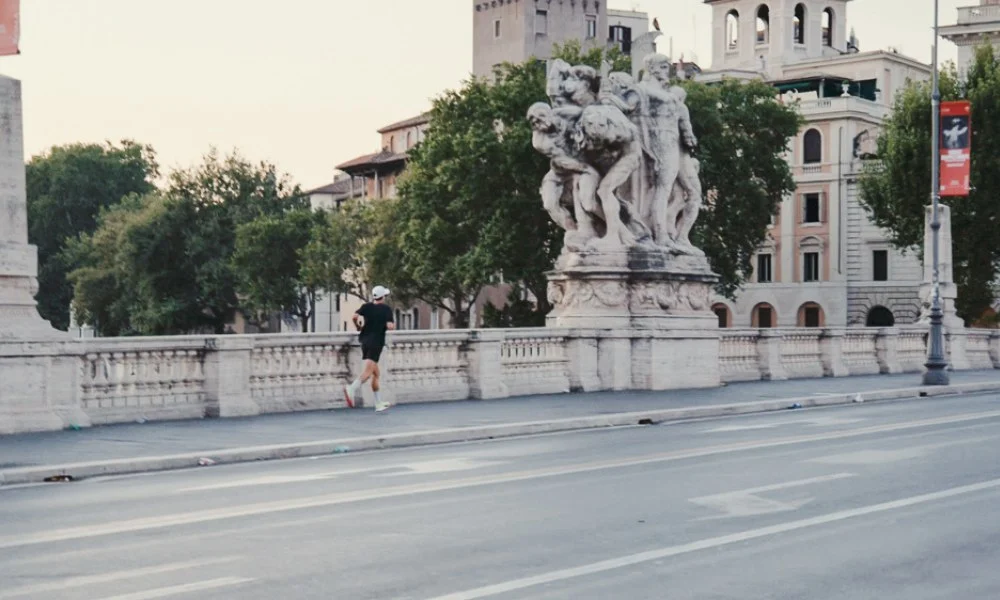
It was this intersection of history, philosophy, and physical endurance that prompted author and thinker Ryan Holiday to undertake an unconventional challenge: a 50-kilometer (31-mile) self-directed run through the historic streets of Rome. This was not a race with a starting gun, a medal, or an audience. It was an exercise in Stoic endurance, a deliberate confrontation with one’s own limits, and a search for a victory that exists solely within the self.
The Philosophy of the "Hard Thing"
The impetus for this grueling journey was not a desire for social validation or competitive accolades. In an era where physical fitness is often gamified—tracked by apps, validated by medals, and posted for public consumption—Holiday’s run stood in stark contrast.
"Do we do hard things because we want to impress people?" Holiday asks. "Because we want to beat other people? Because we want a medal or a trophy? As Marcus’s victory column is a pretty good reminder, doing things for a trophy is a terrible reason to do things."
The choice to run 50 kilometers in the blistering heat of a European summer—the hottest on record—was rooted in the Stoic belief that voluntary discomfort is a pathway to resilience. By removing the external reward, the individual is forced to confront the internal "why." This methodology mirrors the Stoic practice of premeditatio malorum (the premeditation of evils), where one prepares for difficulties before they occur, ensuring that when the "unexpected blow" lands, it does not lead to panic or moral failure.
A Chronology of the 50K Journey
The run was mapped as a pilgrimage through sites of profound historical and philosophical significance. The route began at the Column of Marcus Aurelius, proceeded toward the Campidoglio to view the equestrian statue of the Emperor, skirted the Colosseum, traversed the Circus Maximus, and ventured onto the ancient stones of the Appian Way.
The Early Miles and the Inevitable Error
The initial phase of the run was characterized by an attempt to synthesize physical exertion with historical reflection. However, the reality of the endeavor quickly asserted itself. A few kilometers after the start, a navigation error forced a one-mile detour. In a competitive race, such a mistake might have been catastrophic to the athlete’s morale. Here, it served as a practical lesson in Stoic acceptance.
"If you go into something thinking, ‘This is all the gas I have in the tank… I need everything to go right,’ you’re in a really vulnerable position," Holiday noted. Rather than succumbing to frustration, the runner corrected the course, treating the extra distance not as a failure, but as a necessary hurdle.
The Mid-Point: A Reflection on Time
At approximately the thirteen-mile mark, the runner stopped at the site traditionally identified as the tomb of Seneca. This location held personal significance, as Holiday had visited it thirteen years prior. Comparing a photograph from that distant trip to his current self, he observed the physical manifestations of time—the graying hair and the deepening lines—that usually go unnoticed in the daily mirror.
This moment highlighted the Stoic concept of time as a "vicious, unrelenting, ceaseless, almost merciless flow." Standing at the potential resting place of one of history’s greatest thinkers, he pondered the transience of human endeavor: the uncertainty of whether Seneca knew his words would endure for two millennia, or whether his grave would eventually be worn down by the indifferent passage of time.
The Turning Point and the Advice of Peers
By the 15.64-mile mark, the heat began to pose a genuine challenge. Behind schedule and battling the rising sun, the runner turned to advice he had solicited from fellow endurance athlete Luke Tuttle. Tuttle’s guidance was pivotal: "Just let it take however long it takes. You’re not gonna be glad you rushed through it."
This advice shifted the goal from time-based performance to experiential endurance. The runner began to treat the journey not as a race to be won, but as an experience to be fully inhabited.
Implications: Building the Internal Threshold
As the distance pushed past the marathon threshold, the challenge transitioned from physical to existential. The final five miles, according to the runner, were where the true "fortitude is earned."
This phase of the run drew direct inspiration from Epictetus, who taught that one must identify and utilize the resources held within. By the 29.5-mile mark, the physical limits were reached. The "graceful ideas" of finishing strong gave way to the raw reality of exhaustion. The struggle to secure water at a local restaurant, the slurred speech, and the stumbling gait were not signs of defeat, but the very markers of a challenge successfully met.
The Role of Spontaneous Support
The emotional climax of the event arrived in the final stretches. As the runner navigated the Appian Way—the same road where, thirteen years prior, he had proposed to his wife—he was joined by his nine-year-old son. This intergenerational moment transformed the solitary act of suffering into a shared experience of human connection, underscoring the idea that the purpose of doing "hard things" is often to create a stronger foundation for one’s life and family.
Analyzing the Stoic Approach to Physicality
The implications of this run extend beyond simple fitness. It provides a blueprint for how modern individuals might engage with challenge in an age of distraction.
- De-coupling Reward from Achievement: By removing the competitive element, the runner reclaimed the activity for personal growth. The "trophy" was not a piece of metal, but the expansion of his own capability.
- Radical Acceptance of Difficulty: The willingness to be lost, the willingness to be slow, and the willingness to struggle served as a training ground for handling professional and personal crises.
- The Threshold Effect: The runner noted that pushing past one’s limits raises the threshold for what is perceived as "difficult" in the future. This is the physiological equivalent of intellectual growth—by expanding the capacity for discomfort, the individual becomes more capable of enduring the inevitable pressures of a complex world.
Conclusion: The Trophy You Get to Keep
The Roman run concluded after six and a half hours, far longer than the initial projections. Yet, the length of time was ultimately irrelevant. The significance of the 50-kilometer run was found in the realization of personal capacity.
In a world obsessed with public perception and external accolades, the story of this run serves as a sobering, yet empowering, reminder. Monuments, like the Column of Marcus Aurelius, are subject to the whims of time, the errors of successors, and the erosion of history. They are external markers of status that can be repurposed, forgotten, or misattributed.
The only true "trophy"—the only victory that cannot be taken away or misinterpreted by posterity—is the quiet, internal knowledge of what one is capable of achieving when the path is hard, the sun is hot, and there is no one watching. As Holiday concluded, the ultimate reward for the hard thing is the self-knowledge that follows: "That was the trophy. And that one I get to keep."