Mumbai, India – In a significant move aimed at bolstering investor protection and enhancing transparency in the burgeoning Indian debt market, the Securities and Exchange Board of India (SEBI) has mandated the introduction of a new, standardised risk-o-meter for corporate bonds and other debt instruments. This innovative tool, designed to simplify the assessment of credit risk, will be prominently displayed across Online Bond Platform Providers (OBPPs), offer documents, private placement memorandums, and advertisements, empowering investors with a clearer understanding of potential default risks.
The regulatory directive, issued via a circular on October 7, 2023, outlines a comprehensive framework that translates complex credit ratings into an intuitive, six-level, colour-coded system. While the circular has been released, the provisions are slated to come into force on November 21, 2026, granting the industry a substantial lead time to integrate these new requirements. This phased implementation underscores SEBI’s commitment to a smooth transition, allowing all stakeholders – from individual investors to large financial institutions – ample time to adapt to the enhanced disclosure regime.
For the growing cohort of retail investors increasingly venturing into corporate debt, this risk-o-meter is poised to act as a crucial first filter, akin to a traffic light system, guiding their investment decisions by clearly signaling the creditworthiness of various instruments. Experts believe this initiative will not only foster greater confidence but also encourage more informed participation in a segment of the market that, while offering attractive yields, inherently carries varying degrees of risk.
Understanding the Regulatory Timeline and Context
The journey towards a more transparent debt market has been a consistent theme for SEBI. The October 7, 2023, circular marks another pivotal step in this ongoing evolution. While the announcement provides clarity on the upcoming changes, the effective date of November 21, 2026, indicates a deliberate and measured approach to implementation. This three-year window is critical for Online Bond Platform Providers (OBPPs) and other market participants to upgrade their technological infrastructure, modify their disclosure practices, and conduct necessary investor awareness campaigns.
SEBI’s earlier efforts, such as the introduction of regulations for OBPPs themselves, have focused on creating a structured and regulated environment for bond trading. The risk-o-meter is a natural extension of these efforts, specifically targeting the standardization of risk communication. By providing a common language for credit risk, SEBI aims to eliminate ambiguities and reduce the information asymmetry that often disadvantages retail investors. This long lead time suggests SEBI’s understanding of the complexities involved in such a widespread systemic change, ensuring that when the meter finally goes live, the market is fully prepared to embrace it. It also allows for potential feedback and fine-tuning of the framework if practical challenges arise during the preparatory phase.
The Six-Level Risk-o-Meter: Decoding Credit Risk
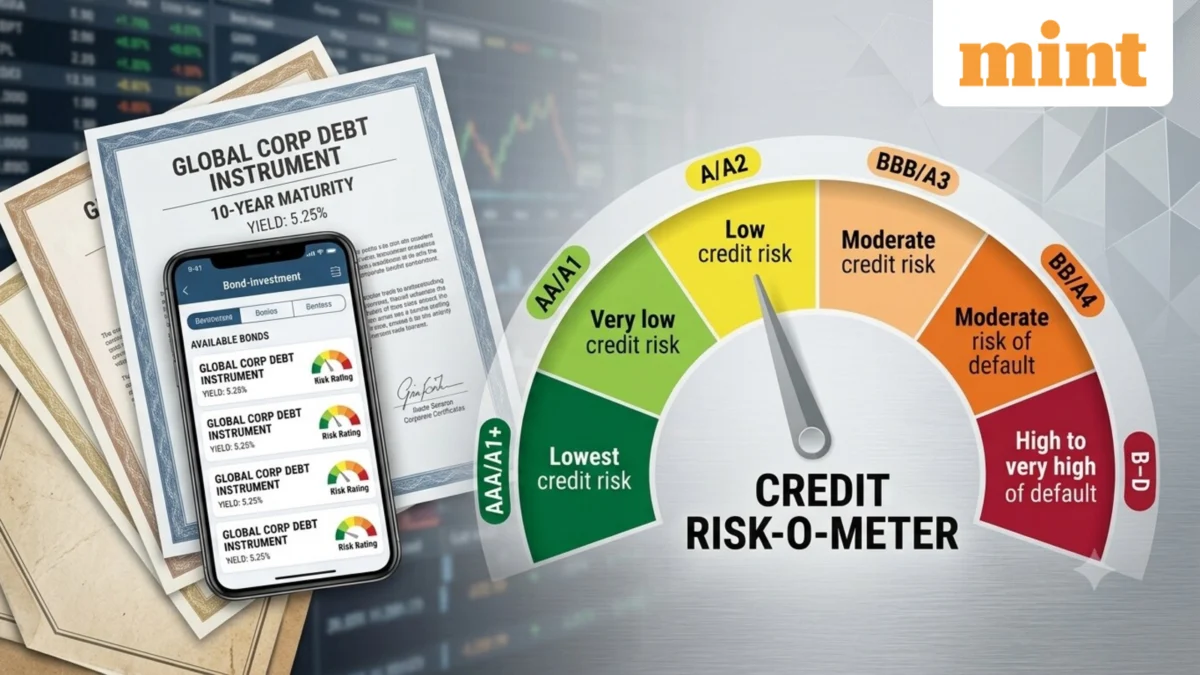
At the heart of SEBI’s new mandate is a meticulously designed risk-o-meter, translating the intricate nuances of credit ratings into a readily digestible format. This system categorises credit risk into six distinct, colour-coded levels, ranging from the lowest credit risk to a high to very high risk of default.
Here’s a detailed breakdown of the risk-o-meter levels:
| Risk-o-Meter Level | Credit Rating Range | Short-Term Rating Symbols | Implication |
|---|---|---|---|
| Lowest Credit Risk | AAA | A1+ | Green Zone: Represents the highest credit quality and lowest expectation of default. Issuers in this category possess exceptional financial strength and the strongest capacity to meet their financial commitments. Considered highly stable and secure. |
| Very Low Credit Risk | AA+, AA, AA− | A1 | Light Green Zone: Denotes a very high credit quality with a very low expectation of default. While slightly below AAA, these issuers maintain very strong financial health and a robust capacity to repay obligations. |
| Low Credit Risk | A+, A, A− | A2 | Yellow-Green Zone: Indicates strong credit quality and a low expectation of default. Issuers are considered financially sound, though they may be more susceptible to adverse economic conditions than those in higher categories. |
| Moderate Credit Risk | BBB+, BBB, BBB− | A3 | Orange Zone: Suggests adequate credit quality and a moderate expectation of default. Issuers have a satisfactory capacity to meet financial commitments, but this capacity may be more vulnerable to changes in economic or business circumstances. These are often referred to as "investment grade." |
| Moderate Risk of Default | BB+, BB, BB− | A4 | Light Red Zone: Signifies speculative credit quality and a moderate likelihood of default. Issuers may face financial stress, and their ability to meet obligations is uncertain, particularly under adverse conditions. These are considered "non-investment grade" or "junk bonds." |
| High to Very High Risk of Default | B+, B, B−, C+, C, C−, D | A4, D | Red Zone: Represents poor credit quality with a high to very high expectation of default. Issuers are either currently in default (D) or are highly vulnerable to default. Investment in these instruments carries substantial risk and is generally suited only for sophisticated investors willing to take on extreme risk for potentially higher returns. |
Source: SEBI
As Vishal Goenka, Co-Founder of IndiaBonds, aptly describes it, the risk-o-meter functions like a "traffic light for the credit risk of a bond." This intuitive visual aid simplifies complex financial jargon into easily understandable signals. Nishchay Nath, Founder & CEO of BondScanner, further clarifies that "for retail investors, the easiest way to read it is as a credit-risk ladder, not a recommendation to buy or avoid a bond." It serves as an initial filtering mechanism, providing a quick snapshot of the inherent credit risk before delving deeper into other investment considerations.
Beyond the colour-coded meter, SEBI has mandated additional crucial disclosures. Below the risk-o-meter, issuers and OBPPs must clearly display the name of the credit rating agency (CRA) and the bond’s actual credit rating. Furthermore, if a bond is unsecured, the word "unsecured" must be prominently shown in bold red text, drawing immediate attention to the absence of collateral backing the investment.
The dynamic nature of credit ratings is also addressed. OBPPs are required to communicate any rating changes within 24 hours of receiving the update from the CRA. This ensures that investors always have access to the most current risk assessment. The meter also accounts for short-term ratings (such as A1+, A1, A2, A3, and A4), which specifically indicate an issuer’s ability to meet debt obligations maturing within one year.
However, experts caution that while indispensable, the risk-o-meter is not the sole determinant of investment suitability. As Nath emphasizes, "A rating only indicates the issuer’s ability to repay. It does not tell investors whether a bond is attractive at its current price or yield. A lower-rated bond may offer a higher return to compensate for higher credit risk. Investors should therefore also assess the issuer’s financial position, maturity, security structure and liquidity." This underscores the need for comprehensive due diligence beyond the meter’s immediate visual cue.
Official Responses and Expert Perspectives
While SEBI has not issued a direct statement specifically on the public reception of the risk-o-meter beyond the circular, its intent is clear: to democratise access to the bond market while simultaneously fortifying investor safeguards. The regulator’s implied stance is one of proactive governance, aiming to align the Indian debt market with global best practices in transparency and risk disclosure. This move is consistent with SEBI’s broader mandate to protect investor interests and promote the development of a fair and efficient securities market.
Industry experts have largely welcomed the initiative, viewing it as a critical step towards enhancing retail participation in the corporate bond market.
Vishal Goenka from IndiaBonds draws a parallel with an existing tool: "The format is familiar, but the purpose is narrower." He notes that unlike the mutual fund risk-o-meter, which reflects the overall risk profile of an entire scheme (encompassing market, credit, and liquidity risks), the bond risk-o-meter specifically targets credit risk – the likelihood of the issuer defaulting on its obligations. This focused approach provides granular clarity on a single, yet paramount, risk factor. Goenka advises investors to use it as a "first filter," subsequently examining three key aspects: the bond’s maturity against their investment horizon, the detailed rating displayed below the meter, and whether the bond is secured or unsecured. For retail investors seeking steady income, he recommends focusing on "AAA and AA-rated bonds as generally the lower-credit-risk segment," while acknowledging that "A-rated bonds can offer additional yield with higher risk."
Nishchay Nath of BondScanner reinforces the meter’s role as an informative tool rather than a prescriptive one. He highlights that while the risk-o-meter helps assess credit risk, a holistic evaluation requires considering "the issuer, yield, maturity, structure, and liquidity" of the bond. Nath also provides valuable insight into the "Issuer Not Cooperating" (INC) rating, which SEBI mandates to be displayed in a specified manner on the risk-o-meter. This tag signifies that the credit rating agency (CRA) has not received the necessary information or cooperation to properly assess the issuer. Nath advises, "Investors should treat it as a reason to pause before considering this bond." Goenka echoes this sentiment, recommending investors "prefer transparent issuers." If an investor still considers an INC-tagged bond, he suggests checking "the issuer’s latest financial results and exchange disclosures, review debenture trustee reports, and look for any history of payment delays." This counsel underscores the paramount importance of investor due diligence, even with enhanced regulatory disclosures.
The Spectrum of Debt Instruments Under the Meter
SEBI’s circular specifies that the risk-o-meter provisions will apply to a broad array of debt instruments, both listed and proposed-to-be-listed. This includes issuances of:
- Non-Convertible Securities (NCS): Commonly known as corporate bonds, these are debt instruments that cannot be converted into equity shares. They represent the largest and most accessible segment for retail investors.
- Commercial Papers (CPs): Unsecured money market instruments issued in the form of a promissory note, primarily by corporate bodies to raise short-term funds. Due to their structure and typically larger ticket sizes, CPs are largely institutional investments.
- Securitised Debt Instruments (SDIs): Instruments representing an interest in a pool of assets, such as mortgage loans or auto loans, where the cash flows from these assets are used to repay the SDI holders.
- Security Receipts (SRs): Instruments issued by Asset Reconstruction Companies (ARCs) to qualified buyers, representing an undivided interest in the financial assets acquired by the ARC. These are also largely institutional due to their complex structure.
- Structured Debt/Market-Linked Debentures (MLDs): Debt instruments where the returns are linked to the performance of an underlying market index, equity, or other assets. These are often complex and primarily catered to institutional or sophisticated investors.
These provisions cover instruments issued through both public issues and private placements, ensuring comprehensive coverage across the market.
Goenka points out that "Among the instruments covered, NCS or corporate bonds are the most accessible to retail investors, particularly as face values move towards ₹10,000." This accessibility, combined with the risk-o-meter, is expected to significantly benefit individual investors. He adds that "Bonds from PSUs, banks and top-tier corporates generally sit in the lowest to very low credit risk categories, which makes them sound building blocks for a retail portfolio." Nath reiterates that while the risk-o-meter assesses credit risk, a comprehensive investment decision necessitates evaluating "the issuer, yield, maturity, structure, and liquidity."
Crucially, the regulation explicitly excludes Government Securities (G-Secs) and Sovereign Gold Bonds (SGBs) from this requirement. As Goenka explains, these instruments are "sovereign-backed," meaning they carry the implicit guarantee of the government and are considered virtually risk-free in terms of credit default. Therefore, a credit risk-o-meter would not be the relevant lens for their assessment.
Broader Implications for Investors, Platforms, and the Market
The introduction of the risk-o-meter carries far-reaching implications for various stakeholders in the Indian debt market.
For Investors: Empowered Decision-Making and Enhanced Due Diligence
The most immediate beneficiaries are retail investors. The risk-o-meter provides a readily understandable, standardized measure of credit risk, which was previously often buried in technical jargon or required interpretation of complex credit rating symbols. This newfound clarity will enable investors to:
- Filter effectively: Quickly identify bonds that align with their risk appetite.
- Understand trade-offs: Better comprehend the relationship between higher yields and higher credit risk.
- Ask informed questions: Equipped with a basic understanding, investors can engage more effectively with financial advisors or platform providers.
However, the meter is not a substitute for comprehensive due diligence. As Nath and Goenka highlighted, investors must look beyond just credit risk. Bonds inherently carry several other risks that do not necessarily move in tandem:
- Interest Rate Risk: The risk that changes in market interest rates will affect the value of a bond. When interest rates rise, bond prices generally fall, and vice versa.
- Liquidity Risk: The risk that an investor may not be able to sell a bond quickly at a fair market price due to a lack of buyers in the market. This is particularly relevant for less-traded corporate bonds.
- Reinvestment Risk: The risk that future income from a bond (e.g., coupon payments) will have to be reinvested at a lower interest rate, reducing overall returns.
- Call Risk: The risk that an issuer may redeem a callable bond before its maturity date, often when interest rates have fallen, forcing investors to reinvest at lower yields.
- Inflation Risk: The risk that inflation will erode the purchasing power of a bond’s future cash flows, reducing the real return on investment.
- Event Risk: The risk that an unexpected event (e.g., a corporate merger, regulatory change, natural disaster) could negatively impact an issuer’s creditworthiness and the bond’s value.
Therefore, while the risk-o-meter addresses credit risk, investors must still factor in these additional dimensions to make truly informed investment decisions.
For Online Bond Platform Providers (OBPPs): Operational Overhaul and Increased Accountability
For OBPPs, the mandate translates into significant operational and compliance requirements. They will need to:
- System Integration: Develop or modify their trading platforms, web portals, and mobile applications to seamlessly integrate the risk-o-meter display. This includes dynamic updating for rating changes.
- Data Accuracy and Sourcing: Ensure robust mechanisms for obtaining accurate, real-time credit ratings from CRAs and displaying associated disclosures.
- Compliance and Auditing: Establish internal processes to monitor compliance with SEBI’s circular, including the 24-hour update rule for rating changes and the clear display of "unsecured" status.
- Investor Education: Play a crucial role in educating their user base about how to interpret and effectively use the new risk-o-meter.
This move will undoubtedly increase OBPPs’ responsibility and accountability, pushing them towards higher standards of data management and investor communication.
For Issuers: Enhanced Scrutiny and Drive for Transparency
Corporate bond issuers will also feel the impact. With a transparent risk-o-meter prominently displayed, the credit quality of their debt instruments will be under greater scrutiny. This could:
- Influence Cost of Borrowing: Lower-rated entities might face higher borrowing costs as their risk profile becomes more apparent to a broader investor base.
- Incentivize Better Ratings: Companies may be further incentivized to maintain strong financial health and credit ratings to attract investors and reduce their cost of capital.
- Demand for Transparency: The "Issuer Not Cooperating" tag serves as a powerful deterrent. Issuers will have a strong incentive to cooperate fully with credit rating agencies to avoid this negative label, thereby fostering greater corporate transparency.
For the Indian Debt Market: Integrity, Growth, and Global Alignment
On a broader scale, the risk-o-meter is expected to:
- Boost Investor Confidence: By providing a clear, standardized risk assessment, SEBI aims to instill greater trust among retail investors, potentially leading to increased participation in the corporate bond market.
- Standardization: Create a uniform framework for risk disclosure across all relevant platforms and documents, eliminating disparate or confusing information.
- Market Deepening: A more confident and informed investor base could contribute to the deepening and broadening of India’s corporate bond market, a long-standing goal for regulators.
- Global Best Practices: Align the Indian debt market with global best practices in investor protection and disclosure, enhancing its appeal to international investors as well.
This regulatory intervention is not just about adding a visual tool; it’s about fundamentally reshaping how risk is perceived and communicated in the Indian debt market. By empowering investors with clearer information, SEBI is laying the groundwork for a more robust, transparent, and ultimately, more accessible bond market for all. The three-year lead time is a testament to the regulator’s vision for a well-prepared and seamlessly integrated system, setting the stage for a new era of debt investing in India come November 2026.
Disclaimer: This story is for educational purposes only. The views and recommendations made above are those of individual analysts or broking companies, and not of Mint. We advise investors to check with certified experts before making any investment decisions.