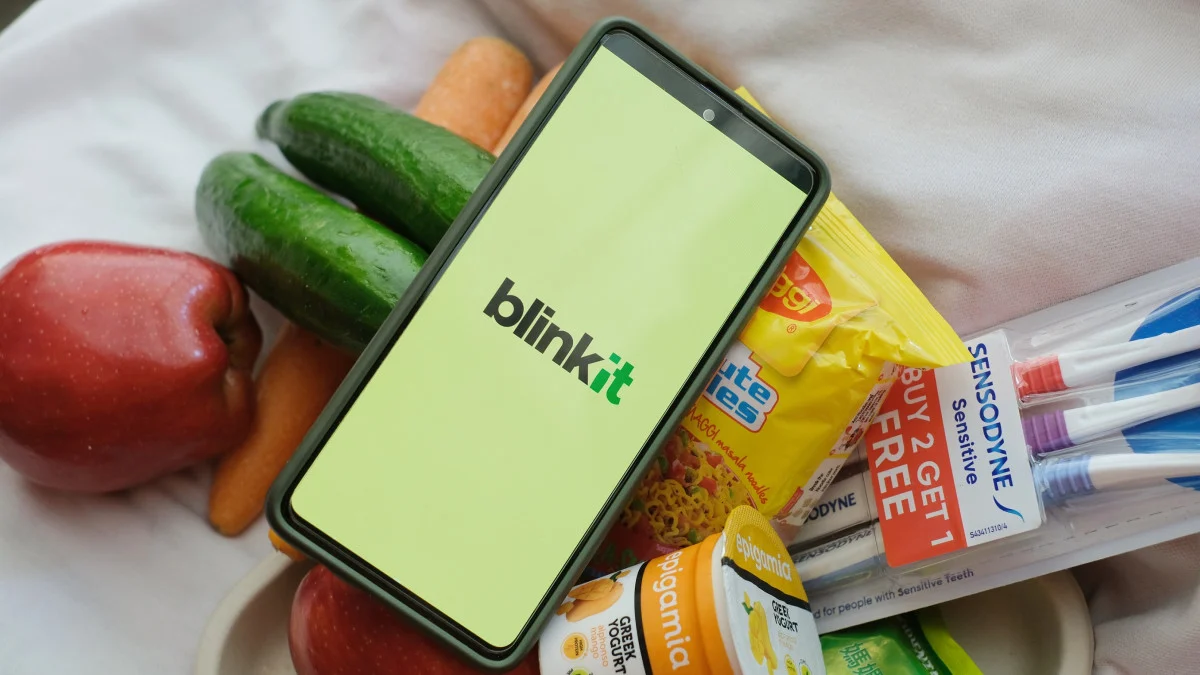
In the high-stakes arena of Indian quick-commerce, the September 2026 quarter has marked a definitive turning point. The industry, characterized by hyper-speed deliveries and aggressive customer acquisition, is witnessing a widening chasm between its two primary titans: Blinkit (owned by Eternal) and Swiggy Instamart. While Blinkit has successfully transitioned into a profitable entity, Swiggy Instamart remains mired in significant operational losses, sparking a debate among investors regarding the viability of their respective growth strategies.
According to recent shareholder disclosures, the contrast is stark. Blinkit reported a profit of Rs 184 crore on an adjusted operating basis, a dramatic reversal from the Rs 156 crore loss it posted in the same quarter last year. Conversely, Swiggy Instamart recorded an adjusted EBITDA loss of Rs 895 crore, an increase from the Rs 849 crore loss reported a year prior. As these companies navigate the complexities of last-mile logistics, the gap between their financial performances has become a focal point for market analysts.
Chronology of the Quick-Commerce Shift
The journey to the September 2026 quarter was not an overnight success for either player, but the trajectories have been markedly different.
One year ago, in the September 2025 quarter, Blinkit found itself in a position not unlike Swiggy Instamart’s current state. During that period, Blinkit was losing approximately Rs 7 on each of its 222.7 million orders, while managing to generate a contribution of Rs 24 per order. Since then, the company has executed a disciplined expansion strategy, focusing on operational efficiency and customer retention. Over the last twelve months, Blinkit’s order volume surged by 79%, while its contribution per order increased by roughly Rs 4, ultimately pushing the company into the black.
Swiggy Instamart, meanwhile, has struggled to mirror this velocity. Its losses expanded by Rs 118 crore from the June 2026 quarter to the September 2026 quarter. While Swiggy has achieved growth, it has come at a high price. The company engaged in heavy "targeted pricing investments"—including controversial Rs 9 delivery offers—to recapture lapsed users. While this led to an addition of 1.3 million monthly transacting customers, the cost of this acquisition resulted in a dip in contribution margins to -1.0% of Gross Order Value (GOV).
Supporting Data: A Side-by-Side Comparison
To understand the divergence, one must look at the granular metrics. The following table highlights the operational realities of both platforms for the quarter ended September 2026.
| Metric | Blinkit | Swiggy Instamart |
|---|---|---|
| Adjusted EBITDA (Rs crore) | 184 | -895 |
| Quarterly Orders (million) | 398.9 | 130.3 |
| Order Growth (YoY) | 79% | 29% |
| Net Average Order Value (Rs) | 525 | 506 |
| Monthly Transacting Customers (million) | 37.0 | 14.8 |
| Orders per Customer/Month | 3.6 | 2.9 |
| Total Stores | 2,751 | 1,240 |
| Orders per Store/Day | ~1,700 | 1,192 |
| Contribution per Order (Rs) | ~28 | ~ -7 |
| Adjusted EBITDA per Order (Rs) | ~5 | ~ -69 |
The data reveals that Blinkit is winning on density and frequency. With 2,751 stores—more than double that of Instamart—Blinkit is achieving superior economies of scale. Furthermore, its customers are more loyal, placing 3.6 orders per month compared to Instamart’s 2.9.
It is important to note the nuances in reporting: Eternal (Blinkit) includes cancelled orders in its total, whereas Swiggy counts only completed orders. Furthermore, definitions of "contribution" vary; Eternal includes store and warehouse rent in its calculations, while industry accounting standards often allow for varying interpretations of operating costs. Regardless of these definitions, the disparity in EBITDA per order—a profit of Rs 5 for Blinkit versus a loss of Rs 69 for Instamart—serves as a blunt indicator of current operational efficiency.
Official Responses and Strategic Pivots
Swiggy’s Path to Break-Even
Swiggy’s management remains optimistic, suggesting that the losses reported in the September quarter have "peaked out." CFO Rahul Bothra emphasized that the company’s current focus is on unit economics. To achieve break-even, Swiggy aims to reach a contribution of Rs 30 per order and scale the business to 2.3 times its current size.
The strategy, according to Swiggy’s shareholder letter, rests on a two-pronged approach: "Roughly two-thirds of this will come from higher revenue per order (via product mix, private labels, and advertising) and one-third from lower cost per order (densification, automation, and operating leverage)." Swiggy is not currently looking to expand into new cities; instead, it is waiting for existing stores to reach a daily threshold of 2,000 orders before initiating further expansion.
Blinkit’s Focus on "Profitable Customers"
Eternal’s leadership is taking a different tack. CEO Albinder Dhindsa has explicitly stated that the company is deprioritizing customers who are solely motivated by deep discounts. "A customer who shows up only for a deep discount uses the same capacity as one who orders every week across categories," Dhindsa noted. "So, for now, we focus on acquiring and retaining customers who order often, buy across categories, and are profitable to serve."
Looking forward, Eternal plans to reach 5,000 stores by March 2028, with a heavy emphasis on smaller cities where, according to CFO Akshant Goyal, new stores are reaching the 1,000-orders-per-day milestone just as quickly as those in major metropolitan hubs.
Market Implications and Analyst Outlook
The divergence in performance has not gone unnoticed by the investment community. During a recent earnings call, CLSA analyst Aditya Soman voiced a sentiment shared by many observers: "For a business that is largely similar, the gap in every metric I see is actually widening quite considerably." Soman further highlighted the valuation discrepancy, noting that the market currently values Eternal at "more than 5 times what Swiggy is."
The "Densification" Race
The central implication of these results is that the quick-commerce race is no longer just about geography; it is about density. Blinkit’s ability to extract more orders from each store per day allows it to spread fixed costs—such as rent and electricity—across a larger base of transactions. Swiggy’s challenge is to force its existing footprint to become more efficient before it can justify further capital expenditure.
The Sustainability Question
The question remains: Can Swiggy replicate Blinkit’s model, or is the latter’s lead now insurmountable? Swiggy’s reliance on "targeted pricing investments" to drive growth has shown diminishing returns in terms of immediate profitability. For Swiggy to bridge the gap, it must fundamentally change consumer behavior on its platform, moving users from occasional, discount-driven shoppers to consistent, full-basket grocery buyers.
Conversely, Blinkit faces the challenge of maintaining its service quality as it aggressively expands into Tier-2 and Tier-3 cities. If its rapid expansion dilutes the per-store efficiency it has worked so hard to cultivate, its profitability could be threatened.
In conclusion, the quick-commerce sector has moved past the "growth at any cost" phase of its evolution. As investors demand bottom-line results, the pressure is on Swiggy to prove that its massive investment in infrastructure will eventually yield the same operational leverage that has propelled Blinkit into profitability. The next few quarters will be a defining test of whether Swiggy can pivot from a volume-chasing strategy to a margin-focused reality, or if the market will continue to consolidate around the proven efficiency of the current leader.