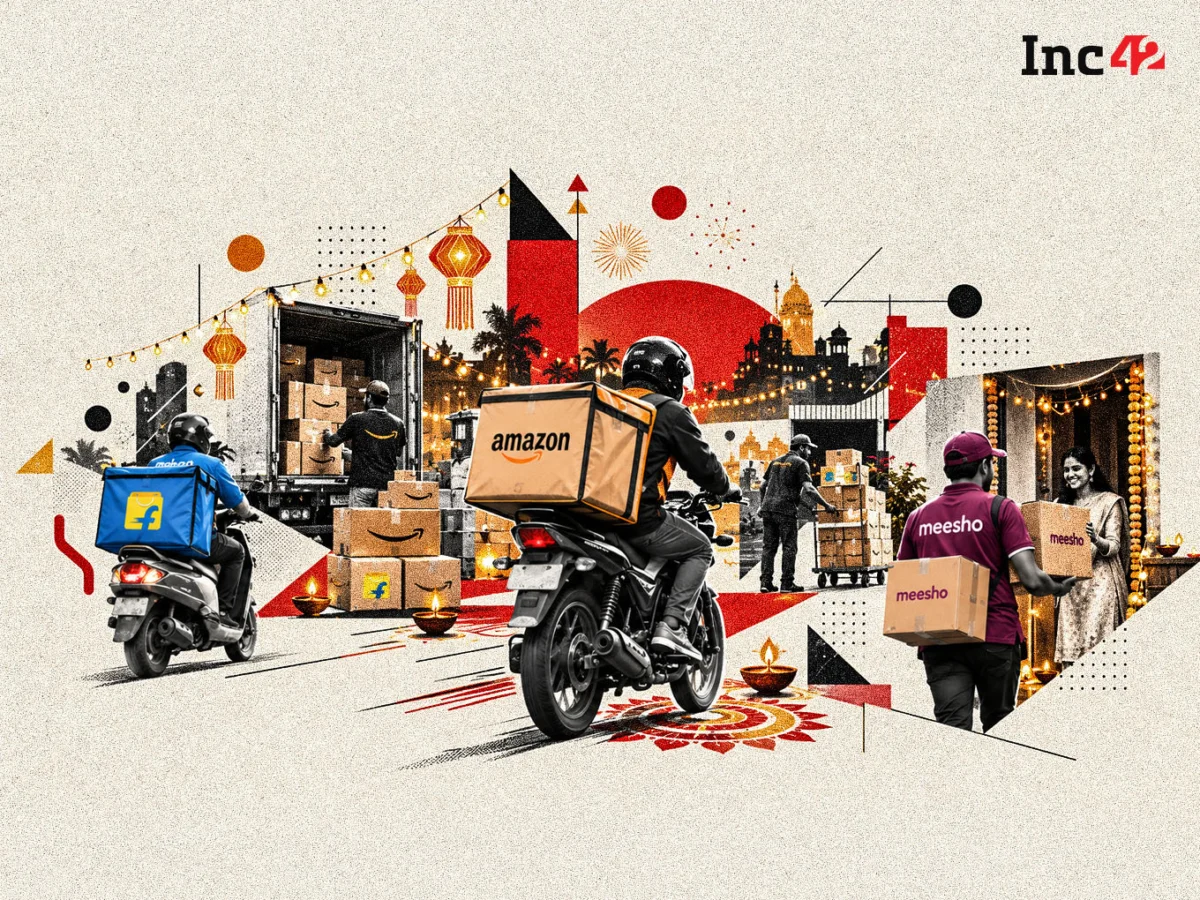
The Indian festive season—traditionally the golden quarter for retailers—has delivered a complex, sobering narrative this year. While digital storefronts buzzed with record-breaking traffic and millions of concurrent users, the underlying financial reality paints a picture of a nation tightening its belt. Despite the glossy marketing campaigns and aggressive countdown timers, early data suggests that the "splurge" mentality has been replaced by a calculated, cautious approach to consumerism.
As household budgets face the twin pressures of stubborn inflation and stagnant wage growth, the anticipated surge in big-ticket spending has largely failed to materialize. This year’s festive retail landscape is defined by a paradox: high engagement metrics masking a distinct decline in actual transactional value.
The Big Picture: A Market in Contraction
The numbers from the first leg of the festive season (October 8–18) provide a stark reality check. According to Redseer, India’s online festive sales clocked a Gross Merchandise Value (GMV) of $7–8 billion. While this figure appears impressive, it obscures the underlying fragility of the market. Nearly 100 million shoppers placed over 350 million orders, with consumption velocity hitting three times the daily average.
However, beneath these volume-driven headlines, deeper intelligence reveals a decline. Data from market intelligence firm Datum Intelligence indicates that online festive sales totaled between ₹29,800 Cr and ₹30,900 Cr—a 7–10% drop compared to the ₹33,200 Cr recorded during the same period last year. Even more telling is the 12–15% year-on-year (YoY) decline in card spending, the primary indicator of high-value discretionary consumption.
This cooling trend is echoed in the "Mood for the Consumer 2026" survey by LocalCircles. Drawing on over 67,000 responses from urban households across 307 districts, the survey projects a total festive discretionary spend of ₹1.97 lakh crore, down 6% from the ₹2.10 lakh crore recorded in 2025.
Chronology of the Festive Sales Cycle
The season began with high-octane expectations. Flipkart’s "Big Billion Days" (October 8–19) set the tone by recording a staggering 6.3 million concurrent users in a single minute during its opening hour. Similarly, the Amazon "Great Indian Festival" (October 8–20) reported that the number of products ordered in the first 24 hours more than doubled YoY. Meesho, catering to the budget-conscious segment, reported a 75% YoY surge in day-one orders.
Yet, the chronology of the sales cycle reveals a "traffic-to-transaction" gap. While early traffic was high, it did not translate into proportional revenue. By October 9, the first full day of universal access to sales, the number of card transactions remained largely stable (83.5 lakh vs 82 lakh last year), but the value of those transactions plummeted by 18%, falling from ₹8,067 Cr to ₹6,594 Cr. This confirms that while the digital footfall remained high, the "basket size"—the amount of money spent per order—was significantly smaller than in previous years.
Supporting Data: The Bifurcation of Demand
The consumer behavior witnessed this year is highly bifurcated. While electronics and smartphones—the traditional heavyweights of festive sales—faced significant headwinds, fashion, beauty, and home decor saw resilient demand.
The Electronics Slump
Counterpoint Research highlights a 16% YoY decline in smartphone sales during the first three days of the major festive events. This is particularly striking given the heavy reliance on promotional tactics like no-cost EMIs, bank cashbacks, and exchange offers. Tarun Pathak, Research Director at Counterpoint, noted that while premium models (like the Samsung Galaxy S25 Ultra) found buyers, the entry-level and mid-range segments—the backbone of volume sales—suffered due to higher base prices and a lack of direct, aggressive discounts.
The Fashion & Beauty Bright Spot
In contrast, fashion and beauty emerged as the surprising winners of the season. Myntra’s "Big Fashion Festival" saw daily active users climb 40% compared to its September average, while Nykaa Fashion saw monthly active users grow by 24% to approximately 17 million. Redseer estimates that fashion grew 20–25% YoY, accounting for nearly a fifth of total festive GMV. Consumers appear to be shifting their spending from long-term, high-cost capital goods (electronics) to affordable, immediate-gratification categories (fashion and personal grooming).
The Household Budget Under Pressure
Why are consumers hesitating? The answer lies in the structural shift in the Indian household economy. With retail inflation hovering at 5.54% and food inflation at 7.74% as of September, the "discretionary" component of the family budget has been largely absorbed by the rising cost of living.
Sachin Taparia, founder of LocalCircles, highlights a critical sentiment shift: "Household earnings are not rising, and inflation continues to rise." This is compounded by an undercurrent of economic anxiety, particularly among white-collar workers concerned about the long-term impact of artificial intelligence on job security.
The funding model for this year’s purchases is equally telling. According to the LocalCircles survey, 83% of households planning to spend expect to dip into their savings to cover the costs, with 16% relying entirely on their savings to fund festive purchases. This suggests that the current consumption levels are being sustained by eroding household financial buffers rather than by rising disposable income.
Official and Industry Responses: Managing Expectations
Retailers and analysts are adjusting their narratives to account for these trends. Industry players have noted that the 2025 sales were bolstered by a specific "tax-led trigger"—the GST rate cuts that occurred in September of that year, which provided a artificial, yet significant, boost to sales. The lack of a similar stimulus this year has made the year-on-year comparison naturally unfavorable.
However, the industry is also grappling with the "discount fatigue" phenomenon. Reports from the Economic Times suggest that the depth of festive discounts was 35–40% lower this year than in 2025. Simultaneously, premium electronics saw price hikes of 30–40% in the months leading up to the festive season. When the "deal" is no longer a deal, the incentive to upgrade a perfectly functional refrigerator or smartphone diminishes rapidly.
Strategic Implications for Retailers
The 2026 festive season serves as a masterclass in shifting consumer priorities. For retailers, the primary challenge moving forward is no longer just "acquisition" (getting the user to the app) but "conversion" (getting the user to spend).
- The Rise of the Non-Metro Consumer: A consistent highlight was the expanding reach beyond major cities. With two-thirds of shoppers coming from Tier II and smaller towns, the future of Indian e-commerce is clearly decentralized. Platforms that successfully localized their offerings saw better engagement.
- The End of the "Big-Ticket" Era: The reliance on high-value electronics to drive GMV is becoming increasingly risky. Retailers must pivot toward higher-margin, lower-cost categories like beauty, lifestyle, and home essentials to maintain revenue stability.
- The Necessity of Value-Based Pricing: The era of "blind discounting" is fading. Consumers are becoming more price-sensitive and discerning. Future success will likely depend on offering tangible, transparent value—such as genuine service bundles, long-term warranties, or exchange programs—rather than mere percentage-based price slashes.
Conclusion: A Cautious Horizon
As the festive season draws to a close, the data provides a clear directive: the Indian consumer has not stopped buying, but they have stopped "splurging." The festive period was marked by a strategic prioritization of essentials over upgrades.
For the retail sector, the takeaway is a reality check. The "digital buzz" of record traffic is a vanity metric; the real pulse of the economy is found in the shrinking transaction values and the increasing reliance on personal savings to fund holiday consumption. As we look toward the remainder of the fiscal year, the retail sector will need to recalibrate its expectations, focusing less on aggressive volume growth and more on sustainable, value-driven engagement with a budget-conscious middle class. The Indian consumer remains resilient, but they are undeniably becoming more pragmatic.