In a landmark shift for meteorology and national defense, the U.S. Air Force has entered into a multi-million dollar agreement with Redwood City-based startup WindBorne Systems. The contract, which could reach a total value of $49 million, secures the military’s access to the startup’s proprietary fleet of autonomous weather balloons. By leveraging WindBorne’s global constellation of approximately 700 high-altitude sensors, the Air Force is signaling a move away from traditional, resource-heavy atmospheric modeling toward agile, AI-driven data acquisition.
The partnership represents the largest contract to date for WindBorne, a company founded in 2015 that has quietly revolutionized the way empirical atmospheric data is collected and processed. As global weather patterns become increasingly volatile, the ability to secure granular, real-time data from remote and inaccessible regions—such as the heart of a typhoon—has become a strategic imperative for the U.S. military.
A New Frontier in Meteorological Data
For decades, meteorology was a discipline defined by massive supercomputers running complex, physics-based simulations. While effective, these models often suffered from "blind spots" where ground-based weather stations or satellite imagery failed to capture localized, high-velocity phenomena.
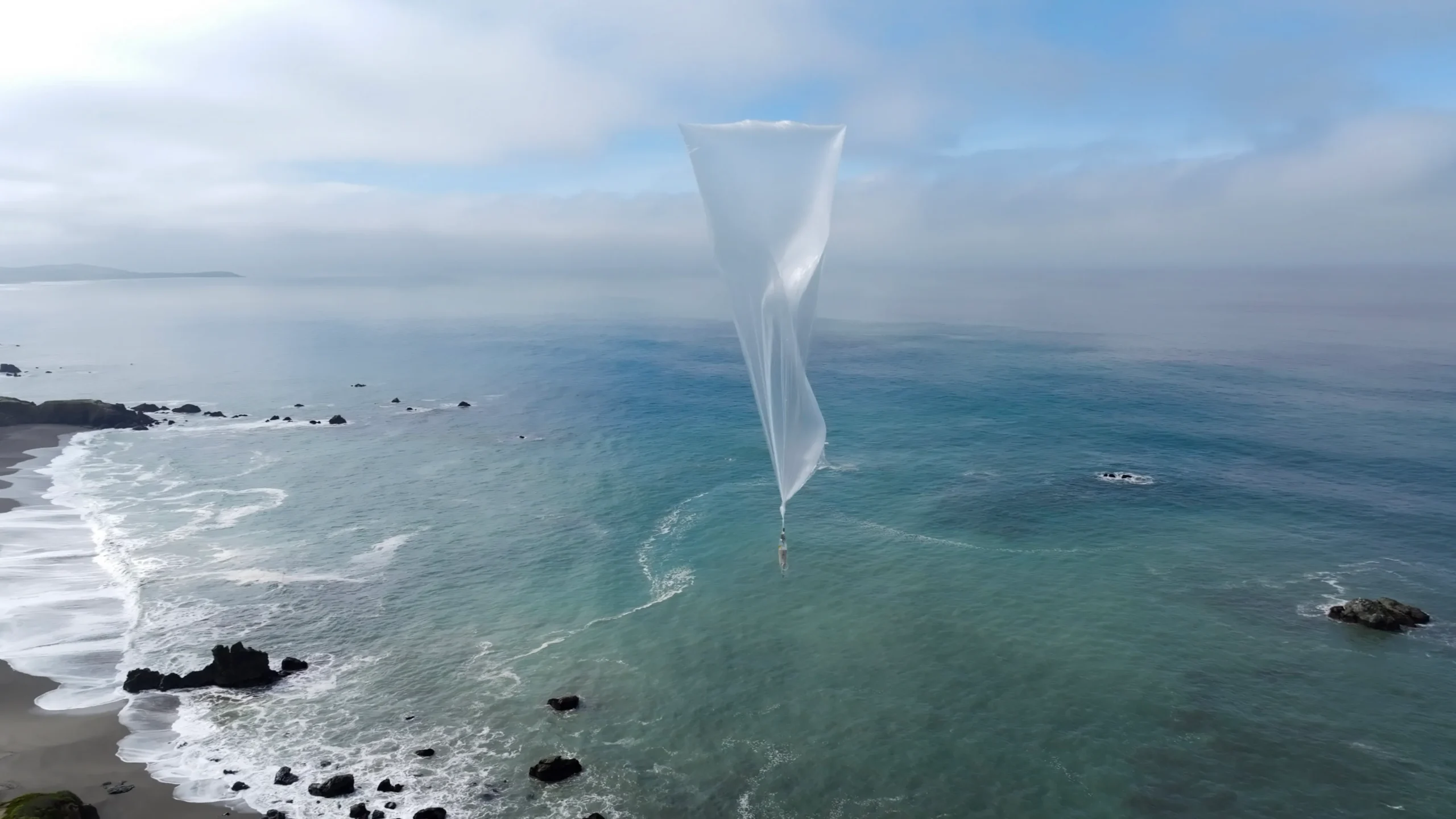
WindBorne Systems has circumvented these limitations by deploying a fleet of low-cost, autonomous weather balloons. Unlike traditional weather balloons that drift aimlessly, WindBorne’s units utilize sophisticated flight-control systems. By adjusting their altitude, bleeding air, or jettisoning sand as ballast, the balloons can navigate specific wind currents to reach target locations.
This capability was put to the test in August when WindBorne successfully maneuvered a balloon into the eye of Typhoon Dolphin. This operation, described by CTO Andrey Sushko as one of the first instances where a deep-learning model made high-stakes, real-time operational decisions, demonstrated that the startup’s hardware is as robust as its software.
Chronology: From Startup to Strategic Partner
The trajectory of WindBorne Systems has been marked by a rapid ascent from R&D project to a critical node in global weather forecasting.
- 2015: WindBorne Systems is founded in Redwood City, California, with a vision to revolutionize atmospheric monitoring.
- Early 2020s: The company begins deep collaborations with the National Weather Service, the U.S. Navy, and the U.S. Air Force, providing pilot data streams to test the efficacy of their autonomous platform.
- June 2026: WindBorne releases "WeatherMesh 6," an AI-driven forecasting model that the company claims outperforms the gold-standard European Centre for Medium-Range Weather Forecasts (ECMWF) in accuracy.
- August 2026: WindBorne secures a $37 million Series B funding round to scale its balloon constellation and data processing infrastructure.
- August 2026: The company successfully navigates an unpowered flight system into the eye of Typhoon Dolphin, marking a milestone in autonomous meteorological data collection.
- Q4 2026: The U.S. Air Force formalizes a contract worth up to $49 million, allowing for on-demand data procurement across specific global regions.
The Power of AI-Integrated Forecasting
The core of WindBorne’s value proposition lies in the marriage of hardware and deep learning. Traditionally, weather data is fed into physics-based simulations. WindBorne, however, has pioneered an end-to-end learning approach, where the raw empirical data collected by its balloon fleet is fed directly into its own AI models.
This "data-first" approach is part of a broader industry trend. Following the advent of transformer architectures and the release of massive historical weather datasets by global agencies, AI has emerged as the most productive frontier in atmospheric science. While physics-based models remain essential for long-term climate projections, AI models like WeatherMesh 6 are proving superior in short-term, high-accuracy predictions.
The shift is significant. Whereas traditional models require massive computational power to approximate atmospheric behavior, deep-learning models ingest decades of historical patterns to issue predictions in a fraction of the time. This speed is vital for the Air Force, which requires rapid, accurate weather assessments for flight planning, logistics, and tactical operations.
Official Responses and Strategic Rationale
The contract was awarded without a competitive bidding process, a rarity that underscores the unique nature of WindBorne’s capabilities. In discussions regarding the agreement, the government determined that WindBorne was the sole entity capable of providing the specific, high-frequency global data collection required for modern operational needs.
"This is largely a vehicle through which continued growth of the constellation can be supported, as well as some work on research and development to continue to improve the hardware and performance of the balloons," said Andrey Sushko, co-founder and CTO of WindBorne.
Sushko emphasized that the contract validates the company’s dual-pronged strategy: maintaining a vast, responsive network of sensors while simultaneously refining the neural networks that interpret that data. For the Air Force, the "pay-as-you-go" structure is particularly attractive. Rather than maintaining a fixed, expensive infrastructure, the military can order targeted atmospheric readings for specific regions and times, providing them with a flexible, on-demand intelligence capability.
Implications for Global Security and Science
The implications of this partnership extend far beyond the immediate utility for the U.S. Air Force. As AI weather models become increasingly central to government operations—notably in tracking hurricanes and extreme weather events—the quality of the input data becomes the most important variable.
1. The Death of the "Data Desert"
Historically, large swaths of the ocean and remote terrestrial regions were "data deserts" where accurate weather readings were impossible to obtain. WindBorne’s constellation effectively "fills in the gaps," providing consistent data streams that refine global models. This leads to better hurricane trajectory predictions and more accurate warnings for civilians and military personnel alike.
2. A New Standard for Defense Intelligence
The use of autonomous, unpowered, and cost-effective sensors sets a precedent for how the military may approach other forms of environmental monitoring. By moving away from massive, vulnerable, and expensive hardware, the military can embrace "distributed sensing." If one balloon in a network of hundreds fails, the mission continues—a level of redundancy that legacy systems cannot match.
3. The Tug-of-War: AI vs. Physics
The industry is currently in a "jagged frontier" phase. While companies like Google DeepMind and startups like WindBorne are pushing the boundaries of what AI can predict, traditional models remain the backbone of the global scientific community. The current consensus is that a hybrid approach—using AI for rapid tactical intelligence and traditional physics-based models for foundational atmospheric stability—will define the next decade of meteorology.
Conclusion: The Future of the Atmosphere
WindBorne Systems has transformed the humble weather balloon into a sophisticated instrument of global intelligence. By successfully integrating hardware, autonomous navigation, and deep-learning models, the company has carved out a niche that is now vital to the U.S. military.
As the Air Force begins to rely on this data for its strategic operations, the contract serves as a case study for how private-sector innovation can leapfrog government-led initiatives in the realm of high-tech defense. Whether through better disaster response or more precise logistics, the data collected by WindBorne’s balloon fleet is poised to become the new baseline for understanding the atmosphere, ensuring that when it comes to the weather, the U.S. military is no longer flying blind.