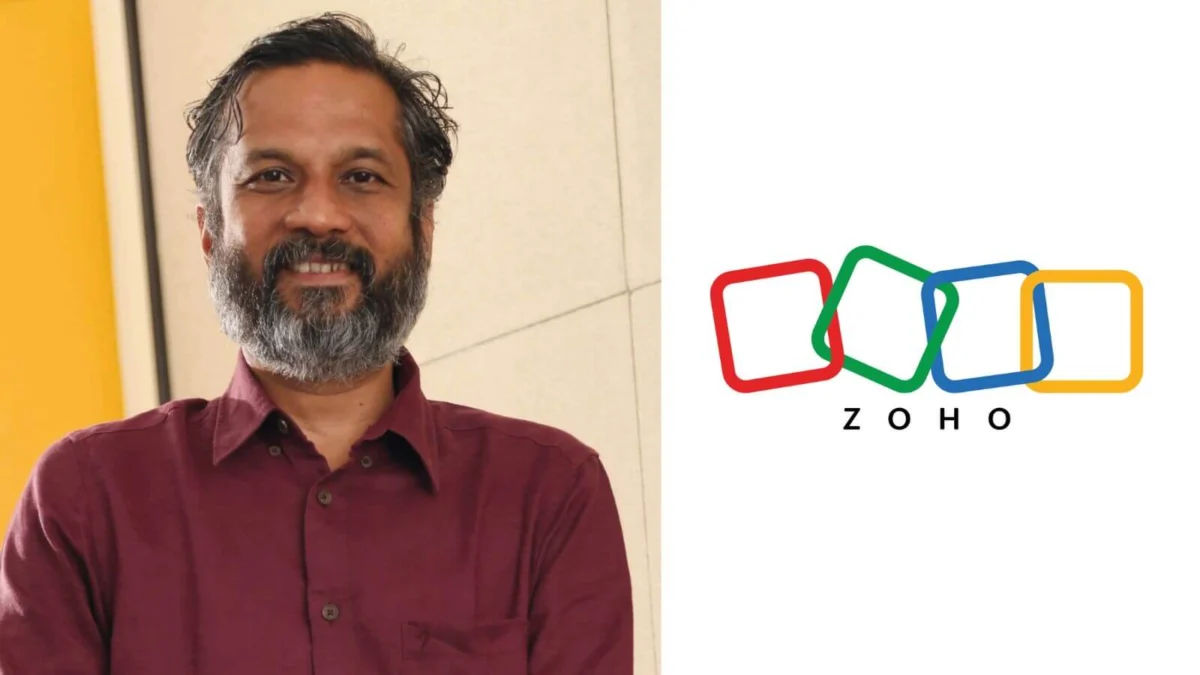
CHENNAI – In a move that underscores the intensifying financial pressure on the global software-as-a-service (SaaS) sector, Zoho Corporation has announced a total freeze on annual salary increments for its global workforce in 2026. The decision, revealed by co-founder and Chief Scientist Sridhar Vembu, marks a significant pivot for the Indian multinational as it grapples with a "grim" outlook for software jobs and a staggering four-fold increase in the cost of the hardware required to power the artificial intelligence (AI) revolution.
As the tech industry navigates what analysts are calling the "SaaSpocalypse," Zoho’s leadership has signaled that the next three to five years will be a period of radical "reinvention." The company, which employs over 19,000 people worldwide, is prioritizing survival and the avoidance of mass layoffs over traditional compensation growth, reflecting a broader trend of capital being diverted from human talent toward silicon and electricity.
Main Facts: A Strategy of Austerity and Realignment
The announcement came via a candid series of communications from Sridhar Vembu, who utilized social media and internal channels to outline the company’s precarious position. The core of the strategy involves a three-pronged approach to cost containment: a complete freeze on salary hikes for the 2026 fiscal year, a continued moratorium on new hiring, and a significant reduction in marketing expenditures.
Vembu cited two primary drivers for this austerity: the "dramatic" rise in AI-related infrastructure costs and a "challenging geopolitical backdrop" that has rendered the software market increasingly uncertain. Specifically, Vembu noted that the price of servers required for modern data centers has increased by 400%, a fiscal burden that is cannibalizing the budget usually reserved for employee raises.
Despite these measures, Zoho remains one of the few tech majors actively attempting to avoid the mass workforce reductions that have characterized the sector over the past 24 months. "We are working hard to avoid mass layoffs," Vembu stated, though he admitted that the company has not increased its total employee count for 18 months—a stark departure from the aggressive expansion the Chennai-headquartered firm was known for over the previous decade.
Chronology: From the 2025 Layoff Wave to the 2026 Freeze
The decision to freeze salaries in 2026 is not an isolated event but the culmination of a multi-year cooling period in the technology sector.
- 2024–Early 2025: The "post-pandemic correction" began in earnest, with major tech firms shedding hundreds of thousands of jobs to right-size after the over-hiring of the 2021-2022 period.
- Late 2025: The focus shifted from "efficiency" to "AI-first." Companies like Amazon and Oracle began restructuring specifically to fund massive investments in Large Language Models (LLMs) and GPU clusters.
- Mid-2025: Zoho initiated its hiring freeze, which has now lasted 18 months. During this time, the company focused on internal mobility and optimizing existing workflows rather than bringing in new talent.
- October 2026: Sridhar Vembu officially announces the 2026 salary freeze, citing the quadrupling of server costs and the need for a 3-to-5-year reinvention window.
This timeline suggests that Zoho’s leadership anticipated the current downturn earlier than many of its peers, opting for a prolonged hiring freeze rather than the "fire and hire" cycles seen at companies like Meta or Google.
Supporting Data: The Rising Price of Compute and Global Job Loss
The data supporting Zoho’s cautious stance is stark. According to TrueUp, a platform that tracks tech industry layoffs, the year 2026 has already seen an estimated 644 layoff events, impacting 193,698 workers—an average of 677 people losing their jobs every single day. This follows a brutal 2025, where over 245,000 employees were displaced.
The Infrastructure Burden
The "massive 4-fold increase in server prices" mentioned by Vembu refers to the industry-wide scramble for high-end GPUs (Graphics Processing Units) and specialized AI servers. As SaaS companies move from hosting simple databases to running complex inference models for every user, the power and hardware requirements have scaled exponentially.
For a company like Zoho, which prides itself on owning its data centers rather than relying solely on public clouds like AWS or Azure, these capital expenditures (CAPEX) are front-loaded and immense. The cost of a single high-density AI server rack in 2026 is significantly higher than the standard commodity hardware of 2020, forcing a choice between upgrading infrastructure or increasing payroll.
The Indian Context
The impact on India’s $315 billion IT services and software industry is particularly pronounced. While Zoho is a product company, its struggles mirror those of the service giants:
- Oracle: Recently announced a reduction of 21,000 employees globally, with India-based workers expected to bear more than 50% of those cuts.
- Cognizant: Shed approximately 4,000 roles (1% of its workforce) as part of a restructuring plan.
- TCS: In 2025, the firm implemented cuts of more than 12,000 employees, marking a historic shift for an organization traditionally viewed as a "job for life" employer.
Official Responses: A Plea for Patience and Reinvention
Sridhar Vembu’s communication style remains distinct in the corporate world, blending macroeconomic analysis with a personal, almost spiritual plea for cooperation. In his statement, he did not mince words about the difficulty of the situation.
"I have apologized for not being able to avoid this [salary freeze]," Vembu said on X. "Most of our employees understand the situation. I am thankful to them. We are in the middle of reinventing ourselves. The next 3-5 years will decide how our reinvention has worked. Please pray for us."
This "reinvention" refers to Zoho’s attempt to weave AI into the very fabric of its 50+ applications without losing the cost-advantage that has been its hallmark. By cutting marketing budgets and freezing pay, Zoho is effectively betting that its internal culture can withstand a period of stagnation in exchange for long-term survival in an AI-dominated landscape.
Industry analysts suggest that Vembu’s transparency is a strategic move to maintain morale. By framing the salary freeze as an alternative to mass layoffs, Zoho is attempting to preserve its talent pool during a time when finding new software roles is increasingly difficult.
Implications: The "SaaSpocalypse" and the Future of Work
The Zoho announcement is being viewed as a bellwether for the "SaaSpocalypse"—a theoretical and increasingly practical shift where traditional software business models are disrupted by AI.
1. The End of Seat-Based Pricing
For decades, SaaS companies grew by charging per "seat" or per user. However, as AI agents become capable of doing the work of multiple human employees, the number of "seats" required by clients is shrinking. This puts downward pressure on revenue at the exact moment that AI infrastructure costs are rising. Zoho’s move to freeze salaries is a defensive measure against this margin squeeze.
2. The Shift from Labor to Capital
The tech industry is transitioning from a labor-intensive model (where more developers equal more features) to a capital-intensive model (where more compute power equals better AI). This shift threatens the traditional value proposition of Indian IT, which was built on the "demographic dividend" of a massive, affordable workforce. If compute is more valuable than coding, the geographical advantage of India’s talent pool may diminish.
3. Client Insourcing
The rise of AI has enabled many large enterprises to bring software development back in-house. With AI-assisted coding tools, a small internal team can now maintain systems that previously required a large outsourced contract. This "insourcing" trend is forcing firms like Zoho, TCS, and Wipro to rethink their pricing and the very nature of the services they provide.
4. The 3-to-5-Year Survival Window
Vembu’s mention of a 3-to-5-year window for reinvention suggests that the "AI bubble" or "AI transition" is not a short-term hurdle but a fundamental shift in the tectonic plates of the industry. Companies that cannot integrate AI while maintaining a sustainable cost structure will likely not survive this window.
Conclusion
Zoho’s decision to freeze salaries in 2026 is a sobering reminder that even the most successful and "culture-first" companies are not immune to the brutal economics of the AI era. By choosing to protect jobs at the expense of raises, Sridhar Vembu is making a high-stakes bet on the loyalty of his 19,000 employees and the necessity of his "reinvention" strategy.
As the software job market remains "grim" and server prices continue to soar, the rest of the Indian IT sector will be watching Zoho closely. If one of the industry’s most resilient players is feeling the heat, the "SaaSpocalypse" may be closer—and more expensive—than anyone anticipated. For now, the message from Chennai is clear: the era of easy growth is over, and the era of expensive intelligence has begun.