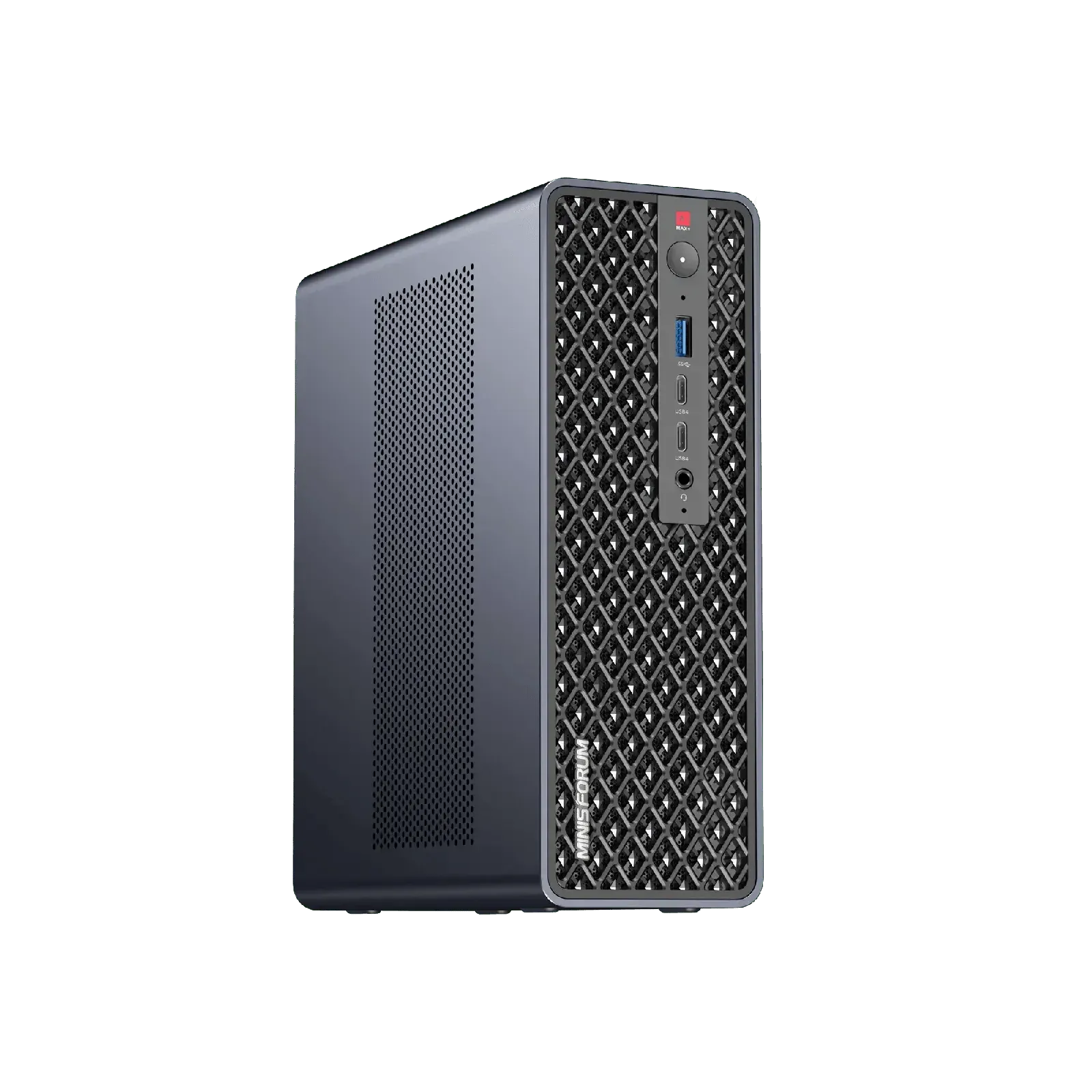
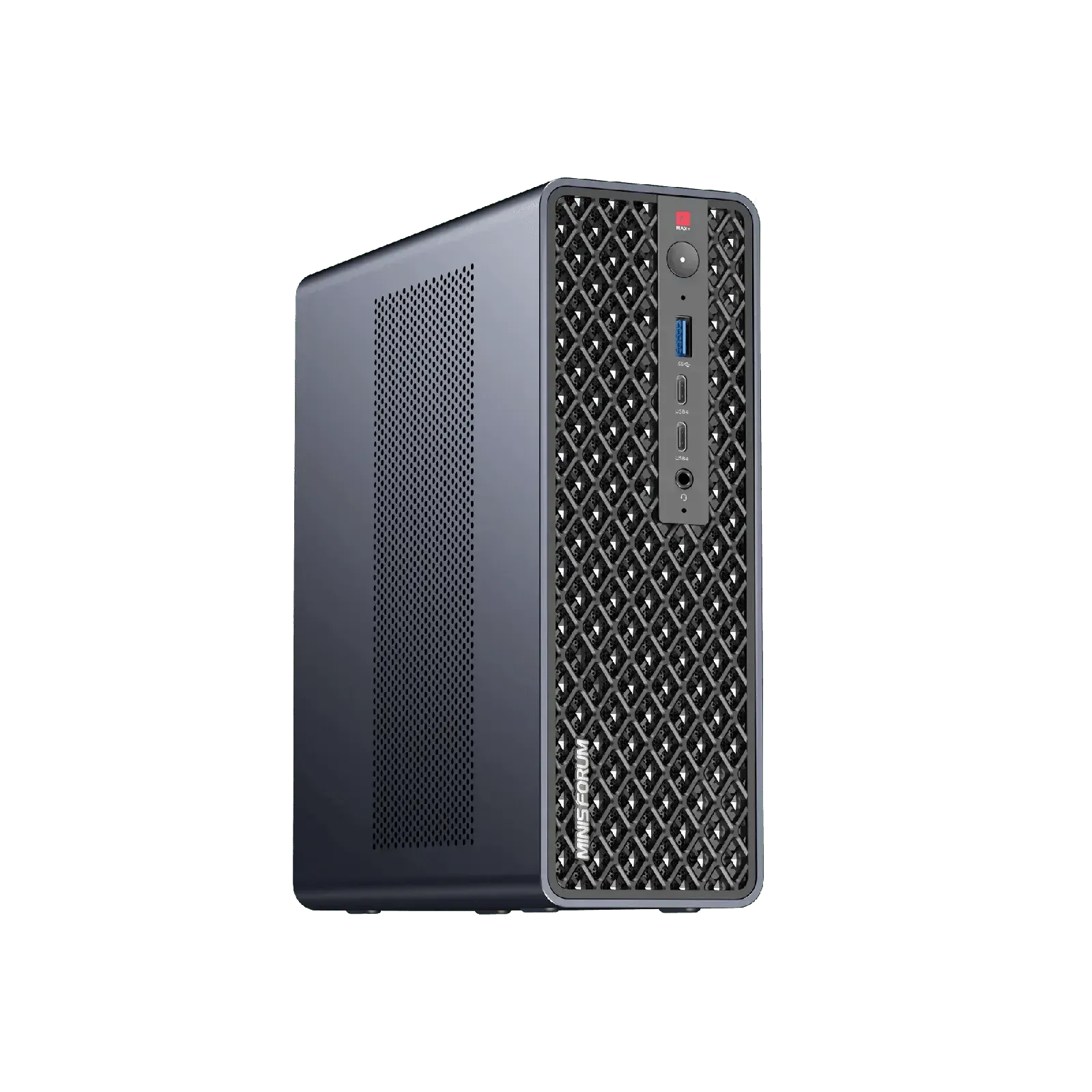
In the rapidly evolving landscape of local artificial intelligence, compute power is often measured by clock speeds and TOPS (Trillions of Operations Per Second). However, Minisforum’s latest release, the MS-S1 MAX-P495, serves as a stark reminder that in the era of Large Language Models (LLMs), memory capacity is the true bottleneck of innovation. By shoehorning a massive 192GB of unified memory into a 3.5-liter chassis, Minisforum is targeting a specific, high-stakes demographic: AI developers and enterprise researchers who require enterprise-grade model performance without the footprint of a traditional server rack.
The Core Specs: A Subtle Evolution
At its heart, the MS-S1 MAX-P495 is built around AMD’s Ryzen AI Max+ PRO 495 processor. On paper, the specs represent a modest, incremental upgrade over its predecessor, the original MS-S1 MAX. The new chip features 16 Zen 5 cores and 32 threads, capable of reaching boost clocks of up to 5.2 GHz—a slight 100 MHz improvement over the 300-series silicon.
The graphics capabilities have seen a similar, measured trajectory. The integrated Radeon 8065S GPU retains its 40 RDNA 3.5 compute units but receives a 100 MHz clock speed bump, reaching 3.0 GHz. Even the Neural Processing Unit (NPU) shows only a marginal 10% improvement, climbing from 50 to 55 TOPS. When combined with the CPU and GPU, the platform provides a total of 131 TOPS, up from the 126 TOPS offered by the previous generation.
For the average consumer, these figures might appear underwhelming. However, the brilliance of the P495 lies not in its processing frequency, but in the structural overhaul of its memory architecture.
Chronology of the Strix Halo Refresh
To understand why the P495 is a significant release, one must look at the timeline of AMD’s "Strix Halo" silicon evolution.
- Mid-2025: Minisforum launches the original MS-S1 MAX, powered by the Ryzen AI Max+ 395. It becomes a darling of the SFF (Small Form Factor) community, offering a rare combination of 10GbE connectivity and high-core-count processing in a 3.5-liter box.
- May 2026: AMD introduces the Ryzen AI Max PRO 400 series. This refresh was designed specifically to address the hunger for higher memory bandwidth and capacity in local AI tasks, rather than chasing raw CPU IPC (Instructions Per Clock) gains.
- Late 2026: Minisforum opens pre-orders for the MS-S1 MAX-P495, effectively pivoting the product line from a "high-end mini PC" to a "specialized local AI workstation."
This transition highlights a deliberate shift in the market: hardware manufacturers are moving away from general-purpose desktop improvements and toward optimizing for the specific memory requirements of modern Mixture-of-Experts (MoE) models.
The Memory Advantage: Why 192GB Matters
The most consequential change in the MS-S1 MAX-P495 is the support for 192GB of LPDDR5X memory across a 256-bit interface. This represents a significant leap from the 128GB capacity limit of the previous generation. More importantly, the system allows up to 160GB to be allocated directly to the GPU.
In the world of local AI, the "model footprint" is king. Large Language Models are stored in VRAM (or system memory in unified architectures). If a model does not fit, it cannot run—or it must be offloaded to slower storage, which destroys inference speed. By increasing the memory pool, Minisforum has unlocked the ability to run massive parameter-count models that were previously impossible to host on a single workstation.
Supporting Performance Data
Minisforum’s internal testing provides a compelling case for this hardware configuration:
- DeepSeek V4 Flash (284B parameters): A single P495 unit running at Q4 quantization achieves approximately 12 tokens per second.
- Qwen3.5-397B: By linking two units together, developers can achieve roughly 16 tokens per second.
- DeepSeek-R1 671B: A cluster of four systems can successfully load the 380GB Q4_0 build.
While these models are technically larger than the available physical memory, they utilize "Mixture-of-Experts" (MoE) architectures. In an MoE design, the model is sparsely activated. For instance, while DeepSeek V4 Flash has 284 billion parameters, it only activates roughly 13 billion per token. The 192GB of RAM acts as the "loading dock," ensuring the model parameters are resident and ready, while the 273 GB/s memory bandwidth ensures the data can be swapped fast enough to maintain usable token generation speeds.
Implications for the Industry
The release of the MS-S1 MAX-P495 signals a maturing of the "Local AI" movement. For the past two years, developers have been hampered by the trade-off between privacy and performance. Keeping data on-premises (for privacy) usually meant sacrificing the ability to run the largest, most capable models.
Minisforum’s strategy here is to provide a "mini-server" that fits on a desk. With dual 10GbE ports and support for 2U rack mounting, the P495 is clearly designed to be clustered. A small team of developers could theoretically rack-mount four of these units to create a portable, high-performance inference cluster that outperforms much larger, power-hungry desktop workstations.
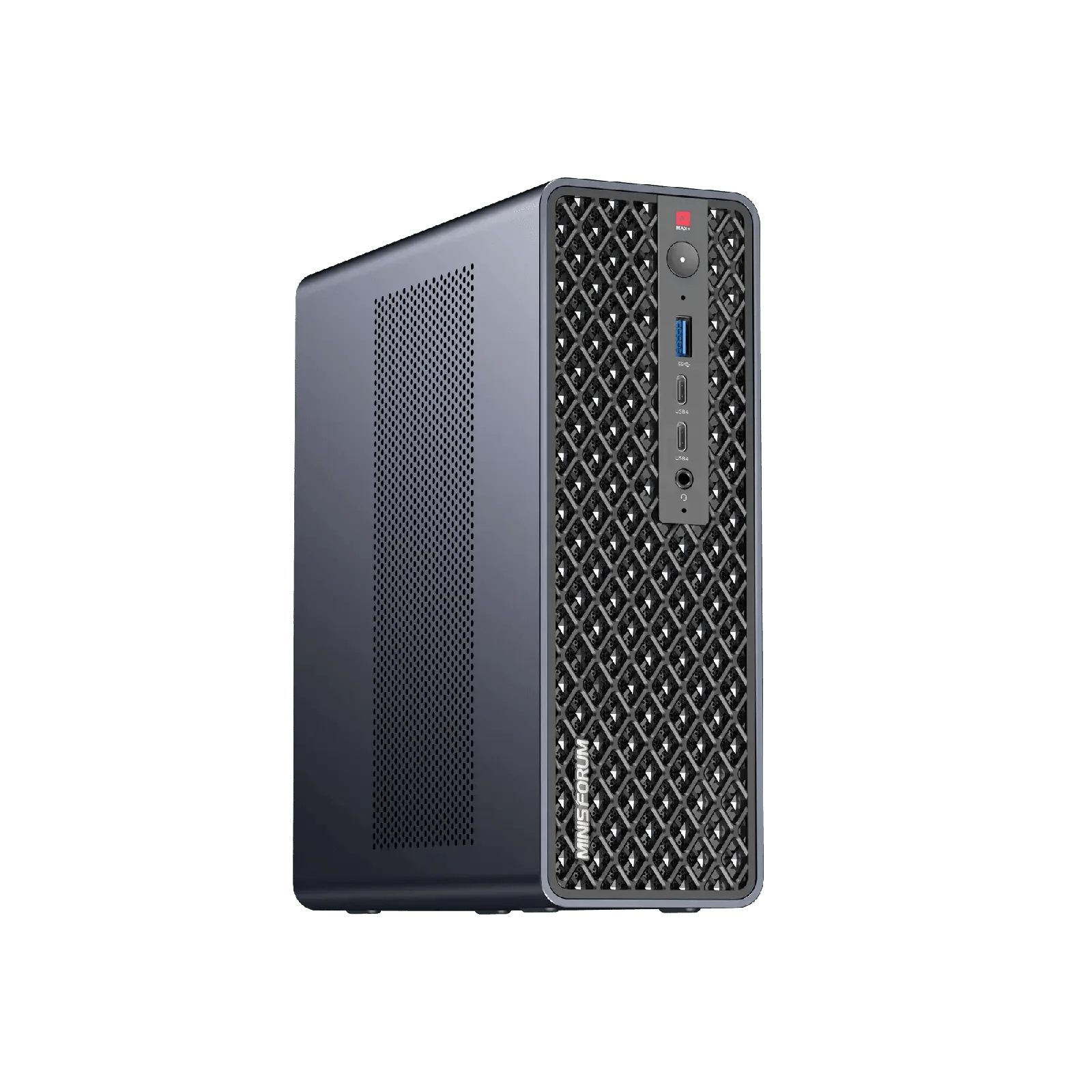
However, the cost of entry is steep. Priced at $7,399 (a figure presented as a 20% discount from a $9,249 MSRP), the machine is undeniably a luxury tool. For the majority of users, the original MS-S1 MAX remains the better value proposition. The performance gap between the 395 and the 495 processors is, in many real-world scenarios, negligible. Only users who specifically need to host massive 200B+ parameter models will find the 192GB memory configuration worth the price of admission.
Official Positioning and Market Reception
Minisforum has been careful to frame the P495 not as a consumer PC, but as a strategic asset for AI development. By focusing on the 131 TOPS platform rating and the ability to handle massive MoE models, the company is positioning itself as a leader in the "AI-at-the-edge" space.
Industry observers note that while the P495 is a niche product, it addresses a genuine pain point. As organizations become increasingly wary of sending sensitive proprietary data to third-party cloud AI providers, the demand for high-memory, small-form-factor workstations is expected to grow. Minisforum is effectively betting that the cost of these machines is lower than the long-term cost of data breaches or the latency of cloud-based inference.
Conclusion: A Tool for Specialists
The Minisforum MS-S1 MAX-P495 is not for the faint of heart, nor for the casual gamer. It is a specialized, high-density computing tool. Its CPU performance, while improved, is secondary to its true purpose: providing a massive memory buffer for local model execution.
For the developer, the data scientist, or the privacy-focused enterprise, the P495 represents a significant step toward liberating AI from the cloud. It proves that you no longer need a room-sized server to run the world’s most advanced models—you just need the right memory configuration in a box that fits on your desk. While the premium price tag may limit its adoption, the MS-S1 MAX-P495 sets a new benchmark for what is possible in the compact workstation market, effectively shifting the goalposts for local AI hardware for the remainder of 2026 and beyond.