
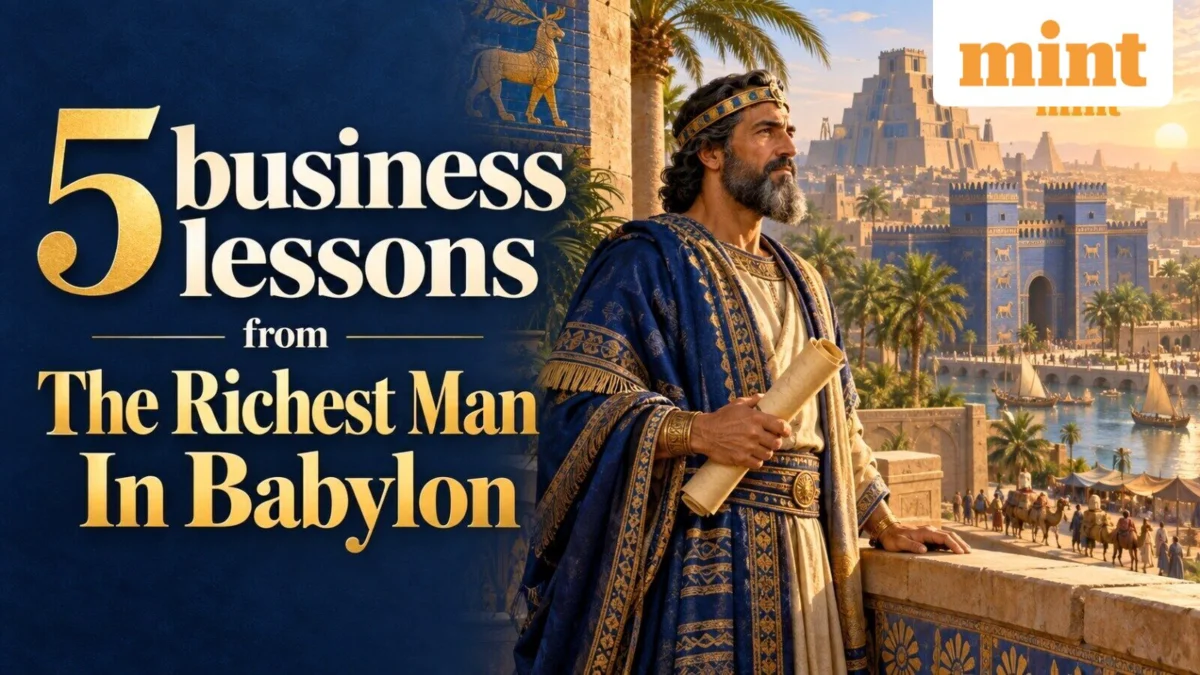
Ancient Parables, Modern Prosperity: How George S. Clason’s Classic Continues to Guide Business Acumen
In an era defined by rapid technological shifts and volatile global markets, the quest for sustainable financial wisdom often leads to unexpected sources. One such enduring wellspring of insight is George S. Clason’s seminal work, The Richest Man in Babylon. Published nearly a century ago, this collection of parables, set against the backdrop of ancient Mesopotamia, distills fundamental principles of wealth creation and preservation into accessible, compelling narratives. Far from being a historical curiosity, its lessons resonate with remarkable clarity for today’s entrepreneurs, offering a bedrock of financial literacy essential for navigating the complexities of modern business.
The book’s core premise is elegantly simple: the secrets to accumulating wealth are universal and unchanging, applicable whether one trades in gold in ancient Babylon or cryptocurrencies in Silicon Valley. Through the tales of Arkad, the richest man in Babylon, and his various apprentices and citizens, Clason lays out practical guidelines for personal and business finance. These aren’t merely abstract theories but actionable strategies for managing income, controlling expenditure, investing wisely, and fostering continuous self-improvement. For any individual or enterprise striving for financial independence and robust growth, The Richest Man in Babylon remains an indispensable guide, proving that the foundations of prosperity are indeed timeless.
The Genesis of a Classic: A Chronological Journey of Enduring Influence
The Richest Man in Babylon first appeared in print in 1926, initially as a series of informational pamphlets distributed by banks and insurance companies. George S. Clason, an American author and businessman, conceived these parables as a means to convey sound financial advice in an engaging and memorable format. The 1920s, often dubbed the "Roaring Twenties," were a period of unprecedented economic boom, but also one characterized by speculative excesses that would eventually culminate in the devastating stock market crash of 1929 and the subsequent Great Depression. It was within this context of burgeoning prosperity mixed with underlying financial instability that Clason’s straightforward lessons on thrift, saving, and prudent investment found fertile ground.
The book quickly gained traction due to its unique narrative approach. Instead of dry financial textbooks, readers were introduced to characters like Bansir, the chariot builder, and Kobbi, the musician, who seek Arkad’s wisdom. This storytelling method made complex financial concepts digestible and relatable to a broad audience, regardless of their prior financial knowledge. As the economic landscape shifted dramatically in the 1930s, the book’s emphasis on financial security, controlling debt, and making money work for you became even more pertinent. It offered a beacon of hope and practical guidance during a time of widespread economic hardship, solidifying its status as a foundational text in personal finance.
Over the decades, The Richest Man in Babylon has been translated into numerous languages and sold millions of copies worldwide. Its continued popularity underscores the universal and unchanging nature of its principles. Financial educators, business leaders, and self-help gurus frequently recommend it, often citing it as one of the most impactful books on wealth building. Its chronology reveals a sustained relevance, from the pre-Depression era to the modern digital age, proving that while the tools and markets may evolve, the core tenets of financial success remain steadfast.
Supporting Data and Deeper Insights: Five Pillars of Business Prosperity
Clason’s parables, while simple on the surface, offer profound insights that translate directly into actionable strategies for contemporary businesses. Here are five powerful lessons, enriched with modern context and practical applications:
1. Pay Yourself First: The Cornerstone of Business Resilience
The most celebrated and arguably the most crucial lesson from The Richest Man in Babylon is "A part of all you earn is yours to keep." For individuals, this means saving a portion of one’s income before any other expenses. For businesses, this translates into establishing a "profit-first" mindset. Instead of spending revenue and hoping there’s profit left over, a business should systematically set aside a predetermined percentage of its earnings as profit before allocating funds to operational costs, salaries, or expansion. Clason famously suggested at least 10%.
In today’s business environment, this principle is vital for several reasons:
- Building Reserves and Emergency Funds: Many businesses operate on thin margins and are highly susceptible to economic downturns, unexpected expenses, or market shifts. By consistently setting aside profits, a business creates a robust financial buffer, an essential "rainy day fund" that can cover payroll, maintain operations, or bridge gaps during lean periods without resorting to high-interest loans or drastic cost-cutting measures. This reserve acts as a crucial safety net, enhancing stability and reducing vulnerability.
- Funding Future Growth and Investment: True business growth often requires capital – for new equipment, technology upgrades, market expansion, or talent acquisition. Businesses that spend all their earnings often find themselves reliant on external financing (loans, investors) which can dilute ownership or incur significant interest costs. Paying yourself first means accumulating internal capital that can be strategically reinvested, allowing for organic, self-funded growth and greater financial independence.
- Cultivating Financial Discipline: Implementing a "pay yourself first" policy instills rigorous financial discipline throughout the organization. It shifts the focus from merely covering costs to actively generating and retaining profit. This mindset encourages careful budgeting and a critical evaluation of all expenditures, knowing that a portion of every earning is sacrosanct for the business’s long-term health. It transforms profit from a residual outcome into a primary objective.
- Psychological Impact: For business owners, seeing a growing reserve of capital provides immense peace of mind and confidence, allowing them to make strategic decisions from a position of strength rather than desperation. It fosters a sense of accomplishment and reinforces sound financial habits.
Businesses that neglect this principle often find themselves in a perpetual cycle of financial precariousness, unable to weather storms or seize opportunities without external assistance.
2. Control Your Expenses Wisely: Differentiating Wants from Needs
Clason’s second key lesson warns against the perils of uncontrolled spending, advising readers to "control thy expenditures." He highlights the common human tendency to increase spending as income rises, often mistaking wants for needs. For businesses, this translates into rigorous budget management and a constant scrutiny of operational costs.
- Strategic Budgeting: A well-defined budget is not a restrictive chain but a strategic roadmap. It allows businesses to allocate resources intentionally, ensuring that capital is directed towards activities that generate value and support core objectives. This involves categorizing expenses (fixed vs. variable, essential vs. discretionary) and regularly reviewing them against actual performance.
- Identifying and Eliminating Waste: Growing businesses, especially, can accumulate small, recurring expenses that, individually, seem insignificant but collectively drain substantial resources. These might include unused software subscriptions, excessive office supplies, inefficient processes, or unnecessary perks. Clason’s wisdom encourages a meticulous review of every line item to identify and eliminate wasteful spending, freeing up capital for more productive uses.
- Avoiding Lifestyle Creep (Business Edition): Just as individuals experience "lifestyle creep" when their spending expands with their income, businesses can fall victim to "operational creep." As revenues increase, there’s a temptation to upgrade office spaces unnecessarily, invest in non-essential technologies, or expand teams beyond immediate needs. Disciplined spending ensures that every expense directly contributes to the business’s mission and bottom line, preventing resources from being squandered on vanity projects or non-critical enhancements.
- Enhancing Profitability: By consciously managing expenses, businesses can significantly improve their profit margins without necessarily increasing revenue. This focus on cost efficiency is crucial in competitive markets where pricing power may be limited. It creates a lean, agile operation capable of adapting to market changes more effectively.
The ability to distinguish between essential investments that fuel growth and superfluous expenditures that merely consume capital is a hallmark of financially sound businesses.
3. Make Your Money Work For You: The Power of Investment
Saving money is merely the first step; the true path to wealth, as Arkad teaches, is to "make thy gold multiply." Idle money loses value over time due to inflation and missed opportunities. Businesses must actively invest their accumulated savings and profits to generate additional income streams and accelerate growth.

- Strategic Reinvestment: Profits should be intelligently reinvested into areas that promise a return. This could involve:
- Technology Upgrades: Investing in automation, AI, or advanced software can boost efficiency, reduce costs, and enhance competitive advantage.
- Talent Development: Training existing employees or hiring skilled personnel can improve productivity, foster innovation, and expand capabilities.
- Market Expansion: Allocating capital to research and development for new products, entering new geographical markets, or launching targeted marketing campaigns can unlock new revenue opportunities.
- Infrastructure: Improving operational infrastructure, such as better manufacturing facilities or logistics networks, can enhance capacity and reduce bottlenecks.
- Diversification of Income Streams: Beyond reinvesting in the core business, entrepreneurs should consider diversifying their investments to create multiple sources of income. This might include passive investments outside the primary business, such as real estate, stocks, or other ventures, carefully chosen to align with risk tolerance and long-term goals.
- Understanding Compound Interest: Clason’s parables implicitly highlight the power of compound interest, where returns on investments themselves earn returns. For businesses, this means that early and consistent reinvestment allows capital to grow exponentially over time, creating significant wealth that would be impossible through saving alone.
- Opportunity Cost: Keeping large sums of cash dormant represents a significant opportunity cost. That capital could be generating returns, expanding market share, or developing new products. Making money work for you means actively seeking out and evaluating these opportunities.
The transition from merely accumulating capital to strategically deploying it is a critical differentiator between businesses that merely survive and those that truly thrive.
4. Protect Your Investments From Risk: Prudence Over Speculation
While investment is crucial, Clason strongly cautions against reckless speculation. "Guard thy treasures from loss," he advises, emphasizing the importance of diligence, research, and seeking expert counsel before making investment decisions. Many people, both in ancient Babylon and modern times, lose their capital chasing promises of quick, unrealistic returns.
- Thorough Due Diligence: Before any significant investment, businesses must conduct comprehensive research. This involves understanding the market, assessing the risks, evaluating potential returns, and scrutinizing the credentials of any partners or advisors involved. This principle applies whether investing in a new marketing campaign, a competitor, or a financial product.
- Seeking Expert Guidance: The book stresses the importance of consulting those with proven experience and wisdom. For businesses, this means engaging financial advisors, industry consultants, legal experts, or mentors who can provide objective insights and help mitigate risks. Relying solely on one’s own limited knowledge or "gut feelings" can be perilous.
- Avoiding Unrealistic Promises: If an investment opportunity promises exceptionally high returns with little to no risk, it should immediately raise red flags. Clason’s characters learn this lesson the hard way. Modern businesses must be wary of "get-rich-quick" schemes that often lead to devastating losses. A sustainable investment strategy prioritizes capital preservation and steady, reasonable returns over speculative gambles.
- Diversification for Risk Mitigation: While not explicitly detailed in the original parables, the spirit of guarding treasures from loss implicitly supports modern diversification strategies. Spreading investments across different asset classes, industries, or markets reduces the impact of a poor performance in any single area, thereby protecting overall capital.
- Risk-Adjusted Returns: Businesses should always evaluate investments based on their risk-adjusted returns. A higher potential return often comes with higher risk, and a prudent investor understands this trade-off, prioritizing the security of their capital.
Protecting existing capital is often more important than the pursuit of extraordinary returns, as significant losses can derail years of effort and accumulation.
5. Increase Your Ability To Earn: The Power of Continuous Learning
The final core lesson from Clason’s work is the imperative to "increase thy ability to earn." This emphasizes the value of self-improvement, skill development, and continuous learning. For business owners and their enterprises, this translates into fostering a culture of innovation, professional development, and adaptability.
- Investing in Human Capital: The greatest asset of any business is its people. Investing in employee training, skill-upgradation programs, and professional development courses directly enhances the collective earning potential of the company. A more skilled workforce is more productive, more innovative, and better equipped to solve complex problems and adapt to new challenges.
- Owner’s Self-Improvement: The business owner or leader must set the example. Continual learning, whether through formal education, industry conferences, mentorship, or reading, improves decision-making, strategic thinking, and leadership capabilities. A growing leader fosters a growing business.
- Staying Ahead of Industry Trends: In today’s fast-paced environment, industries are constantly evolving. Businesses must commit to understanding new technologies, market shifts, consumer preferences, and regulatory changes. This proactive approach ensures the business remains competitive and relevant, capable of anticipating future demands rather than merely reacting to them.
- Innovation and Adaptation: An increased ability to earn is intrinsically linked to a business’s capacity for innovation. By continuously learning and adapting, businesses can develop new products, services, and business models that unlock new revenue streams and provide a sustainable competitive advantage.
- Knowledge as an Asset: Clason’s wisdom suggests that knowledge itself is a form of wealth. For businesses, proprietary knowledge, specialized skills, and continuous learning become invaluable assets that differentiate them in the marketplace and drive long-term value.
Businesses that stagnate in their learning and development will inevitably be outpaced by competitors who embrace continuous improvement.
Bonus Lesson: Start Early And Stay Consistent
While often woven into the fabric of the other lessons, Clason implicitly emphasizes the profound impact of starting good financial habits early and maintaining consistency. Small, deliberate actions, repeated over time, yield monumental results.
- The Power of Compounding: This applies not just to financial investments but also to habits. Saving even a small amount consistently, or making minor operational improvements daily, compounds into significant wealth or efficiency gains over years. Delaying these habits means missing out on the exponential growth that consistency provides.
- Building Momentum: Early adoption of sound financial practices creates positive momentum. A business that begins paying itself first from day one will build substantial reserves much faster than one that waits until it’s "more profitable."
- Resilience through Routine: Consistency in budgeting, expense control, and investment review embeds these practices into the business’s DNA, making them routine rather than reactive. This builds inherent resilience and reduces the likelihood of financial crises.
- Habit Formation: The earlier these disciplines are integrated, the more deeply ingrained they become, making them easier to maintain even during challenging times.
Consistency, more than sporadic grand gestures, is the true engine of sustained wealth creation and business success.
Official Responses and Modern Endorsements: The Enduring Legacy
While The Richest Man in Babylon doesn’t elicit "official responses" in the sense of governmental statements, its principles have garnered widespread endorsement from financial experts, educators, and business leaders globally. It is frequently cited as a foundational text in personal finance and entrepreneurship curricula.
- Financial Literacy Programs: Many financial literacy programs and workshops, both for individuals and small businesses, incorporate Clason’s teachings. The simplicity of the parables makes complex concepts accessible to a broad demographic, from high school students to seasoned entrepreneurs.
- Business School Recommendations: Leading business schools and entrepreneurship programs often include The Richest Man in Babylon on their recommended reading lists. Its practical, timeless advice serves as an excellent complement to more theoretical economic and financial models.
- Celebrated by Financial Gurus: Renowned financial advisors, wealth managers, and motivational speakers often reference or directly endorse the book. Figures like Robert Kiyosaki (Rich Dad Poor Dad) and Dave Ramsey, while offering their unique methodologies, often echo the core principles of saving, investing, and debt control that Clason articulated decades prior.
- Universal Applicability: The book’s principles transcend cultural and economic boundaries. Its lessons are as relevant in emerging markets seeking economic growth as they are in developed economies, demonstrating a universality that few financial texts achieve. This broad acceptance underscores the inherent wisdom embedded in its ancient tales.
The "official response" to Clason’s work, therefore, is its consistent inclusion in the pantheon of essential financial literature and its ongoing recommendation by those entrusted with guiding others towards financial well-being.
Implications for the Future: A Blueprint for Sustainable Prosperity
The implications of applying the lessons from The Richest Man in Babylon are profound, extending beyond individual businesses to touch broader economic stability and societal prosperity.
- Reduced Business Failure Rates: Businesses that adhere to these principles—saving profits, controlling expenses, investing wisely, mitigating risk, and continuous learning—are inherently more resilient. This leads to lower failure rates, fostering a more stable and robust economic landscape.
- Sustainable Wealth Creation: For entrepreneurs, these lessons provide a clear, actionable blueprint for building long-term, sustainable wealth rather than chasing ephemeral gains. This fosters a class of financially secure business owners who can contribute positively to their communities through job creation and economic activity.
- Enhanced Economic Resilience: On a macro level, if a significant portion of businesses and individuals adopt these prudent financial practices, the economy as a whole becomes more resilient to shocks. It reduces reliance on debt-fueled growth and promotes a more stable accumulation of capital.
- Empowerment through Financial Literacy: The book empowers individuals and business owners by demystifying finance. It provides a sense of control over one’s financial destiny, shifting the narrative from passive consumption to active wealth creation.
- A Foundation for Innovation: Financial stability provides the necessary runway for innovation. Businesses that are financially secure can afford to take calculated risks on new ideas, research, and development, knowing they have reserves to fall back on. This fuels progress and keeps economies dynamic.
Conversely, ignoring these timeless principles can lead to business fragility, cycles of debt, missed growth opportunities, and, on a larger scale, economic instability. The Great Recession of 2008 and other financial crises have repeatedly demonstrated the dangers of neglecting fundamental financial prudence.
In conclusion, George S. Clason’s The Richest Man in Babylon stands as a testament to the enduring power of fundamental financial principles. Its ancient parables offer a remarkably clear and practical roadmap for modern entrepreneurs seeking to build robust, resilient, and prosperous businesses. By embracing the wisdom of Arkad—to pay yourself first, control expenses, make money work for you, protect investments, increase earning ability, and act with consistency—businesses can lay a foundation not just for survival, but for thriving in any economic climate, echoing the timeless truth that true wealth is built on unwavering discipline and sagacious foresight.