
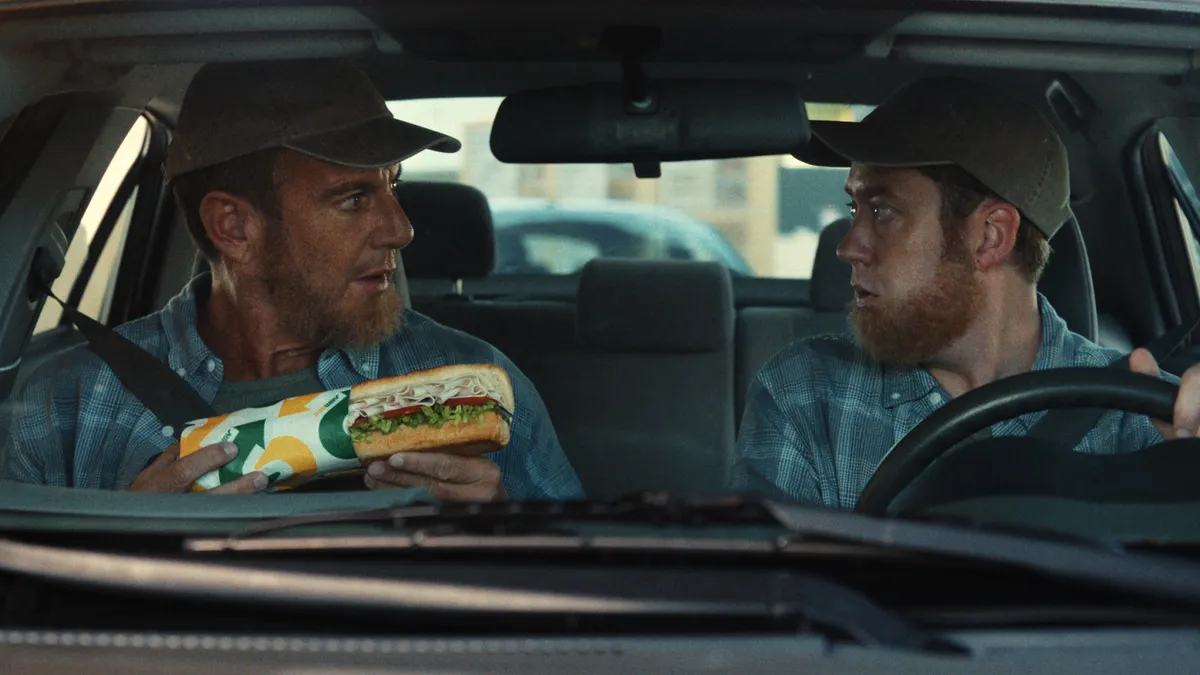
In a bold attempt to reclaim its status as the premier destination for quick, health-conscious dining, Subway has officially launched a new, expansive brand platform titled "Feed Your SUBconscious." The campaign, which debuted on September 21, 2026, marks a significant departure from the brand’s recent advertising efforts, enlisting the sardonic, unmistakable voice of actor Will Arnett to critique the modern food landscape while positioning Subway as the rational, delicious alternative.
This creative shift comes at a pivotal moment for the sandwich giant. Following internal leadership shake-ups and the appointment of a new agency of record, Subway is looking to navigate a retail environment defined by inflationary pressures, shifting consumer health trends, and the aggressive expansion of high-growth competitors.
Main Facts: The "Feed Your SUBconscious" Strategy
The "Feed Your SUBconscious" platform centers on the psychological battle consumers face when choosing what to eat. Through a series of spots, Will Arnett portrays the "inner voice" of the consumer—a gravelly, cynical, and highly perceptive narrator who calls out the absurdity of current dining habits.
The campaign targets a wide range of industry culprits:
- The Fast-Food Trap: Arnett highlights the lack of nutritional value in standard, greasy fast-food burger joints.
- The "Premium" Mirage: The spots take aim at the skyrocketing prices of trendy, boutique smoothie shops—often compared to high-end grocers like Erewhon—which charge significant premiums for items that may not actually be satisfying.
- The Protein Myth: The campaign critiques the chalky, unpalatable nature of mass-produced protein bars often used as meal replacements.
In contrast to these options, the campaign highlights Subway’s core pillars: freshly sliced meats and daily baked bread. By framing Subway as the "sensible" choice, the brand is attempting to modernize its long-standing "Eat Fresh" positioning for a generation of consumers who are increasingly skeptical of ultra-processed, high-cost convenience foods.
Chronology of Change: From Agency Reviews to Creative Evolution
The genesis of this campaign lies in a series of strategic transitions that began earlier this year.
Spring 2026: Leadership Realignment
Subway signaled a major internal shift when it eliminated the global Chief Marketing Officer role previously held by Greg Lyons. In the subsequent restructuring, the company elevated former Popeye’s executive Jeff Klein to the position of CMO. Klein, known for his track record of driving growth in the QSR space, immediately began evaluating the brand’s creative and media trajectory.
August 2026: Agency Transition
After just over a year of working with Publicis Groupe’s Leo, Subway announced that it would be parting ways with the agency. In a move that signaled a desire for a fresh, more anthemic creative voice, the brand selected The Martin Agency as its new creative agency of record.
September 2026: Launch
Within weeks of the partnership, the fruits of the collaboration were made public. "Feed Your SUBconscious" represents the first major output from The Martin Agency, serving as a clean break from the previous focus on loyalty program incentives and transactional promotions.
Supporting Data: Navigating a Shrinking Footprint
The necessity for a creative overhaul is underscored by recent performance metrics. While Subway remains one of the largest QSR chains globally, it has faced significant contraction in its domestic market. According to industry reports, the company closed at least 729 units in the United States in 2025 alone, marking the highest number of closures since the start of the current decade.

This contraction is not necessarily a sign of failure, but rather a strategic pruning as the company manages its privately held assets. However, the competitive pressure is mounting. Jersey Mike’s, a direct competitor in the sandwich segment, has engaged in a period of rapid expansion and went public in late July 2026. Their marketing strategy, which also leans into celebrity endorsements (most notably starring Danny DeVito), has proven effective at capturing market share through humor and relatability.
Furthermore, the broader QSR industry is suffering from "menu fatigue" and the erosion of the value proposition. With inflation pinching consumer wallets, diners are less willing to pay premium prices for mediocre quality. Subway’s pivot attempts to solve this by emphasizing that "fresh" and "affordable" need not be mutually exclusive.
Official Responses and Strategic Rationale
While Subway has remained relatively quiet regarding the specific financial targets of the "Feed Your SUBconscious" campaign, CMO Jeff Klein has indicated that the goal is to shift the conversation from "deals" to "value and quality."
By choosing Will Arnett to inhabit five distinct roles across the campaign, the brand is attempting to appeal to a broad demographic. The strategy is to move beyond the traditional "sandwich consumer" and instead position Subway as a meal replacement for anyone, whether they are a busy professional grabbing a quick lunch or a health-conscious individual tired of overpriced superfood smoothies.
Industry analysts suggest this is a "Category-Expansion" play. Rather than fighting only other sandwich shops, Subway is declaring war on the entire "on-the-go" food category. By positioning themselves against microwavable meals and protein snacks, they are effectively redefining what "fast food" means in the mid-2020s.

Implications: Can the Strategy Stick?
The implications of this campaign are twofold: internal brand revitalization and external market positioning.
1. Internal Morale and Consistency
For a brand that has been through several years of management churn and store closures, "Feed Your SUBconscious" serves as a rallying cry. By consolidating the brand message under a singular, high-profile voice like Arnett, Subway is attempting to create a more consistent identity. The shift away from pure loyalty-program advertising suggests that the leadership team understands that coupons alone cannot win the long-term loyalty of a discerning consumer base.
2. Challenging the Competition
Subway’s willingness to "slam" competitors—or at least the habits associated with them—is a tactic that has worked well for others. The casual dining chain Chili’s, for instance, has seen significant growth by launching campaigns that place fast-food burger joints "on trial," highlighting the price disparity between a full-service meal and a fast-food bag. If Subway can successfully convince the consumer that their sandwich is a more "logical" meal than a $15 smoothie or a chalky protein bar, they could see a significant lift in average check size and store traffic.
The Road Ahead
The success of the "Feed Your SUBconscious" campaign will be measured not just by social media sentiment, but by the stabilization of unit closures and a return to consistent year-over-year growth. In a world where consumers are increasingly bombarded by digital noise and "lifestyle" food brands, Subway’s gamble is that a return to basics—delivered with a sharp, witty, and slightly subversive tone—will resonate with a public that is, quite literally, tired of being fed the wrong things.
As the campaign rolls out across national television and digital platforms, the industry will be watching closely. For Subway, this is more than just a new ad campaign; it is a declaration of intent to remain the titan of the sandwich industry, even as the landscape beneath its feet continues to shift.