In the modern digital ecosystem, the traditional playbook for search engine optimization (SEO) is undergoing a radical metamorphosis. As the search experience shifts from a list of blue links to synthesized, AI-generated answers, enterprise brands are finding themselves in a high-stakes race to maintain visibility. For global organizations, this transition to Answer Engine Optimization (AEO) is not merely a technical update; it is a fundamental shift in how they must manage their digital identity across dozens of product lines, languages, and regional markets.
The Fragmented Reality: Why Legacy Tools Fail the Enterprise
The challenge of AEO for the enterprise is one of scale and complexity. Unlike smaller businesses that might focus on a handful of keywords, enterprise brand teams often manage global portfolios where local answer engines—such as Perplexity, ChatGPT, Gemini, or localized versions of traditional search—operate with distinct, often opaque, citation patterns.
When content teams, regional marketing heads, and product managers handle AEO in siloes, the result is fragmented visibility. A product team in Germany might optimize for a specific localized engine, while the global content team remains unaware of how the brand is being summarized by AI in North America. This lack of a "single source of truth" prevents leadership from seeing the full picture of how the brand is showing up—or disappearing—in the age of AI.
Scaling AEO at the enterprise level requires more than just tracking rankings. It demands a sophisticated infrastructure that enables centralized monitoring, seamless cross-team workflows, and, most importantly, the ability to tie visibility investments directly to revenue outcomes.
Chronology of a Paradigm Shift: From Keywords to Citations
The evolution of search has been rapid. Historically, the "SEO era" was defined by keyword density, backlink volume, and domain authority. Brands invested heavily in SEO agencies to manipulate these metrics to climb the SERPs (Search Engine Results Pages).
However, the rise of Large Language Models (LLMs) has changed the rules of engagement. We have entered the "Answer Engine Era," characterized by three distinct phases:

- The Information Retrieval Phase (Pre-2023): Search engines acted as directories. Success was defined by clicks.
- The Synthesis Phase (2023–2024): Search engines began incorporating snippets and AI summaries. Brands scrambled to "rank for the snippet," leading to a focus on structured data and schema markup.
- The Citation Phase (Present Day): AI agents now act as researchers. They synthesize data from multiple sources to provide a definitive answer. Visibility is no longer about a blue link; it is about being the cited authority within an AI’s generated response.
For the enterprise, this progression has created a "visibility vacuum." Organizations that rely on legacy tools built for the "Information Retrieval" phase are now finding themselves invisible to the "Citation" engines.
Supporting Data: The Case for Centralized Intelligence
The discrepancy between traditional SEO and AEO performance is quantifiable. According to internal data from HubSpot, organizations that adopt a centralized AEO strategy—as opposed to fragmented, team-based efforts—see a significant uptick in efficiency and lead quality.
Specifically, HubSpot AEO users report generating 2.7x more Marketing Qualified Leads (MQLs) compared to those relying on disjointed, manual tracking methods. This data suggests that when a brand can harmonize its citation strategy, it isn’t just "showing up" more often—it is appearing in front of a more qualified, intent-driven audience.
Furthermore, the "matrix" of enterprise visibility is vast. A single brand might track:
- 12+ Product Lines: Each with unique value propositions.
- Multiple Languages: Ensuring tone and authority are maintained across linguistic barriers.
- Regional Variations: Accounting for different cultural nuances in AI model training.
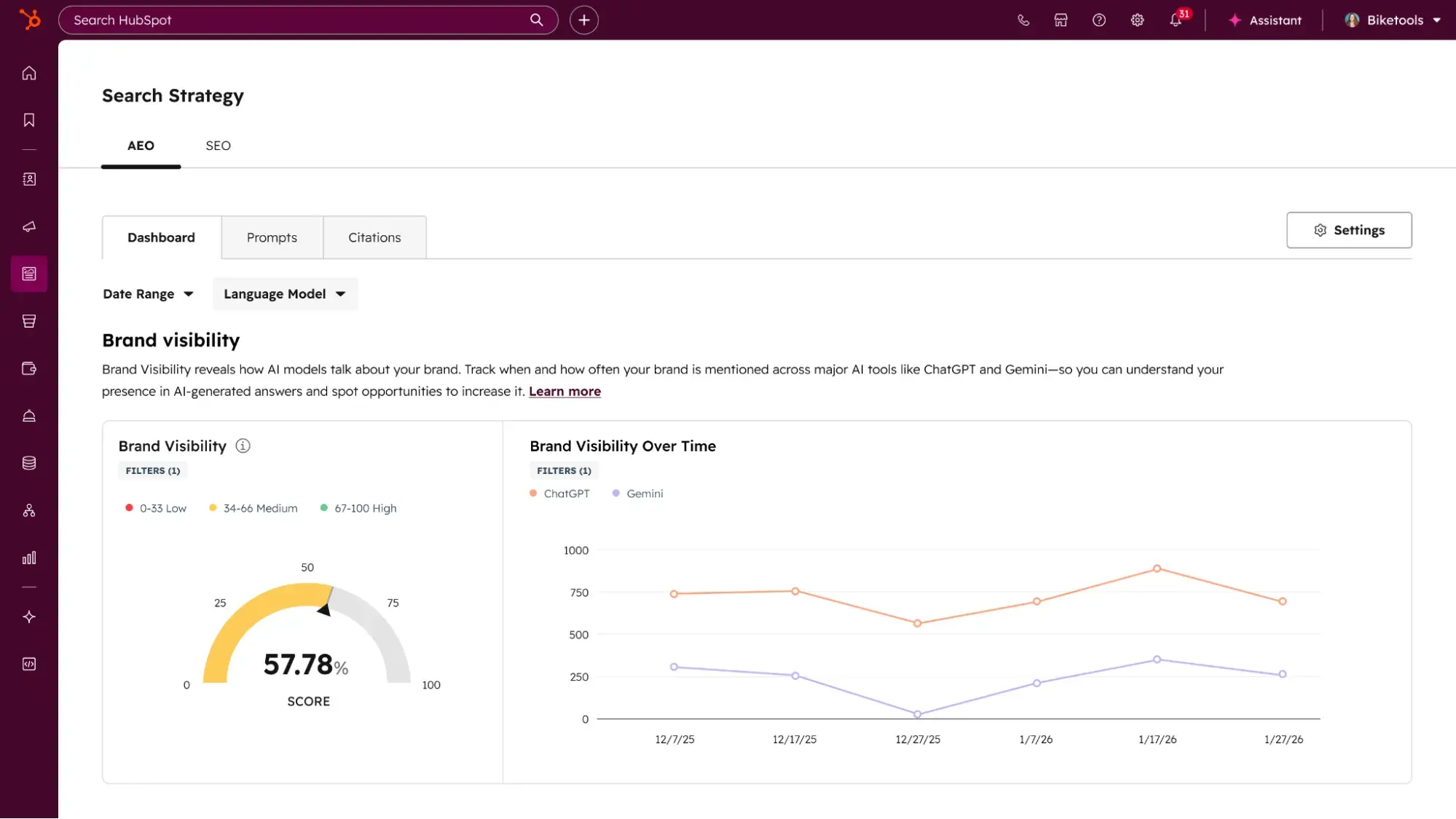
When this data is siloed, the cost of "manual assembly"—the process of stitching together spreadsheets from different regional teams—is immense. By consolidating these metrics into a unified Brand Visibility Dashboard, enterprise teams can finally measure "Share of Voice" in a way that reflects the actual AI ecosystem.
Official Strategic Perspectives
Industry experts and enterprise marketing leaders are increasingly moving toward a "Content Operations" approach to AEO. The consensus is that AEO cannot be treated as a side-project for the technical SEO team. Instead, it must be integrated into the core content workflow.

"Generating recommendations is the easy part," says one digital strategy analyst. "The friction occurs at the execution layer. If a recommendation for a content update sits in a dashboard that the creative or regional team doesn’t access, it’s just noise. The goal is to make the AEO insights actionable within the tools that teams are already using to write and publish content."
The integration of "content agents"—AI-assisted tools that help creators rewrite, optimize, or repurpose content based on specific citation opportunities—is seen as the next frontier. By embedding AEO directly into the CMS (Content Management System) or Marketing Hub, organizations can bridge the gap between identifying a visibility gap and closing it.
Implications: Connecting Visibility to Revenue
The most critical hurdle for enterprise AEO is the "attribution trap." CMOs and CFOs are often skeptical of investing in "visibility" if they cannot see a direct line to the bottom line.
Historically, SEO teams struggled to prove that "ranking higher" translated to "more revenue." AEO offers a unique opportunity to change this narrative. By connecting AEO metrics to CRM data, enterprises can perform closed-loop reporting:
- Correlation Tracking: Does an increase in brand citation frequency for a specific product line correlate with an uptick in inbound demo requests?
- Attribution Modeling: Can we attribute a specific percentage of pipeline growth to the increased visibility of our brand in AI-generated research summaries?
When HubSpot AEO is connected to platforms like Marketing Hub Pro or Enterprise, these questions move from the realm of speculation to fact. Marketing teams can finally build custom reports that showcase how improvements in "Citation Share of Voice" directly impact MQL rates and, ultimately, closed-won revenue.
Building the Infrastructure for the Future
Scaling AEO is not a destination; it is an ongoing infrastructure investment. Organizations that win in the coming decade will be those that view AEO not as a "search" problem, but as a "knowledge management" problem.

1. Centralized Monitoring
The foundation is a unified dashboard. Enterprises must stop measuring performance in snapshots and start tracking trends across multiple answer engines. This requires the ability to segment visibility by product, geography, and competitor, providing a holistic view of the brand’s digital authority.
2. Coordinated Action
The middle layer involves operationalizing insights. This means breaking down the walls between the SEO team and the regional content creators. By using tools that push recommendations directly into editorial workflows, companies ensure that every piece of content published is optimized for the AI agents that are increasingly guiding the buyer’s journey.
3. Revenue Accountability
The final layer is financial. By tying visibility metrics to CRM outcomes, AEO programs move from being "cost centers" to "revenue drivers." This transformation is essential for securing the budget necessary to compete in an AI-first landscape.
Conclusion: The Path Forward
As AI continues to refine how information is consumed, the "Blue Link" era will fade further into the background. For the enterprise, this is not a moment for panic, but a moment for modernization. By investing in the right infrastructure—one that consolidates brand visibility, aligns regional content teams, and proves business impact—enterprises can move beyond simple rankings and establish themselves as the definitive authorities in their respective markets.
The future of brand visibility belongs to those who understand that in an AI-summarized world, the brand that provides the best, most accurate, and most cited information wins the customer. With centralized AEO, that goal is no longer a vision—it is an operational reality.