Main Facts: A Strategic Convergence of Health and Commerce
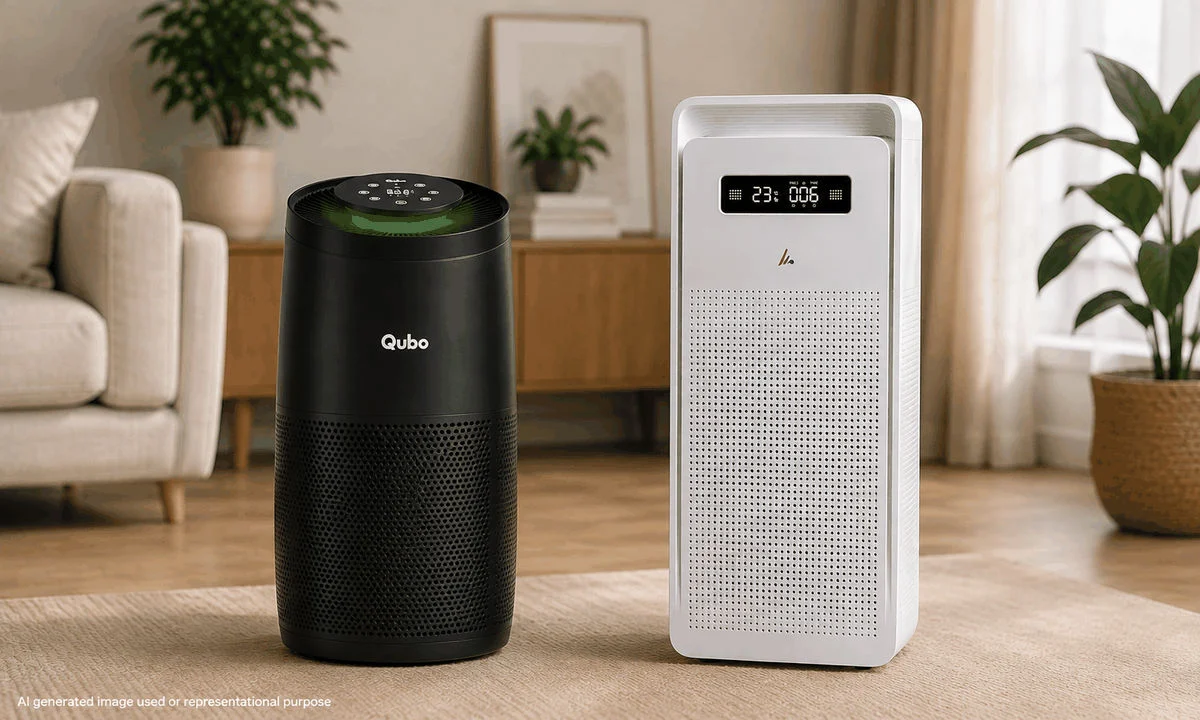
As the monsoon retreats across the Indian subcontinent, a familiar and grim atmospheric phenomenon begins to take hold. The post-monsoon period in India, particularly across the Indo-Gangetic Plain, is synonymous with a sharp decline in Air Quality Index (AQI) levels. Recognizing the urgent consumer demand for respiratory protection, e-commerce giants Amazon India and Flipkart have launched their flagship festive sales, positioning air purifiers not as luxury items, but as essential household appliances.
The current "Great Indian Festival" on Amazon features deep discounts on a spectrum of air purification technology, ranging from entry-level budget models to premium, high-performance units. Major industry players including Dyson, Honeywell, Philips, Xiaomi, and Pigeon have significantly lowered their price barriers. For instance, budget-friendly models like the Pigeon Air Purifier have seen price cuts of over 50%, while premium brands like Dyson and Honeywell have slashed thousands of rupees off their flagship models to capture a larger share of the burgeoning Indian "wellness" market.
The central narrative of this sale cycle is the democratization of clean air. By bringing high-efficiency particulate air (HEPA) technology to a price point below ₹5,000, and making smart, IoT-enabled premium units more accessible, retailers are responding to a public health crisis with a targeted commercial strategy.
Chronology: From Seasonal Niche to Mass Market Staple
The evolution of the air purifier market in India follows a distinct chronological pattern that mirrors the country’s worsening air quality crisis over the last decade.
Phase 1: The Luxury Era (2014–2017)
Initially, air purifiers were considered niche products, largely purchased by the expatriate community and high-net-worth individuals in New Delhi. Brands like Dyson and Blueair entered the market with premium price tags, often exceeding ₹40,000. During this time, the "sale" season for these devices was limited to the peak of the "Great Smog" in November.
Phase 2: The Entry of Tech Disruptors (2018–2021)
The entry of Xiaomi and Philips into the mid-range segment changed the timeline. Air purifiers began appearing in festive sales (September–October) as proactive purchases. The COVID-19 pandemic further accelerated this, as consumers became hyper-aware of indoor air quality and viral filtration.
Phase 3: The Current Landscape (2022–Present)
Today, the sale chronology has shifted to a "Pre-Winter Strategy." Amazon and Flipkart now launch these deals in early October to ensure delivery before the first major "Severe" AQI spike. The current sale highlights a mature market where consumers are educated about specifications like CADR (Clean Air Delivery Rate) and PM2.5 sensors, leading to the massive volume of deals seen today.
Supporting Data: A Comparative Analysis of Current Deals
To understand the scale of the current discounts, one must look at the technical specifications and price deltas of the featured models. The following data points highlight the most significant offers currently available on Amazon India.
1. The Budget Disruptor: Pigeon Air Purifier
- Original Price: ₹8,999
- Sale Price: ₹4,299
- Technical Highlights: This model represents the "entry-level" segment. Despite its low price, it features a 3-stage purification system including a Pre-filter and a HEPA filter. It is designed to capture particles as small as 0.5 microns.
- Efficiency: It operates on a low power consumption of 30W and includes a color-coded real-time air quality indicator, a feature previously reserved for mid-range models.
2. The Mid-Range Standard: Philips 900 Series
- Original Price: ₹12,995
- Sale Price: ₹11,950
- Technical Highlights: The 900 Series is a volume-driver for Philips. It covers an area of up to 65 square meters with a CADR of 250 m³/h.
- Innovation: It boasts an ultra-quiet ‘Sleep Mode’ operating at 20.5 dB and is fully integrated with the "Air+" app for remote monitoring, reflecting the consumer shift toward smart home integration.
3. The Performance Specialist: Honeywell Air Purifier
- Original Price: ₹22,999
- Sale Price: ₹11,489 (Approx. 50% Discount)
- Technical Highlights: Honeywell has positioned this unit for larger living spaces (up to 589 sq. ft.). It utilizes a 4-stage filtration process: Pre-filter, Nano-silver anti-bacterial filter, H13 HEPA filter, and Activated Carbon.
- Data Point: It delivers a high CADR of 380 m³/h, capable of cleaning the air in a standard room every 12 minutes. The filter life is rated for a substantial 9,000 hours.
4. The Premium Benchmark: Dyson Hushjet Purifier Compact-HJ10
- Original Price: ₹34,900
- Sale Price: ₹29,900
- Technical Highlights: Dyson remains the gold standard for air projection technology. This compact model covers up to 1,076 square feet.
- Smart Integration: Beyond simple filtration, it offers deep data analytics through the MyDyson app and supports multi-voice assistant integration (Alexa, Siri, Google Home).
5. The Value King: Xiaomi Air Purifier 4 Lite
- Sale Price: ₹10,990
- Market Position: Xiaomi continues to dominate the "Value for Money" segment, offering high CADR and sleek aesthetics that appeal to urban millennials.
Official Responses and Industry Sentiment
While individual brands rarely comment on specific sale prices, the general consensus among consumer electronics leadership in India points toward a permanent shift in consumer behavior.
Market Analysts’ Perspective:
Industry analysts from firms like IDC and Counterpoint Research suggest that the air purifier category is seeing a 25-30% year-on-year growth during the festive season. "We are seeing a transition from ‘panic buying’ in November to ‘planned purchasing’ in October," says a senior retail analyst. "The e-commerce platforms are leveraging this by offering bundled bank offers—such as the SBI card discounts mentioned in the Amazon listings—to lower the psychological barrier of the high upfront cost."
Manufacturer Stance:
Spokespeople from brands like Philips and Honeywell have historically emphasized that the Indian market requires specific filtration needs, such as heavy-duty carbon filters to combat the unique "urban cocktail" of vehicular emissions and construction dust. Their participation in these sales is a move to scale their technology to the middle-class demographic, moving beyond the tier-1 city elites.
Amazon India Strategy:
Amazon’s focus on "Smart Home" categories this year includes air purifiers as a pillar of their "Home Safety and Wellness" storefront. By providing No-Cost EMIs and exchange offers, the platform is actively trying to convert the millions of households that currently rely only on basic fans or air conditioners into air-purified homes.
Implications: Health, Economy, and the Environment
The aggressive discounting of air purifiers carries significant implications for various sectors of Indian society.
1. Public Health Implications
The primary driver of this market is the deteriorating health of the urban population. With PM2.5 levels often exceeding WHO limits by 20 to 30 times during winter, indoor air purifiers have become a vital tool in reducing respiratory ailments, particularly for children and the elderly. The accessibility of these devices could potentially lead to a reduction in seasonal hospitalizations related to asthma and COPD.
2. The Economic Shift
The air purifier industry is no longer a seasonal "pop-up" market. It has become a year-round industry with a massive supply chain involving filter replacements. For every purifier sold at a discount today, there is a recurring revenue stream for filters (costing between ₹1,500 and ₹5,000) every 6 to 12 months. This "razor and blade" business model ensures that brands remain profitable even with deep initial discounts.
3. Technological Democratization
The fact that a Pigeon air purifier with a HEPA filter is available for under ₹4,500 signifies a major technological milestone. High-efficiency filtration, once expensive to manufacture, has reached a level of industrial scale where it can be mass-produced cheaply. This allows lower-income households to access a level of environmental safety previously reserved for the wealthy.
4. The Environmental Irony
There remains a poignant irony in the rise of the air purifier market. As consumers buy more electronic devices to protect themselves from pollution, the energy consumption of the country rises. However, the move toward energy-efficient models—like the 23W to 30W units from Philips and Pigeon—shows that manufacturers are at least conscious of the carbon footprint of these "survival" appliances.
Conclusion: A Breath of Fresh Air for Consumers?
The current Amazon and Flipkart sales represent a critical window for Indian consumers. As the skies over North India begin to haze over with the arrival of the "stubble burning" season and stagnant winter air, the availability of discounted technology offers a semblance of control over one’s immediate environment.
While air purifiers are a "band-aid" solution to the much larger systemic problem of environmental pollution, the current market trends indicate that for the foreseeable future, the "Great Indian Festival" will be as much about buying clean air as it is about buying new clothes or sweets. For the savvy shopper, the data is clear: the current window offers the best balance of price and protection before the inevitable "pollution-spike" price hikes of November.