In a move that signals a paradigm shift in the global electronics supply chain, Swiss technology titan Logitech has officially inaugurated its manufacturing operations in India. This development, marking a significant milestone in the company’s 45-year history, involves the establishment of a sophisticated assembly facility in Manesar, Haryana, in collaboration with a prominent local electronics manufacturing services (EMS) provider.
By transitioning from a purely commercial and R&D presence to a full-scale manufacturing entity within the subcontinent, Logitech is not merely expanding its footprint; it is fundamentally rewriting its operational playbook to align with one of the world’s fastest-growing economies. This strategic pivot comes at a time when "Make in India" initiatives and global "China Plus One" strategies are converging, positioning India as a central pillar in the future of high-tech production.
I. Main Facts: The Manesar Mandate and Strategic Alignment
The core of Logitech’s new Indian chapter lies in its Manesar facility. This plant represents more than just a production line; it is a localized hub designed to enhance the company’s "operational agility and supply chain resilience."
A Phased Production Strategy
Logitech’s approach to manufacturing in India is disciplined and phased. The initial focus of the Manesar operations is centered on Personal Workspace Solutions.
- Phase One: The production has commenced with high-demand webcams, catering to the burgeoning remote work and content creation sectors.
- Phase Two: The roadmap includes a swift expansion into "pointing devices," which encompasses the company’s world-renowned range of ergonomic mice and keyboards.
The Partnership Model
Unlike traditional outsourcing, Logitech has opted for a "Deep Ecosystem Engagement" model. Rather than treating their local EMS provider as a mere contract manufacturer, Logitech is actively exporting its global manufacturing standards. This involves rigorous quality testing, process optimization, and the implementation of Swiss-engineered production benchmarks. The goal is to ensure that a product manufactured in Haryana is indistinguishable in quality and performance from one produced in any of Logitech’s other global facilities.
II. Chronology: From Distribution to Localized Engineering
Logitech’s journey in India has evolved through several distinct stages, moving from the periphery of the market to its very core.
- Market Entry and Distribution: For decades, Logitech operated in India primarily through a robust distribution network, establishing itself as the premier brand for computer peripherals.
- The R&D Evolution (Chennai Hub): Years ago, the company established a Research and Development center in Chennai. Initially focused on software and quality control, this hub has matured into a cornerstone of Logitech’s global innovation engine. Today, the Chennai R&D center handles complex hardware engineering and built-in AI optimization for global product lines.
- The Manufacturing Pivot (2024): The commencement of assembly in Manesar completes the "triangle" of Logitech’s presence—integrating R&D, commercial operations, and manufacturing within the same geography.
This chronology reflects a broader trend among global tech majors: India is no longer viewed solely as a consumer market, but as a holistic base for the entire product lifecycle—from conception and code to components and consumption.
III. Supporting Data: Market Dominance and Economic Drivers
Logitech’s decision to manufacture locally is backed by formidable market data and shifting consumer behaviors. The company is not entering the Indian manufacturing space as a challenger, but as a dominant incumbent looking to protect and grow its territory.
Market Share and Consumer Trends
Logitech currently holds a commanding lead in several key categories in India:
- Mid-to-High-End Peripherals: Over 40% market share.
- Webcams: A staggering 75% market share.
The demand for these products is being driven by two primary engines:
- The Rise of Quick-Commerce: The explosion of platforms like Blinkit, Zepto, and Swiggy Instamart has revolutionized how peripherals are purchased. Instant delivery requires localized inventory and faster replenishment cycles, which local manufacturing facilitates.
- The GCC Boom: India is home to over 1,600 Global Capability Centers (GCCs). These large-scale corporate entities require customized, high-quality hardware for thousands of employees, creating a massive B2B (Business-to-Business) vertical for Logitech.
Sustainability as a Competitive Edge
Logitech’s manufacturing isn’t just about volume; it’s about "green" volume.
- PCR Integration: More than 80% of Logitech’s Personal Workspace Solutions portfolio utilizes Post-Consumer Recycled (PCR) plastic.
- Carbon Goals: The company is on a mission to halve its global carbon emissions by FY30.
- Local Material Sourcing: By manufacturing in India, Logitech reduces the carbon footprint associated with long-range logistics and shipping.
IV. Official Responses: Insights from the Leadership
In exclusive dialogues, Logitech’s top brass emphasized that the move to India is a "market-driven story" rather than a mere cost-saving exercise.
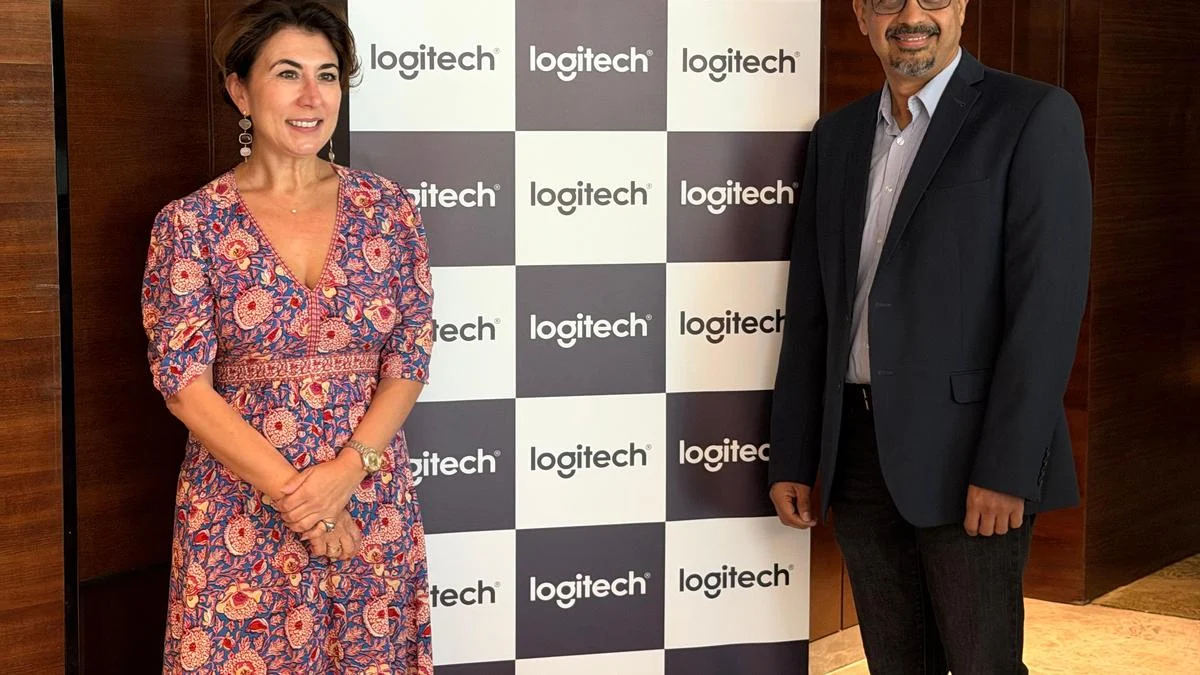
Sree Chenincherry, Chief Supply Chain Operations Officer, highlighted the necessity of proximity:
"For us, it is a market story of how we get closer to the consumer to build our operational agility and resilience. India is an important market for us with immense potential. We have a mandate to get closer to customers here and serve them better. Our approach isn’t simply asking a partner to build and deliver a product. It’s about helping them elevate their process, quality testing, and manufacturing standards to meet our global benchmarks."
Delphine Donné, Vice President and General Manager of Personal Work Solutions, discussed the synergy between hardware and the AI revolution:
"In the age of AI, hardware solutions have never been as relevant. We are the main point of connection between users and digital systems. Our hardware acts as the extension of a user’s hands, eyes, ears, and voice to provide commands to AI tools. Ideally, as an operations person, you want to be close to R&D and close to the market. This gives us the best of both worlds."
On the topic of the future, Donné expressed a high degree of bullishness:
"We have never been as excited about the potential of Logitech in India. Between manufacturing, AI transformation, B2B opportunities, and new product innovations, this is really a new beginning for us."
V. Implications: The Broader Impact on the Tech Ecosystem
The arrival of Logitech’s manufacturing operations in India carries profound implications for the local economy, the global supply chain, and the future of human-computer interaction.
1. The "Hardware-as-an-AI-Interface" Shift
As generative AI becomes integrated into daily workflows, the mouse and keyboard are evolving. They are no longer "dumb" input devices but "smart" interfaces. By having R&D in Chennai and manufacturing in Manesar, Logitech can rapidly prototype and produce AI-optimized hardware—such as keyboards with dedicated AI-prompt keys or webcams with edge-processed AI features—tailored specifically for the Indian workforce.
2. Elevating the Local EMS Industry
Logitech’s insistence on "Swiss standards" in a Manesar plant acts as a catalyst for the Indian electronics manufacturing services sector. To meet Logitech’s requirements—particularly in molding 80% PCR plastic while maintaining structural integrity—local partners must upgrade their technical capabilities. This "knowledge transfer" raises the bar for the entire Indian electronics ecosystem, making it more competitive on a global scale.
3. India as a Future Export Hub
While the immediate goal is to satisfy domestic demand, the long-term implication is clear: export. As the Manesar facility matures and achieves the necessary economies of scale, it is poised to serve as a hub for the broader South Asian and potentially Middle Eastern markets. This aligns perfectly with the Indian government’s vision of making the country a global electronics manufacturing powerhouse.
4. Combatting the Counterfeit Market
The presence of local manufacturing allows Logitech to exert tighter control over its supply chain. In a market where counterfeit peripherals are a persistent challenge in local electronics hubs, a "Made in India" Logitech product provides a clear trail of authenticity. The company plans to pair this localized production with advanced product tracking technologies and brand storytelling to ensure consumers receive genuine, high-performance gear.
5. Sustainability and Circular Economy
By implementing PCR plastic manufacturing at scale in India, Logitech is setting a precedent for environmental responsibility in the tech sector. This move challenges other manufacturers to look beyond "assembly" and focus on the "materiality" of their products, promoting a circular economy within the Indian industrial landscape.
Conclusion
Logitech’s entry into Indian manufacturing is a multifaceted strategic masterstroke. It addresses the need for supply chain resilience, capitalizes on the massive B2B and quick-commerce growth in India, and leverages the country’s growing R&D prowess. As the lines between hardware, software, and artificial intelligence continue to blur, Logitech’s localized presence ensures it will remain the primary interface through which India’s digital future is written.