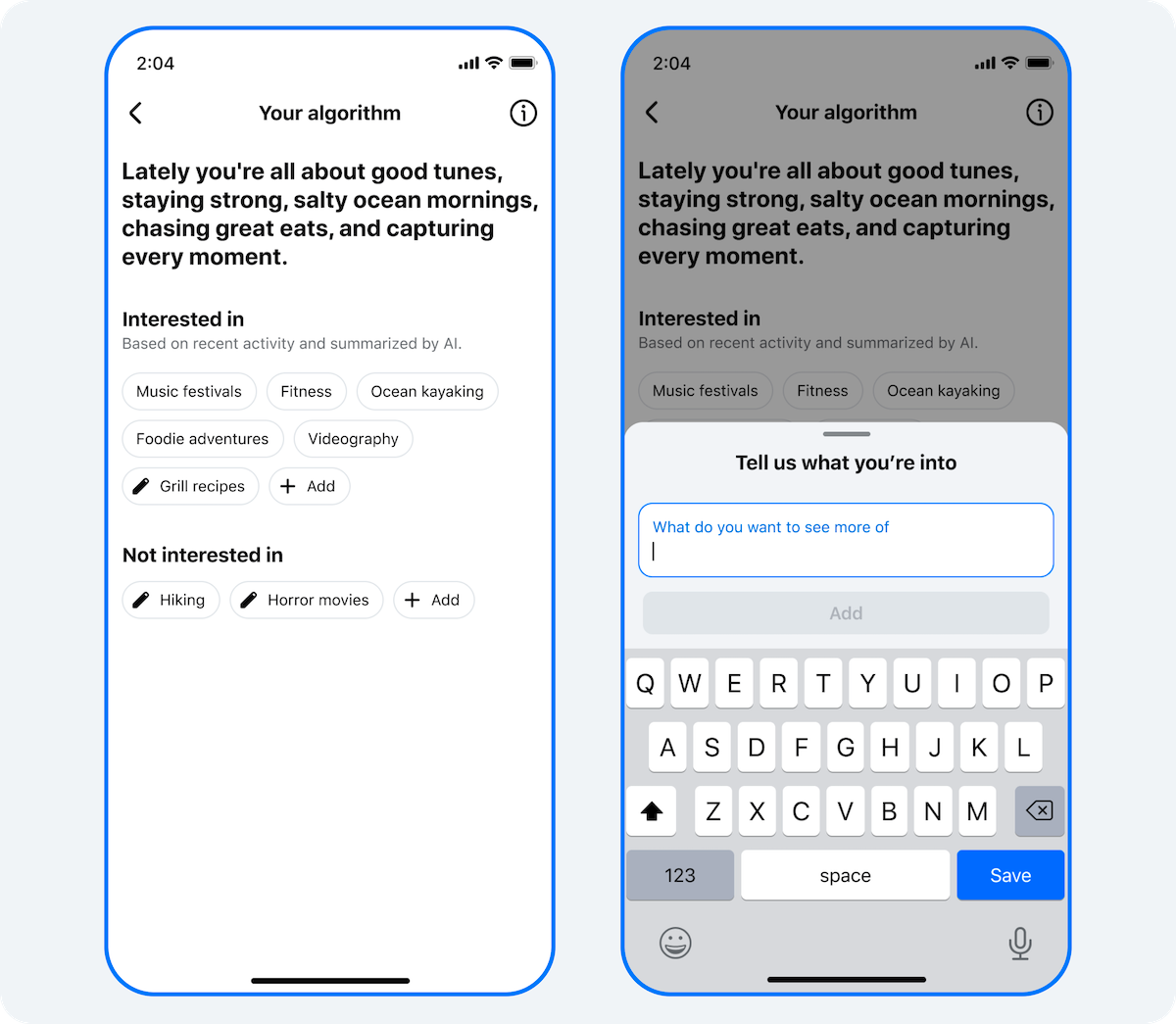
In a significant pivot for the world’s largest social media network, Meta has officially rolled out its "Your Algorithm" feature to Facebook. The update, announced on Tuesday, October 13, 2026, marks a watershed moment in the relationship between AI-driven recommendation engines and human intent. By allowing users to describe their content preferences using natural language, Meta is effectively dismantling the "black box" nature of its feed, granting users an unprecedented level of agency over their digital experience.
This shift, which brings Facebook in line with Instagram and Threads, represents a fundamental change in how the platform balances its commercial goals—keeping users engaged—with the growing consumer demand for digital autonomy.
Main Facts: What is "Your Algorithm"?
At its core, "Your Algorithm" is an AI-powered interface that moves beyond the binary "like" or "share" buttons that have defined social media for over a decade. Instead of forcing users to rely on passive signals (like watch time or dwell time) to influence their feeds, the tool enables a direct, linguistic dialogue between the user and the platform.
Users can now navigate to their settings or use the updated three-dot menu on any post to access the feature. Within this interface, they can articulate exactly what they want to see more or less of. For instance, a user could type, "I want to see more high-quality photography and tutorials related to woodworking, but less political commentary or divisive opinion pieces." The AI processes these natural language instructions and adjusts the ranking signals for that user’s feed in real-time.
Crucially, the system is interactive. When a user provides feedback, the platform may trigger follow-up questions to clarify intent. This ensures that the algorithm doesn’t just guess what the user wants based on past behavior, but learns based on explicitly stated preferences.
A Chronological Evolution of Control
The road to "Your Algorithm" was not an overnight development. It is the culmination of a multi-year strategy by Meta to address mounting criticism regarding the "addictive" and often opaque nature of its recommendation systems.
- December 2025: Meta begins testing "Your Algorithm" on Reels, recognizing that short-form video content was the area where users felt the least control over their rapid-fire consumption habits.
- June 2026: Encouraged by positive feedback and improved user retention metrics, Meta expands the feature to Instagram’s primary Feed and Explore tabs. During this period, Meta also tests various iterations to ensure that user-stated preferences do not inadvertently create "echo chambers."
- February 2026: Threads, Meta’s text-based alternative to X (formerly Twitter), introduces "Dear Algo." This feature served as a sandbox for the company to experiment with user-driven algorithmic tuning, proving that users were not only willing to customize their feeds but were actively seeking the tools to do so.
- October 13, 2026: The official launch of "Your Algorithm" on Facebook, marking the integration of this technology into the company’s most mature and largest platform.
Supporting Data: Why Change Now?
The transition to user-controlled algorithms is driven by both sociological trends and competitive pressures. For years, platforms like TikTok dominated the landscape by prioritizing a highly efficient, hyper-personalized recommendation engine that required zero user input. However, this "passive-consumption" model has faced significant backlash from regulators and users who feel that algorithms prioritize engagement-bait—often sensational or polarizing content—over user well-being.
Meta’s internal data, while proprietary, suggests that user retention increases when people feel they have "content agency." When users can curate their own experience, they spend more time on the platform because the content they encounter is inherently more relevant. By shifting the burden of curation from a purely automated system to a collaborative effort, Meta is betting that "intentional consumption" will lead to higher-quality engagement than "algorithmic addiction."
Furthermore, as generative AI becomes ubiquitous, users are becoming more comfortable with "chatting" with their software. The move to natural language as an interface is a strategic attempt to modernize the Facebook experience for a demographic that expects their digital tools to be as intuitive as a ChatGPT-like assistant.

Official Responses and Corporate Strategy
In its official statement, Meta emphasized that "Your Algorithm" is not about removing AI from the equation, but about making the AI a "co-pilot" rather than a "dictator."
"Our goal is to ensure that the content you see on Facebook is a reflection of your evolving interests," a spokesperson for Meta stated during the launch. "We understand that your preferences on Monday morning—when you might be looking for news or industry updates—are vastly different from your preferences on Friday night. This feature allows the platform to adapt to your state of mind, rather than forcing you into a static category based on your history from three years ago."
Industry analysts have interpreted this as a defensive yet clever move. By providing these tools, Meta is preempting potential legislation that could mandate "algorithmic transparency" or "user-tunable feeds." If a company provides the tools itself, it maintains control over the underlying data architecture, whereas government-mandated transparency could be far more disruptive to their business model.
Implications: The Future of Social Media
The ripple effects of this update are likely to be profound, both for users and for the creators who populate the platform.
For the Average User
The most immediate implication is the reduction of "algorithmic fatigue." Many users have expressed frustration with "recommended for you" content that feels disconnected from their actual identity. With the ability to prune the feed, users may see a decrease in unwanted advertisements and rage-bait, potentially making social media a more functional, less emotionally taxing tool.
For Creators and Publishers
For those who create content for a living, this is a double-edged sword. If users explicitly tell the algorithm they want less of a certain topic, creators in that niche may see a dip in reach. Conversely, if users explicitly ask for more of a specific type of content, creators who double down on high-quality, niche-specific work may find themselves rewarded with a more loyal, highly-targeted audience. The days of "gaming the algorithm" through clickbait titles or trending sounds may be numbered, as the algorithm becomes increasingly sensitive to explicit user-requested quality rather than just broad engagement metrics.
For the Industry
The "Your Algorithm" feature sets a new industry standard. We are moving toward a paradigm where "curation as a service" becomes a primary feature of social platforms. Expect other competitors to follow suit, likely launching their own versions of "conversational feed tuning" within the next 18 to 24 months.
Ultimately, this move signals that the "Golden Age of Algorithmic Obscurity" is coming to a close. Users are no longer content to be passive recipients of a machine-learning output; they want to be the architects of their own digital environments. Whether this will successfully balance the business imperatives of Meta with the human desire for agency remains to be seen, but the rollout marks an undeniable shift in the power dynamics of the social web.
As we move toward 2027, the success of "Your Algorithm" will likely serve as the benchmark for how effectively a major tech giant can pivot from the "feed-as-a-service" model to the "feed-as-a-partner" model, fundamentally changing the daily habits of billions of users worldwide.