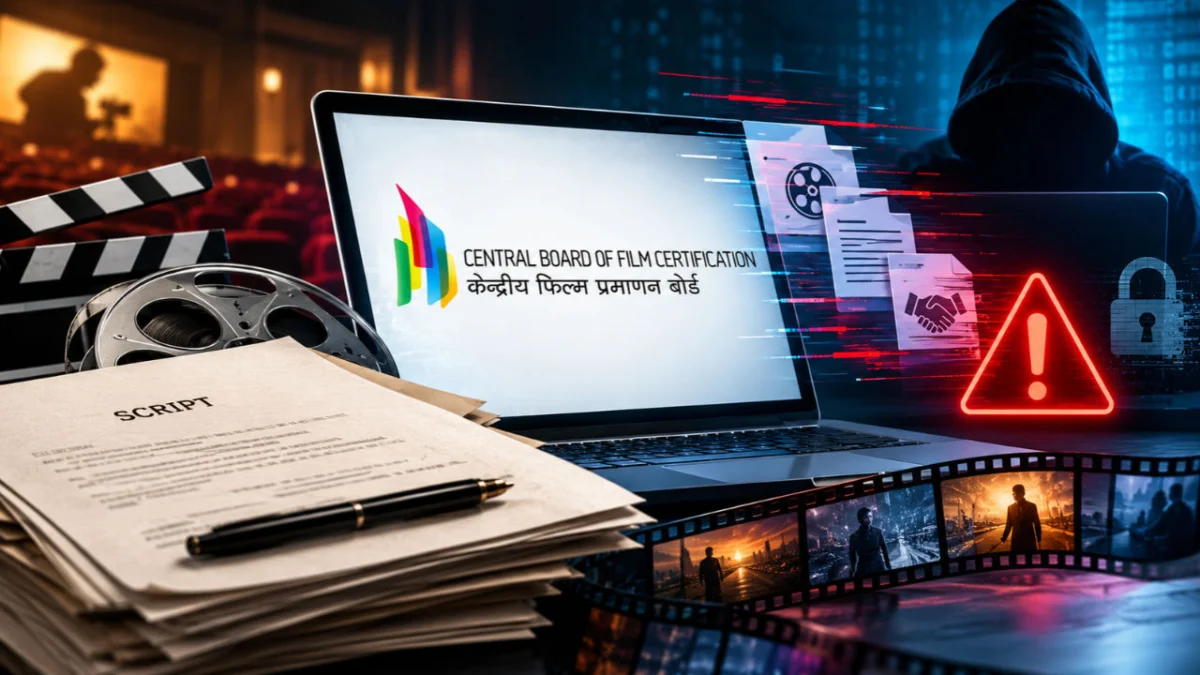
The sanctity of India’s film certification process has been thrown into question following reports of a significant data breach at the Central Board of Film Certification (CBFC). The leak, which allegedly originated from the board’s digital wing, has reportedly exposed sensitive intellectual property and confidential commercial data belonging to over 500 films. As the primary regulatory body under the Ministry of Information and Broadcasting, the CBFC is responsible for the "public exhibition" rights of every film in India. The exposure of internal documents—ranging from unreleased scripts to high-stakes business contracts—represents not just a technical failure, but a potential economic crisis for the Indian film industry.
The Core Facts: What Was Exposed?
According to an investigative report first brought to light by The Hindu, the breach appears to have compromised the e-Cinepramaan portal, a digital platform launched in 2017 to streamline the film certification process. The sheer volume of the leak is staggering, involving more than 500 individual titles. These are not merely titles of films already in the public domain, but projects currently in the pipeline, seeking the mandatory clearance certificates required for theatrical release across the Indian subcontinent.
The leaked repository reportedly contains:
- Detailed Film Scripts: The creative blueprints of upcoming projects, the exposure of which could lead to plagiarism or the premature revelation of plot twists.
- Censor Cut Orders: Specific instructions from the CBFC regarding scenes to be deleted or modified. These are often politically or socially sensitive and can spark controversy if leaked before the film’s release.
- Confidential Business Agreements: Legal contracts between filmmakers, producers, and distributors that detail the inner workings of a film’s financial structure.
- Licensing and Distribution Documents: Highly sensitive data regarding how much distributors paid for rights and the specific territories covered.
Among the high-profile casualties of this leak are documents related to the Brazilian film The Secret Agent and the Hollywood production Good Luck, Have Fun, Don’t Die. The exposure of international titles indicates that the breach has global ramifications, potentially affecting India’s reputation as a secure market for international film distribution.
Chronology of the Incident
The timeline of the breach suggests a prolonged period of vulnerability before the issue was detected and mitigated.
- December 2025 – August 2026 (Dated Documents): The documents found in the leak were dated within this range, indicating that the breach involved both current filings and future-dated administrative records.
- Early 2024 – Mid-2024: It is suspected that the unauthorized access occurred during this window, as documents began appearing on third-party hosting sites.
- October 2024: The leaked contents were discovered on the Internet Archive (Wayback Machine), a non-profit digital library. These records were freely accessible to anyone with the specific URL or search parameters.
- Early November 2024: Following the discovery, the Internet Archive removed the records and notified relevant authorities.
- Current Status: The CBFC has initiated a comprehensive security audit of the e-Cinepramaan portal while involving the Indian Computer Emergency Response Team (CERT-In) to trace the source of the intrusion.
Supporting Data: The Nature of the Vulnerability
The e-Cinepramaan portal was designed to be a "paperless" solution to the often-criticized bureaucracy of the censor board. While it succeeded in making the application process more transparent for filmmakers, this breach suggests that the security infrastructure did not keep pace with the sensitivity of the data being hosted.
The e-Cinepramaan Ecosystem
The portal handles massive amounts of metadata. When a filmmaker applies for certification, they must upload a script, a synopsis, and proof of ownership. For foreign films, distribution agreements are mandatory to prove that the applicant has the legal right to represent the film in India. By gaining access to this portal, bad actors essentially gained a "backdoor" into the strategic planning of the Indian film market for the next two years.
The Role of the Internet Archive
The fact that the data appeared on the Internet Archive is particularly concerning. Usually, data appears there through automated "web crawlers" or manual uploads. If a crawler found the documents, it implies that the CBFC’s internal directories were not properly indexed or protected by firewalls, making them "public-facing" even if they weren’t linked on the main homepage.
Official Responses and Investigative Actions
The CBFC has maintained a cautious stance, balancing the need for transparency with the necessity of preventing panic within the film industry.
The CBFC Chairperson’s Statement
The office of Shashi Shekhar Vempati, the CBFC Chairperson, issued a statement in response to the initial reports. While acknowledging the gravity of the allegations, the board stated that "no trace has been found of the certification-related documents that were claimed to have been accessed" during their preliminary internal review. However, they confirmed that a deep-dive investigation is underway.
Involvement of CERT-In
The Indian Computer Emergency Response Team (CERT-In), the national nodal agency for responding to computer security incidents, has been officially notified. Their role will be to conduct a forensic audit to determine if the breach was an external hack, an internal leak, or a result of a misconfigured server.
Cybersecurity Measures
The CBFC has noted that while documents were exposed, the "individual accounts" of filmmakers—which contain sensitive payment information and personal identity documents—remain unaffected. As a precautionary measure, a full-scale security audit of the e-Cinepramaan portal is currently being conducted by third-party cybersecurity experts to patch any existing vulnerabilities.
The Implications: A Crisis of Confidence and Commerce
The ramifications of this leak extend far beyond technical glitches; they strike at the heart of the film industry’s economic model.
1. Erosion of Negotiation Power
In the film industry, information is currency. The leaked agreements reportedly reveal licensing fees and revenue-sharing models. If a distributor knows exactly what a producer accepted from another party, the producer loses all leverage in future negotiations. This "information asymmetry" can lead to millions of dollars in losses for production houses.
2. Intellectual Property (IP) Risks
For a filmmaker, the script is the most valuable asset until the day the movie hits the screen. A leaked script allows for the possibility of "copycat" productions, or worse, "spoiler" campaigns that can ruin a film’s opening weekend—the most critical period for recouping investment.
3. Legal and Contractual Liabilities
The exposure of Intellectual Property Rights (IPR) and distribution obligations could lead to a wave of litigation. If a filmmaker’s confidential contract is leaked through a government portal, the filmmaker may have grounds to sue for damages, citing the government’s failure to protect proprietary data.

4. Impact on International Relations
India is one of the world’s largest markets for Hollywood and international cinema. If international studios feel that their confidential business terms and unreleased content are not safe with the Indian regulator, they may become hesitant to bring their "A-list" content to the country, or they may demand more stringent (and expensive) security protocols that could delay releases.
5. Political and Social Sensitivity
Censor cut orders are often the subject of intense public debate. When these orders are leaked, they can be taken out of context to fuel social media outrage or political protests before a filmmaker has the chance to defend their work. This adds a layer of "social risk" to an already volatile industry.
Contextualizing the Breach in India’s Digital Landscape
The CBFC leak is not an isolated incident but part of a concerning trend of data vulnerabilities in state-managed portals. Recently, the State Bank of India (SBI) faced a similar situation where thousands of records were potentially exposed. These incidents highlight a critical gap in the "Digital India" mission: as services move online to increase efficiency, the "security-by-design" principle must be more rigorously applied.
For the CBFC, the e-Cinepramaan portal was a symbol of modernization. This breach serves as a reminder that digitalization without robust, multi-layered cybersecurity is a liability.
Conclusion: The Path to Recovery
The alleged CBFC data leak is a wake-up call for the Ministry of Information and Broadcasting. While the board’s current investigation is a necessary first step, the industry is calling for more concrete actions. These include:
- Two-Factor Authentication (2FA): Implementing stricter access controls for any official accessing the e-Cinepramaan backend.
- End-to-End Encryption: Ensuring that scripts and legal documents are encrypted at rest, meaning even if a hacker gains access to the server, the files remain unreadable.
- Regular Transparency Reports: The CBFC should provide regular updates to the film guilds and producers’ associations regarding the safety of their data.
As the investigation continues, the focus remains on whether the CBFC can restore the trust of the filmmakers who are legally mandated to hand over their most precious creative and commercial secrets to the board. In an era where data is the new oil, the "Secret Agents" of the cyber world have proven that even the most guarded vaults of the Indian state are not impenetrable.