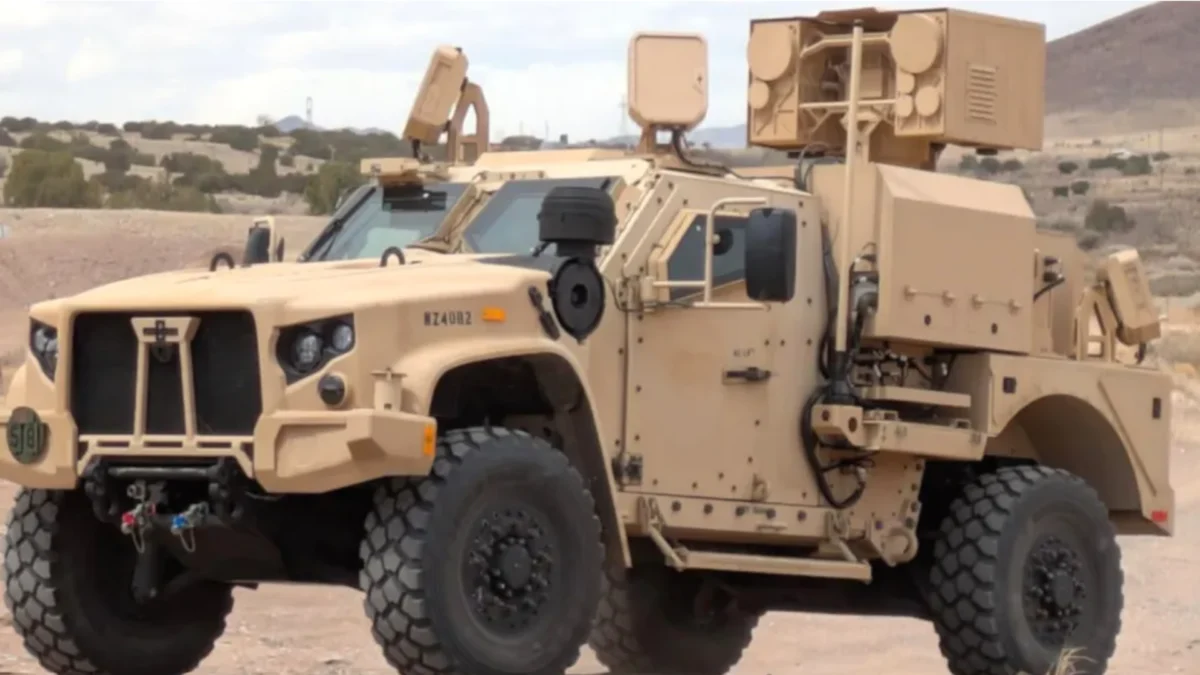
In an era where the battlefield is increasingly dominated by low-cost, high-volume drone swarms, the U.S. Army is pivoting toward a radical shift in air defense strategy. Moving away from heavy, bespoke anti-air platforms, the service is betting on modular, high-energy laser weapons capable of turning ordinary tactical trucks into lethal, cost-effective interceptors. At the heart of this transformation is the LOCUST X3, a 30-kilowatt directed-energy system developed by AeroVironment that promises to redefine how the military manages the skies.
The Core Mandate: Democratizing Air Defense
The U.S. Army’s pursuit of directed-energy weapons (DEW) is not merely a technological upgrade; it is an economic necessity. Traditional missile-based air defense systems—such as the Patriot or even shorter-range Stingers—rely on expensive interceptors to neutralize targets that may cost only a few hundred dollars. As the prevalence of Group 1 to Group 3 drones (ranging from 9 kg to 600 kg) grows, the math of modern warfare has become unsustainable.
The LOCUST X3 (Laser Optimized Communication and Utility System Technology) aims to solve this "cost-exchange ratio" crisis. By utilizing a 30-kilowatt laser, the system can neutralize incoming unmanned aerial systems (UAS) at a fraction of the cost of a kinetic interceptor. AeroVironment estimates that each engagement costs less than $10, with some internal reports suggesting the cost could be as low as $5 per shot. This capability provides a scalable, near-infinite magazine of ammunition, provided there is a power source to keep the system running.
A Brief Chronology of Development
The Army’s journey toward the current iteration of the LOCUST program has been marked by both technical hurdles and strategic pivots:
- 2022: The Army reactivates an air defense battalion at Fort Sill, Oklahoma, focusing on laser-equipped Stryker vehicles. Early testing reveals that while the laser tech is maturing, the integration into specific, rigid platforms creates reliability and maintenance bottlenecks.
- March 2026: A key industry trade report highlights the extreme cost-efficiency of the platform, citing the $5-per-shot operational cost that captures the attention of the Department of Defense.
- August 25, 2026: The Army reports a successful drone interception near the U.S.-Mexico border, marking a milestone for the LOCUST system in a real-world, albeit domestic, operational environment.
- September 2026: AeroVironment secures the initial manufacturing contract from the U.S. Army, a deal valued at $464.8 million, formalizing the production of the LOCUST X3.
- September 8, 2026: AeroVironment announces its first international order for the system, valued at over $50 million, signaling global interest in mobile directed-energy solutions.
- Early 2028 (Projected): The U.S. Army anticipates the first units of the X3 to be fully operational and fielded in active combat units.
Engineering the "Sled" Concept: Portability and Reliability
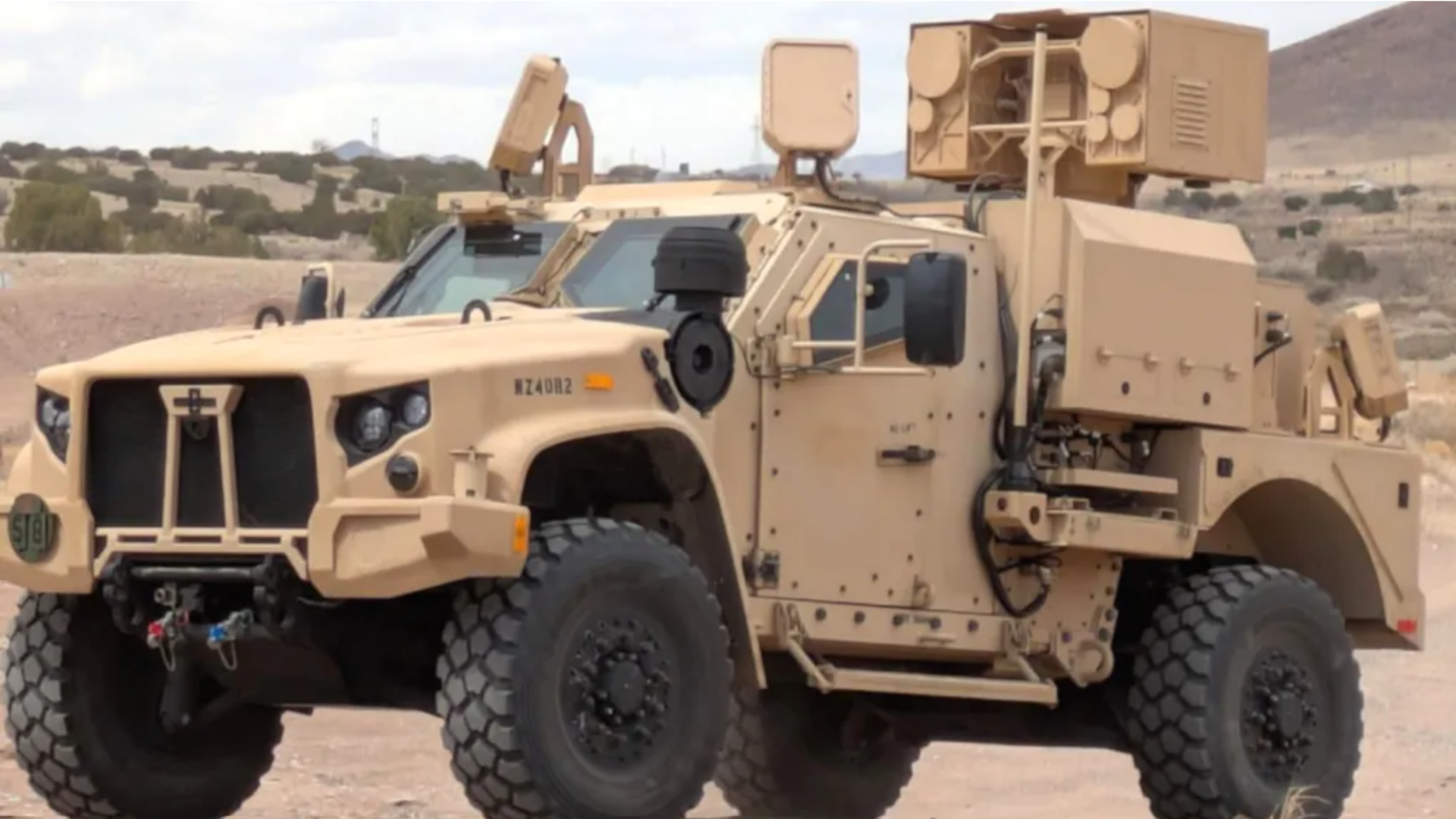
One of the most significant innovations in the LOCUST program is its "sled" design. Historically, military laser programs were tethered to a single, dedicated vehicle chassis. If that vehicle broke down, the weapon was effectively sidelined.
Kirk Williams, Chief Engineer at the Army’s Directed Energy Project Office, has emphasized that the transition to a modular, detachable frame is the key to field viability. "We’re getting to the point where the systems are reliable enough, but we still have to make them maintainable and repairable," Williams noted. "It’s going to be on a battlefield. Things are going to break… So if it’s not reliable, or if it’s not maintainable, if it’s not repairable, that’s a problem."
By decoupling the laser from the vehicle, the Army can move the weapon between various platforms within a motorpool. This creates a "plug-and-play" capability where any sufficiently rated tactical truck can serve as an air-defense platform. Brig. Gen. Guy Yelverton, the Army’s Capability Program Executive for Defensive Fires, echoed this sentiment, stating, "We’re focused on any vehicle in the motorpool. I want to try to integrate future capability of high-energy lasers into it."
Supporting Data and Technological Specifications
The LOCUST X3 operates within a 20 to 35-kilowatt power envelope, depending on the specific mission requirements. To ensure accuracy and target acquisition, the system utilizes "Halo Pinpoint," an in-house artificial intelligence suite developed by AeroVironment. This AI manages the entire engagement cycle—from detection and tracking to the final firing solution—allowing operators to focus on broader situational awareness.
However, the technology is not without its physical constraints:
- Power Limitations: Current battery technology limits the system to roughly 80 to 120 seconds of sustained firing time before requiring a recharge cycle.
- Environmental Degradation: As with all directed-energy weapons, the laser beam is susceptible to "blooming" and attenuation caused by atmospheric conditions such as heavy dust, fog, smoke, or high humidity.
- Targeting: The system is currently optimized for single-target engagement. While highly effective against small, slow-moving drones, it is not yet a broad-area solution for complex, multi-axis swarms.
To address these limitations, the Army is working in parallel on more robust solutions. While the X3 is designed for the 30-kilowatt range, development is already underway for containerized laser systems capable of 150 kilowatts. Scott Keeney, CEO of nLIGHT, a partner in the laser development effort, has suggested that the architecture is scalable toward a one-megawatt threshold, a capability that would significantly increase the effective range and destruction potential of the weapon.
Implications for Global Security and Industrial Growth
The move toward the LOCUST X3 represents more than just a procurement contract; it is a catalyst for economic and military expansion. AeroVironment is currently investing over $30 million into its Albuquerque, New Mexico campus, a move expected to create 450 high-tech jobs and inject an estimated $670 million into the local economy.
For the military, the implications are profound. If the LOCUST system proves as reliable as the Army hopes, it will force a fundamental shift in how adversaries utilize aerial assets. The existence of a cheap, mobile, and persistent "laser wall" could make the use of inexpensive surveillance and strike drones significantly more hazardous, effectively creating "no-fly zones" for small UAVs.
However, skepticism remains. While the Army has touted successful engagements, including the August 2026 border interception, the lack of released technical data or independent third-party verification keeps the program under scrutiny. The transition from a controlled test environment to the "fog of war"—where dust, rapid movement, and electronic warfare interference are constant—will be the true test for the LOCUST X3.
Conclusion: The Path Forward
The Army’s commitment to the LOCUST X3 is a clear indicator that the service is prioritizing adaptability over brute force. By focusing on modularity, the military is attempting to build a force that is as agile as the threats it faces. As we approach the 2028 operational deadline, the world will be watching to see if this marriage of AI-driven targeting and modular laser hardware can truly deliver on its promise to secure the skies of the 21st-century battlefield.
While the 30-kilowatt threshold may seem modest compared to the dreams of megawatt-class directed energy, it serves as the necessary foundation for a new doctrine of air defense. The modular revolution has begun, and if successful, the humble tactical truck may soon become the most feared entity in the sky for any drone operator within range.