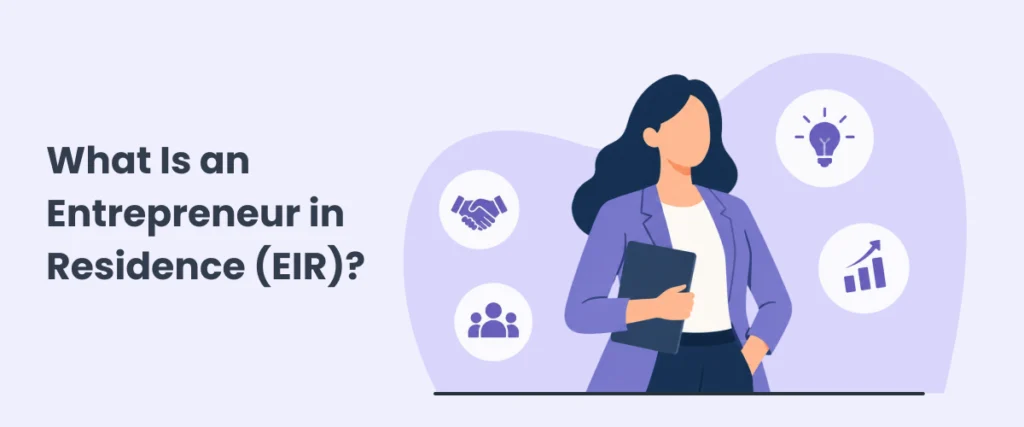
In the rapidly evolving landscape of modern business, organizations are increasingly grappling with the "innovator’s dilemma"—the struggle to balance existing operations with the necessity of future-proofing through new ventures. Enter the Entrepreneur in Residence (EIR): a specialized role designed to bridge the gap between high-level institutional resources and the agility of a startup founder.
An EIR is not merely a consultant or an advisor; they are an embedded operator. Brought into an organization—be it a venture capital firm, a university, or a multinational corporation—for a finite period, the EIR is tasked with identifying, vetting, and often executing new business opportunities. This article delves into the mechanics of this high-impact role, examining its evolution, operational structure, and the significant professional implications for those who step into the residency.
The Genesis and Evolution of the EIR Role
Historically, the EIR role emerged from the venture capital (VC) world. Firms like Benchmark and Kleiner Perkins popularized the model, bringing on successful former founders to sit within their offices. The logic was simple: these veterans brought an "insider’s eye" to the deal-flow process, helping firms evaluate potential investments while providing mentorship to existing portfolio companies.
However, the definition has expanded dramatically over the last two decades. Today, the EIR is a fixture in:
- Corporate Innovation Labs: Where they focus on "intrapreneurship," developing new product lines or spin-offs from within the company’s infrastructure.
- Venture Studios: Where the EIR’s sole purpose is to build a company from scratch using the studio’s capital and operational support.
- Academia: Where universities leverage EIRs to commercialize research and mentor student-led startups.
The transition from a "VC-only" role to a multifaceted business function reflects a broader shift: companies no longer want passive advice; they want active, entrepreneurial participation in the growth process.

Core Operational Responsibilities
The mandate of an EIR is rarely static. It is defined by the host organization’s immediate strategic deficit. However, the role generally clusters into three core operational pillars:
1. Venture Building and Incubation
For many, the primary objective is the creation of a new, viable business. An EIR might be handed a "white space" opportunity—a gap in the market the organization has identified but lacks the bandwidth to pursue. The EIR must validate the concept, build the MVP (Minimum Viable Product), and determine if it warrants further funding or full-scale launch.
2. Strategic Advisory and Mentorship
In a VC setting, the EIR serves as a "force multiplier." By embedding themselves within the firm’s portfolio companies, they offer hands-on guidance to nascent founders. They bridge the gap between the investor’s financial goals and the founder’s operational reality, often stepping in to solve hiring crises, pivot product roadmaps, or assist with series-round fundraising.
3. Ecosystem Bridging
EIRs often act as the "eyes and ears" of the organization. They leverage their personal networks to source talent, identify emerging market trends, and introduce the host firm to high-potential startups before they hit the open market. They challenge existing corporate biases, forcing teams to think like disruptors rather than incumbents.
Chronology of an EIR Engagement
An EIR engagement is defined by its impermanence. Unlike a standard executive hire, the role is typically time-bound, lasting between six to 18 months.

- Phase 1: The Integration (Months 1–3): The EIR spends this time auditing the organization’s resources, understanding the "pain points," and building internal buy-in. It is a period of high observation and relationship building.
- Phase 2: The Ideation and Validation (Months 4–9): Here, the work shifts to execution. The EIR prototypes solutions or begins deep-dive due diligence on potential acquisitions or internal project spin-offs.
- Phase 3: The Pivot or Launch (Months 10–18): By the final phase, the project either hits a "Go/No-Go" milestone. If successful, the EIR may lead the new venture as its CEO or transition to a board role. If the project fails, the EIR typically rotates out of the organization to pursue their next venture, having gained valuable data and connections.
Supporting Data: The Value of the Embedded Founder
Why pay a premium for an EIR when a consultancy firm could provide a report? The answer lies in execution risk.
According to industry surveys of venture studios, startups led by individuals with prior, proven founder experience—the exact profile of a typical EIR—have a 30% higher survival rate through the Seed-to-Series A transition. The EIR brings "battle scars." They have already navigated the regulatory, technical, and psychological hurdles of building a business. When a corporation hires an EIR, they are essentially buying a de-risking mechanism.
Regarding compensation, the market for EIRs is highly competitive, reflecting the scarcity of individuals who possess both deep industry knowledge and the grit of an entrepreneur. While compensation structures vary, they often include:
- Base Retainer: A competitive salary that covers the "opportunity cost" of the EIR not starting their own company during the term.
- Equity/Carried Interest: The "upside." If the EIR successfully launches a venture or helps identify a "unicorn" investment, they often receive a significant equity stake in that new entity.
Official Perspectives: The Institutional View
From the perspective of a Venture Capital firm, the EIR is a strategic asset. "An EIR is not a cost center; they are an engine for deal flow and operational excellence," notes a partner at a leading Silicon Valley firm. "When we host an EIR, we aren’t just looking for them to build a business; we are looking for the intellectual friction they bring to our team. They force us to stay sharp, to question our investment theses, and to look at the market through the eyes of someone who is still in the trenches."
Conversely, for the entrepreneur, the role offers a "sandbox." It provides a safety net—access to capital, legal resources, and a brand name—while they iterate on a high-risk idea. It is the ultimate low-risk, high-reward environment for a founder between ventures.

Implications for Aspiring EIRs
To secure an EIR role, one must move beyond the traditional resume. Organizations are not looking for general managers; they are looking for proven builders.
The Path to Becoming an EIR:
- Develop a Track Record: You must show evidence of having built something—whether it is a successful startup exit, a major product launch, or a turnaround of a failing business unit.
- Specialize, Don’t Generalize: The most sought-after EIRs have deep domain expertise (e.g., AI/ML, FinTech, Biotech). Organizations hire them because they know the "ins and outs" of a specific, complex market.
- Network-Driven Entry: EIR roles are rarely posted on public job boards. They are often filled through internal referrals. Your reputation within the venture capital and startup ecosystem is your primary currency.
- Demonstrate "Founder-Market Fit": You must articulate why you are the right person to build in a specific space. Organizations want to see that you have a vision for a sector and the technical or operational depth to execute it.
Conclusion: The Future of the Entrepreneur in Residence
The role of the Entrepreneur in Residence is poised to grow in importance as industries continue to digitize and disrupt at an unprecedented pace. As corporations realize that they cannot innovate in isolation, the EIR will remain the vital link between the legacy organization and the future of market innovation.
For the aspiring entrepreneur, this role offers more than just a paycheck; it offers a vantage point. It allows one to learn from the inside, test ideas with institutional backing, and refine the leadership skills necessary to navigate the modern, volatile business climate. Whether you are a founder looking for your next challenge or an organization looking to spark innovation, the EIR model provides a sophisticated, proven framework for growth in an uncertain world.
By embracing the role of the EIR, businesses are not just hiring a person—they are buying a perspective, a process, and a proven methodology for turning the "uncertain" into the "extraordinary."