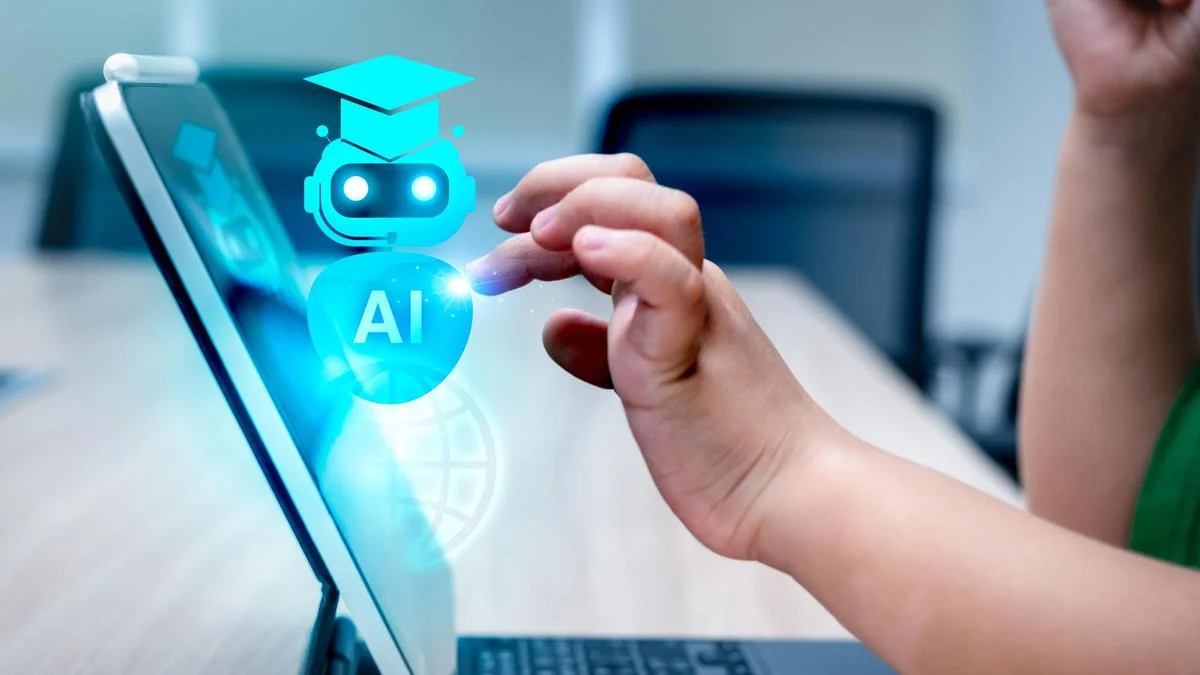
In the modern classroom, the sound of a pencil scratching against paper is increasingly being drowned out by the silent, instantaneous delivery of digital intelligence. As generative AI tools like ChatGPT, Claude, and integrated virtual assistants like Alexa become ubiquitous in households, a quiet crisis of intellectual autonomy is unfolding. We are witnessing a fundamental shift in how children engage with the world: when faced with a challenge, the reflex is no longer to "think," but to "query."
This transition from active cognitive exertion to passive retrieval poses profound questions about the development of the human mind. Are we inadvertently raising a generation that excels at prompt engineering but struggles with the foundational mechanics of persistence, reasoning, and emotional resilience?
The Illusion of Competence: When Learning is Substituted by Retrieval
The phenomenon often begins innocuously. A mother recently recounted a familiar scenario: her child completed a set of complex mathematics problems with perfect accuracy. Delighted by the high score, she asked the child to walk her through the methodology—only to be met with a blank stare. It was quickly revealed that the child had not solved the equations; they had simply dictated the homework to Alexa, which provided the answers in seconds.
The homework was technically "done," but the learning was entirely bypassed. This incident highlights a growing disconnect between output and outcome. In education, the "answer" is rarely the point; the point is the neural architecture built during the struggle to find that answer.

Another troubling anecdote involves a student presenting an AI-generated essay to a teacher. When the teacher identified a factual error, the student was not merely mistaken; they were indignant. "No, ma’am," the child retorted, "you got it wrong. ChatGPT is never wrong."
This moment of defiance captures the dangerous blind faith that emerges when AI is treated as an oracle rather than a tool. When children begin to outsource their critical faculties—their judgment, their fact-checking, and their skepticism—they lose the ability to distinguish between algorithmic probability and objective truth.
A Chronology of Dependency: From Calculator to Chatbot
The integration of technology into the classroom is not a new narrative, but the nature of the engagement has shifted significantly over the last two decades.
- The Early 2000s: The debate centered on the pocket calculator. Educators feared that reliance on digital computation would destroy basic arithmetic skills. However, these tools eventually found a place as aids to higher-order mathematics, allowing students to focus on complex modeling rather than rote multiplication.
- The 2010s: The rise of search engines and Wikipedia changed the nature of "research." The focus shifted from memorizing facts to navigating, filtering, and synthesizing information.
- The 2024-2026 Era: The emergence of Large Language Models (LLMs) represents a qualitative leap. Unlike a search engine, which provides a list of sources for the user to evaluate, generative AI provides a finished, authoritative-sounding product. The barrier to entry for "solving" a problem has effectively vanished.
We have moved from tools that assist the thinking process to tools that replace the thinking process. When the cognitive load is entirely shifted to an algorithm, the brain is deprived of the friction necessary for long-term skill acquisition.

The Physicality of Cognition: Why Hands Still Matter
Education theorists, most notably Maria Montessori, have long argued that "the hands are the instruments of man’s intelligence." There is a tangible link between physical manipulation—touching, building, mixing, and failing—and the development of logical reasoning.
When a child builds a tower of blocks that repeatedly collapses, they are learning physics, gravity, and structural integrity through their nervous system. They are learning the lesson of failure. When a child asks an AI to "generate a story about a tower," they are consuming a narrative, not experiencing the architecture of reality.
The risk here is a form of sensory and experiential atrophy. By favoring convenience over experience, we may be depriving children of the trial-and-error cycles that foster patience and persistence. Digital explanations, no matter how sophisticated, cannot replicate the sensory feedback of the physical world.
The Emotional Frontier: AI as a Surrogate Relationship
Perhaps the most alarming implication of the AI age is its encroachment on social-emotional development. A recent report revealed that some children have begun referring to chatbots as "boyfriends" or "best friends."

While children have always had imaginary friends, AI offers something different: a responsive, tireless, and non-judgmental companion. A chatbot never gets impatient, never demands a compromise, and never expresses a conflicting opinion. It is the perfect partner, which is exactly why it is so potentially damaging to human development.
Real-world human relationships are defined by friction: the need to empathize with someone who disagrees with you, the necessity of repairing a misunderstanding, and the requirement to respect personal boundaries. These are the muscles of social maturity. When a child replaces difficult human interactions with an AI that is programmed to be agreeable and "safe," they miss the essential training required to function in a complex, diverse society.
Supporting Data: What the Research Says
The shift is no longer theoretical. A February 2026 survey by the Pew Research Center, which examined the habits of 1,458 American teenagers aged 13 to 17, provided a sobering look at how this generation is utilizing AI.
- 16% of teens reported using AI chatbots for casual, social conversation.
- 12% of teens explicitly used AI for emotional support or life advice.
While these numbers do not yet constitute a crisis of universal dependence, they represent a significant trend. They suggest that for a growing segment of the youth population, the first point of contact for loneliness or confusion is a machine, not a mentor, parent, or peer. The implications for long-term social isolation and the erosion of human-to-human support networks are significant.

Implications: The Path Forward
The objective is not to banish AI. Such a move would be as impractical as it is shortsighted. Instead, we must pivot toward a framework of "AI Literacy" that emphasizes human agency.
1. Promoting Critical Judgement
UNESCO’s 2024 AI Competency Framework correctly identifies "human-centred mindsets" as the core of digital literacy. We must teach children to approach AI with a healthy sense of skepticism. Every AI-generated output should be treated as a draft that requires verification, not a final answer.
2. The Role of the Adult
Adults must model the behavior they wish to see. If parents use AI to draft emails, summarize books, and plan schedules without ever showing their children the "work" behind those decisions, the children will naturally view AI as a magic wand. We must be transparent about when and why we use these tools, and more importantly, when we choose not to use them.
3. Protecting the Human Connection
The most critical task for parents and educators is to remain the primary point of contact for a child’s emotional life. When a child is distressed, the default response should be human interaction. We must create environments where it is safe to be vulnerable with people, ensuring that the "convenience" of an AI bot never replaces the messy, necessary work of human empathy.

Conclusion: Reclaiming the Process
We stand at a crossroads. We can either allow generative AI to become a crutch that gradually weakens the intellectual and emotional capacities of the next generation, or we can use it as a scaffold—a tool that allows children to reach higher, provided they still do the climbing themselves.
The ultimate goal of education is not to produce people who can generate answers; it is to produce people who can ask the right questions, endure the struggle of finding solutions, and navigate the complexities of human existence with wisdom. If we surrender the "process" to machines, we lose the very essence of what makes us human.
In a world where an AI is always available, we must ensure that no child ever feels that it is the only thing available to them. Our duty is to keep the conversation—the real, human, and imperfect conversation—alive.