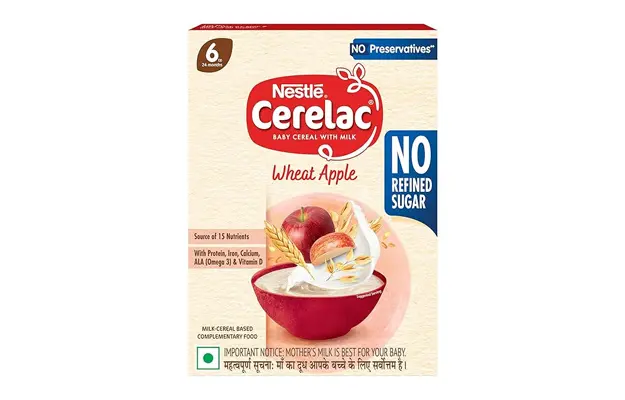
For decades, Cerelac has been a staple in households worldwide, serving as a primary transitional food for infants. Its convenience, consistency, and perceived nutritional value have made it a go-to choice for parents navigating the complex journey of weaning. However, a question often arises among health-conscious parents: How can a product containing natural ingredients, such as wheat, milk, and various grains, maintain a long shelf life without the presence of artificial preservatives?
The answer lies not in a single "secret ingredient," but in a sophisticated convergence of advanced food engineering, specialized packaging technology, and stringent manufacturing processes. Understanding how these elements work in tandem is essential for parents to make informed decisions about their infant’s nutrition.
The Engineering of Longevity: Moisture Control and Processing
The fundamental enemy of shelf stability in food products is moisture. Water activity ($a_w$) is a measure of the free water available in a product for microbial growth, such as bacteria, yeast, and mold. To keep a product stable without artificial preservatives, manufacturers must reduce this water activity to a level where biological activity is essentially halted.
The Role of Roller Drying
Cerelac is produced using a process known as roller drying (or sometimes spray drying, depending on the specific variant). In this process, the raw ingredients—cereals and milk—are cooked and then passed through heated rollers. This high-heat treatment serves two critical purposes:
- Gelatinization: It breaks down the starch molecules, making the nutrients more digestible for the infant’s developing gut.
- Dehydration: The process rapidly removes moisture. By the time the product reaches its final powder form, its moisture content is extremely low, and the water activity is well below the threshold required for microbial survival.
Without sufficient moisture, bacteria and mold cannot reproduce, effectively "freezing" the product in a state of stasis.
Advanced Packaging: The Barrier to External Contamination
Even with a low-moisture product, shelf life could be compromised if the food is exposed to atmospheric oxygen or ambient humidity. If a product absorbs moisture from the air, it becomes susceptible to spoilage.
Modified Atmosphere Packaging (MAP)
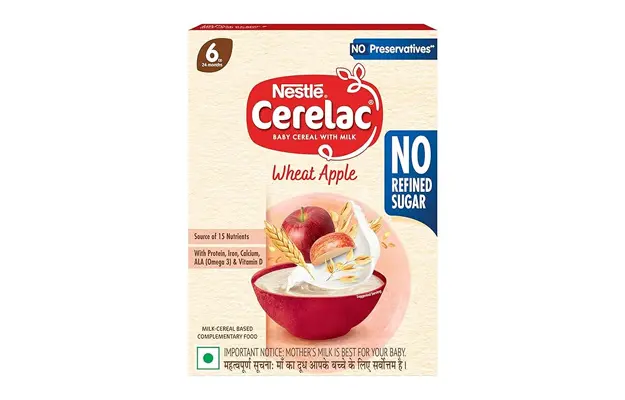
Cerelac is typically packed using Modified Atmosphere Packaging. Before the final seal is applied to the tin or sachet, the oxygen inside the container is displaced with an inert gas, such as nitrogen. Oxygen is the primary driver of lipid oxidation—the chemical process that causes fats (like those found in milk solids) to go rancid. By removing oxygen, the product is protected from off-flavors and nutrient degradation, ensuring that the fats remain stable for the duration of the product’s shelf life.
The Multi-Layered Barrier
The packaging material itself acts as a sophisticated shield. It is typically a composite of aluminum foil, high-density polyethylene, and paperboard. This multi-layered structure provides an impermeable barrier against:
- Moisture vapor transmission: Preventing environmental humidity from entering.
- Light transmission: UV light can trigger chemical reactions that degrade vitamins.
- Oxygen permeation: Ensuring the integrity of the inert gas environment created during packing.
Chronology of Safety: From Ingredient Sourcing to Distribution
The safety and longevity of Cerelac are not just products of the final manufacturing step but are rooted in a "farm-to-spoon" quality assurance model.
1. Ingredient Sourcing and Rigorous Testing
The process begins with the procurement of high-quality grains and milk solids. Every batch of raw material undergoes testing for contaminants, including mycotoxins (mold-produced toxins) and heavy metals. By starting with a "clean" slate, the risk of early spoilage is significantly reduced.
2. The Controlled Production Environment
Manufacturing occurs in environments that adhere to strict Good Manufacturing Practices (GMP). These facilities use High-Efficiency Particulate Air (HEPA) filtration systems to keep the air free of contaminants that could settle on the powder during the filling stage.
3. Stability Testing
Before a product is cleared for distribution, it undergoes rigorous "accelerated shelf-life testing." Samples are kept in environmental chambers that simulate extreme temperature and humidity conditions. Scientists measure the degradation of vitamins, the oxidation levels of fats, and the physical texture of the powder over time. This data is used to set the "Best Before" date, ensuring that even under less-than-ideal storage conditions, the product remains safe.

Official Stances and Regulatory Compliance
Regulatory bodies like the FSSAI (Food Safety and Standards Authority of India) and the FDA (Food and Drug Administration) have strict guidelines regarding infant food. Under these regulations, the use of many artificial preservatives is either banned or strictly limited in infant nutrition products.
The "No Artificial Preservative" Claim
When a label claims there are no added preservatives, it means that the manufacturer has not included chemical additives such as BHA, BHT, or potassium sorbate to extend the shelf life. The preservation is achieved through the physical and mechanical processes described above (dehydration and hermetic sealing).
However, manufacturers are required to maintain a transparent supply chain. In response to public queries regarding the nutritional integrity of these products, companies often publish detailed "Product Profiles" that explain the specific nutrient fortification used to compensate for any minor losses that occur during the heat-treatment process.
Nutritional Implications: What Does This Mean for the Infant?
While the physical stability of the product is high, parents often wonder if the processing affects the nutritional value.
Nutrient Fortification
Heat treatment can indeed reduce the levels of certain heat-sensitive vitamins (like Vitamin C or B-complex vitamins). To combat this, manufacturers perform "nutrient fortification." After the drying process, specific levels of vitamins and minerals are added back into the powder to ensure that the final product meets the nutritional profile promised on the label. This is a standard practice in the infant food industry, designed to guarantee consistency across every batch.
The Importance of Proper Storage
Even with advanced packaging, the shelf life is guaranteed only if the product remains sealed. Once the tin or sachet is opened, the internal environment is compromised. Oxygen and moisture from the air enter the container, and the product becomes susceptible to degradation and potential microbial growth.

Best Practices for Parents:
- Seal Tightly: Always close the lid or fold the sachet tightly after every use.
- Cool, Dry Place: Avoid storing the product near the stove or in areas prone to high humidity.
- Usage Window: Once opened, most manufacturers recommend consuming the product within 3–4 weeks to ensure the highest quality and safety.
- Avoid Contamination: Use a clean, dry spoon to scoop the powder, and avoid touching the inside of the container with wet hands or utensils.
Conclusion: Balancing Convenience and Safety
The long shelf life of Cerelac is a triumph of food technology, allowing for the stable delivery of fortified nutrition to millions of infants. By relying on physical processes—such as moisture reduction and inert gas packaging—rather than chemical preservatives, manufacturers can maintain a product that is safe, shelf-stable, and nutritionally consistent.
For the parent, the key to maximizing these benefits lies in the post-purchase handling of the product. By respecting the storage guidelines and understanding the science that keeps the product stable, parents can confidently utilize these nutritional tools as part of a balanced diet during their child’s critical developmental years. As always, consulting with a pediatrician remains the best way to determine the ideal nutritional strategy for an individual child’s specific health needs.