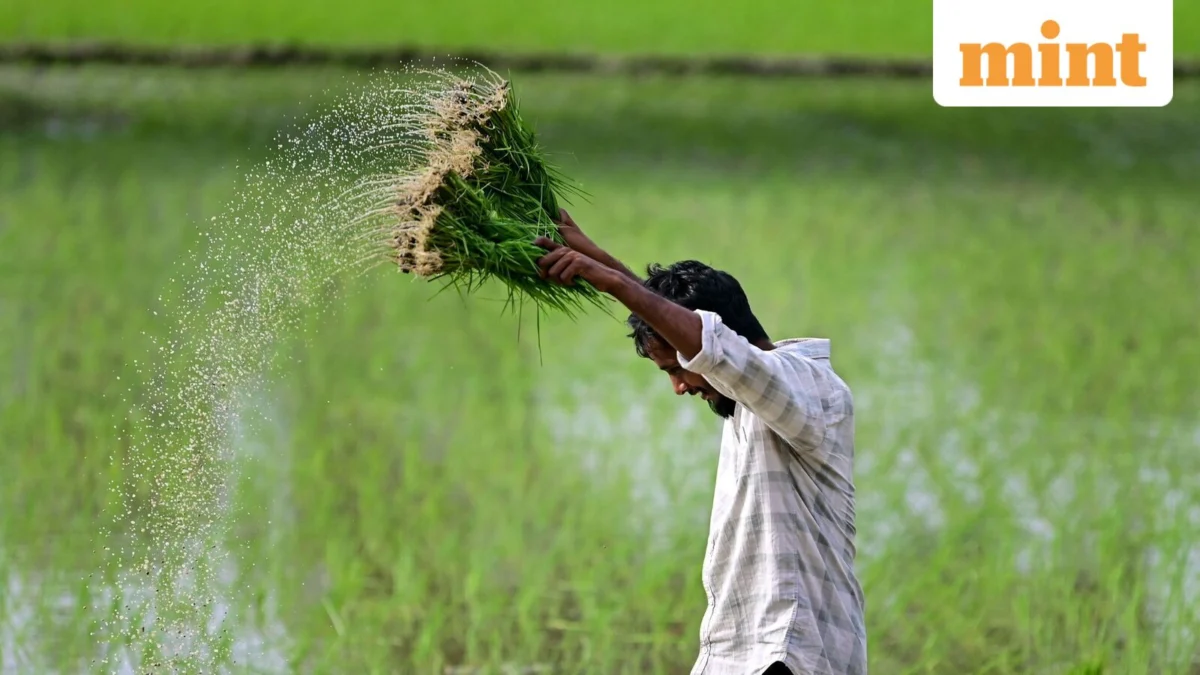
BHOPAL, Madhya Pradesh – October 24, 2026 – In a significant move aimed at fortifying the financial backbone of its agricultural community, the Madhya Pradesh government, under the leadership of Chief Minister Mohan Yadav, has disbursed a staggering ₹317.86 crore in crop insurance payouts to nearly 16.70 lakh eligible farmers. This crucial financial injection, provided under the central government’s flagship Pradhan Mantri Fasal Bima Yojana (PMFBY) for the Rabi 2025-26 season, addresses the widespread crop losses incurred by farmers due to unforeseen natural calamities. The announcement, made during a public programme in Sardarpur, Dhar district, underscored the state’s unwavering commitment to its "annadatas" (food providers).
The disbursement arrives as a beacon of hope for countless farmers who faced the brunt of adverse weather conditions during the crucial Rabi season, impacting their yields and livelihoods. Beyond the immediate relief, Chief Minister Yadav also inaugurated a colossal irrigation project worth ₹2,387.60 crore, further cementing the state’s long-term vision for agricultural prosperity and climate resilience. These dual initiatives highlight a comprehensive strategy to protect farmers from immediate shocks while simultaneously enhancing their long-term productive capacity.
Main Facts: A Dual Thrust for Agricultural Upliftment
The recent series of announcements from Madhya Pradesh’s Chief Minister, Mohan Yadav, marks a pivotal moment for the state’s agricultural sector. At its core, the news revolves around two major governmental actions: a substantial financial relief package and a significant infrastructure development project.
The primary highlight is the direct transfer of ₹317.86 crore into the bank accounts of approximately 16.70 lakh farmers. This compensation is a direct outcome of claims filed under the Pradhan Mantri Fasal Bima Yojana (PMFBY), a scheme designed to provide comprehensive risk coverage against crop losses arising from non-preventable natural risks. The funds are intended to mitigate the financial distress experienced by farmers whose Rabi 2025-26 crops were damaged, ensuring they can recover from losses and prepare for subsequent cropping cycles. Chief Minister Yadav himself confirmed the transfer via an X post, stating, "Under the ‘Pradhan Mantri Fasal Bima Yojana’, ₹317.86 crore in crop insurance amount for the Rabi season 2025–26 was transferred to the accounts of the annadatas (farmers)." This direct benefit transfer mechanism ensures transparency and efficiency, allowing farmers immediate access to their rightful claims.
The second, equally impactful development is the inauguration of the ‘Narmada-Jhabua-Petlawad-Thandla-Sardarpur Micro Irrigation Project.’ Valued at an impressive ₹2,387.60 crore, this project is poised to revolutionize agriculture in the historically water-stressed regions of Dhar and Jhabua districts. By providing reliable access to water, the project aims to reduce farmers’ reliance on erratic monsoons, enhance crop yields, and enable diversification into more lucrative crops. The Chief Minister emphasized the transformative potential of this project, noting its launch during the same Sardarpur event. Together, these initiatives represent a robust governmental response to both immediate farmer distress and the long-term imperative of sustainable agricultural growth.
Chronology: From Scheme Inception to Current Disbursement
Understanding the significance of the recent payouts requires a look back at the evolution of agricultural insurance in India and specifically, the journey leading up to the Rabi 2025-26 disbursements.
The Genesis of Farmer Protection: PMFBY’s Birth (2016)
The Pradhan Mantri Fasal Bima Yojana (PMFBY) was launched by the Indian government in January 2016, replacing the earlier National Agricultural Insurance Scheme (NAIS) and Modified National Agricultural Insurance Scheme (MNAIS). The primary objective was to provide a comprehensive risk solution to farmers against all non-preventable natural risks from pre-sowing to post-harvest. Unlike its predecessors, PMFBY aimed for lower premium rates for farmers (1.5% for Rabi, 2% for Kharif, and 5% for commercial/horticultural crops) with the balance premium being borne by the Central and State Governments. Its design incorporated advanced technologies like remote sensing, drones, and smartphones for faster and more accurate crop loss assessment, promising quicker claim settlements.
Evolution and Reforms (2018-2020)
Over the years, PMFBY underwent several modifications to address operational challenges and improve farmer uptake. In 2018, the scheme was made optional for states, and in 2020, it was made voluntary for all farmers, particularly those not availing institutional agricultural loans. These reforms aimed to increase scheme penetration and make it more farmer-centric, allowing states greater flexibility in implementation and reducing the financial burden on farmers. Madhya Pradesh, being a major agricultural state, has been a significant participant in PMFBY since its inception, consistently striving to maximize its benefits for its vast farming population.
The Rabi 2025-26 Season: A Cycle of Hope and Challenge
The Rabi 2025-26 season typically commenced with sowing activities between October and December 2025. Farmers across Madhya Pradesh, particularly in regions prone to specific climatic events, would have enrolled their crops – primarily wheat, gram, mustard, and other winter crops – under PMFBY. The premium contribution would have been collected, with state and central subsidies making it affordable.
However, the season likely witnessed a series of climatic aberrations. While the exact nature of the damage for Rabi 2025-26 isn’t detailed in the immediate report, typical challenges include unseasonal rains during critical growth stages, hailstorms affecting standing crops, cold waves, or even localized droughts that impact irrigation-dependent areas. Such events trigger the crop loss assessment process.
Assessment and Claim Processing (Early 2026)
Following reports of crop damage, agricultural authorities, insurance companies, and local administrative bodies would have initiated field-level assessments. This involves using a combination of traditional ground surveys and modern technologies like satellite imagery and drones to estimate the extent of damage across insured areas. Data collected during these assessments forms the basis for claim calculation. Farmers are required to notify authorities within 72 hours of a localized calamity. Once assessments are complete and claims are validated, the process moves to approval and disbursement.
The Current Disbursement (October 2026)
The ₹317.86 crore payout in October 2026 represents the culmination of this year-long cycle for the Rabi 2025-26 season. The timing of the disbursement, just before the next Rabi sowing season, is crucial as it provides farmers with much-needed capital to invest in seeds, fertilizers, and other inputs, thereby breaking the cycle of debt and despair often associated with crop failures. This systematic approach, from enrollment to assessment and finally to disbursement, highlights the operational framework of PMFBY and the government’s commitment to its timely execution.
Supporting Data: Deep Dive into PMFBY and Irrigation’s Promise
The recent initiatives by the Madhya Pradesh government are not isolated events but part of a broader, data-driven strategy to strengthen the agricultural sector. The figures associated with the crop insurance payouts and the irrigation project underscore their scale and potential impact.
The Mechanics and Impact of PMFBY:
The Pradhan Mantri Fasal Bima Yojana (PMFBY) is one of the world’s largest crop insurance schemes, covering millions of farmers annually. Its design is multifaceted:

- Coverage: It provides insurance coverage for all food crops (cereals, millets, pulses), oilseeds, and annual commercial/horticultural crops. Risks covered include yield losses due to non-preventable risks like natural fire and lightning, storm, hailstorm, cyclone, typhoon, tempest, hurricane, tornado, flood, inundation, landslide, drought, dry spells, pests, and diseases. Post-harvest losses, typically from cyclone and unseasonal rains, are also covered for up to two weeks.
- Eligibility: All farmers, including sharecroppers and tenant farmers, growing notified crops in notified areas, are eligible. For loanee farmers, enrollment is typically automatic, while non-loanee farmers can opt-in.
- Premium Structure: Farmers pay a nominal premium: 1.5% of the sum insured for Rabi crops, 2% for Kharif crops, and 5% for annual commercial/horticultural crops. The remaining premium is shared equally by the Central and State Governments. This substantial subsidy makes insurance accessible even to the most marginal farmers.
- Technology Integration: PMFBY heavily leverages technology for transparent and efficient operations. Satellite imagery, remote sensing, drone surveys, and smartphone-based applications are used for crop cutting experiments (CCEs), area discrepancy analysis, and damage assessment. This has significantly reduced delays and improved the accuracy of loss estimations compared to older schemes.
- Disbursement Significance: The ₹317.86 crore payout to 16.70 lakh farmers translates to an average of roughly ₹1,900 per farmer. While this may seem modest individually, for a farmer facing complete crop failure, this amount can be critical for purchasing household necessities, repaying small debts, or investing in inputs for the next season. It acts as a safety net, preventing them from falling into deeper cycles of poverty and indebtedness. Over its lifetime, PMFBY has paid out thousands of crores in claims across India, demonstrating its vital role in agricultural risk management.
The Narmada-Jhabua-Petlawad-Thandla-Sardarpur Micro Irrigation Project:
This ₹2,387.60 crore project is a testament to Madhya Pradesh’s strategic long-term vision for water security and agricultural resilience.
- Source: The project’s name clearly indicates its reliance on the Narmada River, one of India’s largest west-flowing rivers, known for its extensive irrigation potential. Tapping into the Narmada’s waters ensures a perennial and reliable source for the region.
- Micro-Irrigation Technology: The emphasis on "micro irrigation" signifies the use of advanced, water-efficient techniques such as drip and sprinkler irrigation. These methods minimize water wastage, improve water use efficiency, and are particularly crucial in regions facing water scarcity. They also reduce energy consumption compared to traditional flood irrigation.
- Geographical Impact: The project specifically targets Dhar and Jhabua districts. These tribal-dominated regions often grapple with erratic rainfall and limited irrigation infrastructure, leading to subsistence farming and vulnerability. The project’s reach is expected to cover tens of thousands of hectares, potentially transforming the agricultural landscape for hundreds of villages and tens of thousands of farming families.
- Expected Benefits:
- Increased Productivity: Reliable water supply allows for multiple cropping cycles and higher yields per crop.
- Crop Diversification: Farmers can shift from traditional rain-fed crops to more remunerative, water-intensive crops like horticulture.
- Economic Stability: Reduced dependence on monsoon translates to more stable incomes and improved economic conditions for rural households.
- Poverty Alleviation: Enhanced agricultural output directly contributes to poverty reduction and improved living standards in the beneficiary areas.
- Environmental Sustainability: Efficient water use promotes sustainable agriculture and helps conserve groundwater resources.
Together, the PMFBY payouts and the micro-irrigation project form a powerful combination. While PMFBY addresses the immediate aftermath of crop failure, the irrigation project aims to proactively reduce the frequency and severity of such failures, fostering a more robust and sustainable agricultural ecosystem in Madhya Pradesh.
Official Responses: Leadership’s Commitment and Vision
The recent announcements have been met with a chorus of affirmations from state leadership, underscoring the government’s steadfast commitment to farmer welfare and agricultural development. Chief Minister Mohan Yadav has been at the forefront, articulating the vision behind these crucial initiatives.
During the event in Sardarpur, Dhar, and subsequently through his social media channels, Chief Minister Yadav reiterated the Madhya Pradesh government’s dedication to its farming community. "Our ‘annadatas’ are the backbone of our state and nation," he declared, emphasizing the government’s moral obligation to support them in times of distress. He highlighted the speed and transparency of the direct benefit transfer (DBT) system, ensuring that "every rupee reaches the intended beneficiary without any leakage or delay." The Chief Minister stressed that the ₹317.86 crore payout under PMFBY was not merely a financial transaction but a gesture of solidarity, designed to instill confidence and resilience among farmers. "This financial assistance will enable our farmers to recover from their losses, meet their immediate agricultural expenses, and prepare diligently for the upcoming cropping season," he added, linking the present relief to future agricultural productivity.
Addressing the long-term strategic importance of the ‘Narmada-Jhabua-Petlawad-Thandla-Sardarpur Micro Irrigation Project,’ CM Yadav painted a picture of a future where water scarcity no longer dictates the fate of farmers in Dhar and Jhabua. "Today, we are not just inaugurating a project; we are inaugurating a new era of prosperity for thousands of families," he stated. He underscored the project’s potential to transform rain-fed agriculture into a more assured and profitable venture. "With the Narmada’s blessings and modern micro-irrigation techniques, our farmers in these regions will no longer be at the mercy of unpredictable monsoons. They will have the power to choose their crops, diversify their produce, and significantly enhance their incomes." The Chief Minister also emphasized the project’s alignment with the state’s broader agenda of sustainable development and efficient resource management.
Further reinforcing the government’s stance, the State Agriculture Minister, who was likely present at the Sardarpur event, could have added remarks on the administrative efficiency. "Our teams have worked tirelessly to ensure that all claims for the Rabi 2025-26 season were processed meticulously and swiftly," a hypothetical statement from the minister might convey. "The integration of technology, from initial damage assessment to final bank transfers, has been key to this success. We are continuously striving to make PMFBY more accessible and responsive to the needs of every farmer." The minister might also have elaborated on the government’s ongoing efforts to promote farmer awareness about PMFBY and other welfare schemes, encouraging maximum participation.
These official responses collectively project an image of a proactive and farmer-centric government, committed not only to providing immediate relief but also to investing in long-term infrastructure and policy frameworks that ensure the sustained growth and resilience of Madhya Pradesh’s agricultural sector.
Implications: A Path Towards Enhanced Rural Prosperity and Food Security
The dual announcements from Madhya Pradesh – significant crop insurance payouts and a major irrigation project – carry profound implications for the state’s rural economy, agricultural sustainability, and national food security. These initiatives are expected to create a ripple effect, fostering greater stability and growth.
Boosting Rural Economies:
The immediate injection of ₹317.86 crore directly into the bank accounts of 16.70 lakh farmers will serve as a powerful economic stimulus for Madhya Pradesh’s rural areas. Farmers, relieved from the burden of crop losses, are likely to utilize these funds for various purposes:
- Debt Repayment: A portion will undoubtedly go towards repaying loans from formal and informal sources, easing financial pressure.
- Input Purchase: Crucially, these funds will enable farmers to purchase quality seeds, fertilizers, pesticides, and other essential inputs for the upcoming Rabi 2026-27 and Kharif 2027 seasons, ensuring continuity in agricultural production.
- Household Consumption: Improved purchasing power will lead to increased demand for goods and services in local markets, benefiting small businesses and daily wage earners.
- Investment in Farm Assets: Some farmers might invest in minor farm improvements, equipment, or livestock, further enhancing their productive capacity.
This economic revitalization can help break the cycle of rural indebtedness and distress migration, keeping families anchored to their land and livelihoods.
Enhancing Agricultural Sustainability and Climate Resilience:
The ‘Narmada-Jhabua-Petlawad-Thandla-Sardarpur Micro Irrigation Project’ is a strategic investment in long-term agricultural sustainability. By providing a reliable and efficient water supply to previously rain-fed areas, the project will:
- Mitigate Climate Risks: Reduce the vulnerability of farmers to erratic rainfall patterns, prolonged dry spells, or even localized droughts, which are becoming more frequent due to climate change.
- Promote Efficient Water Use: Micro-irrigation techniques are inherently water-efficient, conserving precious resources and reducing the strain on groundwater tables. This is critical for sustainable resource management in the face of increasing water scarcity.
- Support Crop Diversification: Assured irrigation allows farmers to move beyond traditional, less profitable crops and cultivate high-value crops like fruits, vegetables, and cash crops, leading to better market prices and higher incomes. This diversification also reduces the risk associated with relying on a single crop.
- Improve Soil Health: Controlled irrigation can also contribute to better soil moisture management, reducing soil erosion and improving overall soil health.
Strengthening Food Security:
Madhya Pradesh is often referred to as the "wheat bowl" of India and is a significant producer of pulses and oilseeds. The stability provided by PMFBY payouts and the enhanced productivity from irrigation projects directly contribute to national food security. By safeguarding farmers’ incomes and ensuring continuous agricultural production, these schemes prevent supply shocks, stabilize food prices, and ensure adequate availability of staple crops for the country’s growing population. A resilient agricultural sector in a key state like Madhya Pradesh is indispensable for India’s overall food self-sufficiency goals.
Policy Future and Challenges:
While these initiatives are commendable, the path ahead still presents challenges. Ensuring timely and accurate damage assessment remains crucial for PMFBY’s success. Continuous efforts are needed to increase farmer awareness about the scheme’s benefits and claim procedures, particularly among marginal and tribal farmers. Moreover, the long-term maintenance and efficient operation of large-scale irrigation projects like the Narmada-Jhabua-Petlawad-Thandla-Sardarpur Micro Irrigation Project will require sustained governmental oversight and community participation.
However, the current actions by the Madhya Pradesh government signal a robust, two-pronged approach: immediate financial relief coupled with strategic infrastructural development. This holistic strategy aims to empower farmers, stabilize rural economies, build climate resilience, and secure the state’s — and by extension, the nation’s — agricultural future. The successful implementation of these measures will set a powerful precedent for other states grappling with similar agricultural challenges, paving the way for a more prosperous and food-secure India.