
New Delhi, India – The Indian insurance regulator, IRDAI (Insurance Regulatory and Development Authority of India), explicitly prohibits "claims-based loading" in health insurance policies. This means insurers are legally barred from increasing an individual’s premium solely because they have made a claim in the previous policy year. However, a closer examination of recent policy renewals and insurer practices reveals a sophisticated, albeit indirect, reintroduction of this practice, leaving policyholders questioning the true spirit of regulatory intent.
While direct penalization for claiming is forbidden, insurers appear to be leveraging a loophole, rewarding policyholders for "favourable claims experience" through significant discounts. This effectively acts as a penalty for those who have utilized their insurance coverage, raising concerns about transparency and fairness within the health insurance sector.
The Regulatory Landscape: What is Permitted and What is Not
At its core, claims-based loading refers to the practice of increasing an insurance premium based on the number or value of claims filed by a policyholder. The IRDAI, recognizing the potential for this practice to discourage individuals from seeking necessary medical treatment, has firmly disallowed it.
The IRDAI Health Insurance Regulations, 2016, are unequivocal on this matter. They stipulate that insurers cannot arbitrarily increase premiums simply because a policyholder has made a claim in a prior year. Any premium hikes must be applied uniformly across all policyholders of the same plan. This includes increases due to factors like age progression or general revisions in underwriting policies, but these must not be selective and targeted at individuals who have claimed.
The regulations state, in black and white: "Insurers cannot PENALIZE you for claiming. But they can REWARD you for NOT claiming." It is this latter point, the ability to reward non-claimants, that insurers are now ingeniously utilizing to achieve a similar financial outcome to claims-based loading.
The Emergence of the "Favourable Claims Experience Discount"
The subtle shift in insurer strategy has become apparent through a new line item appearing on policy renewal receipts: the "Favourable Claims Experience Discount." For many policyholders, this discount represents a substantial portion of their final premium, often amounting to nearly 50%. While seemingly a benefit, its introduction and magnitude suggest a deliberate recalibration of premiums, effectively making the cost of insurance significantly higher for those who have recently claimed.

One policyholder, who wishes to remain anonymous, recounted their experience: "When I renewed my health insurance, I noticed a discount of approximately ₹16,000 labeled as ‘Favourable Claims Experience Discount.’ This was almost 50% of my final premium. In the previous year’s receipt, there was no such entry. This clearly indicates a new strategy being implemented, and the overall change in my final premium was marginal only because of a GST cut. It appears the discount was adjusted to keep the premium stable, effectively offsetting the benefit of the GST reduction for those who claimed."
The lack of clear explanation for this "Favourable Claims Experience Discount" within policy documents further fuels suspicion. While insurers may point to information available on their websites for other plans, the absence of explicit detail in the contract leaves policyholders in the dark about the precise calculations and implications of this discount.
Deconstructing the Discount: A Closer Look at the Mechanics
The "Favourable Claims Experience Discount" is typically calculated based on a tiered system, rewarding policyholders with higher discounts for longer periods of no claims. Conversely, any claim made can lead to a significant reduction, or even complete elimination, of this discount in the subsequent renewal.
An example cited from an insurer’s website illustrates this:
- No Claim for 5 Years: 30% discount
- No Claim for 4 Years: 27% discount
- No Claim for 3 Years: 24% discount
- No Claim for 2 Years: 21% discount
- Claim in the Previous Year: Discount reduced to 18%
This structured approach, while presented as a reward for good health, effectively penalizes individuals for utilizing their insurance. A policyholder who has diligently paid premiums for years and then faces a medical emergency, necessitating a claim, can see their premium effectively jump by a substantial margin the following year, not due to direct loading, but due to the loss of a significant discount.
The Insurer’s Perspective: Profitability and Risk Management
From an insurer’s standpoint, the justification for such practices often centers on profitability and risk management. Insurance companies are commercial entities that operate on the principle of pooling risk. When a significant number of policyholders within a particular plan make claims, it can strain the insurer’s financial reserves and impact their profitability.
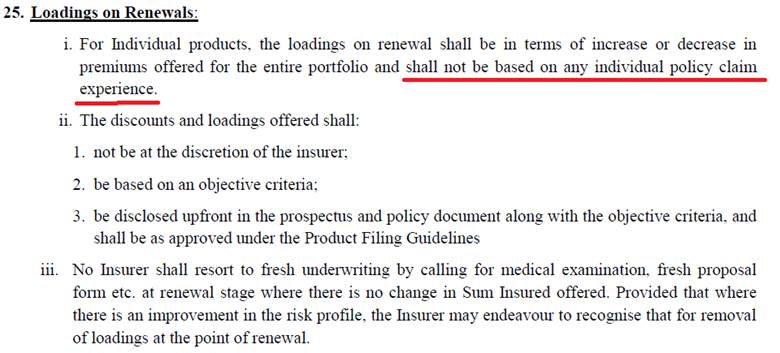
Insurers argue that offering discounts for "favourable claims experience" incentivizes policyholders to maintain healthier lifestyles and to only utilize insurance for genuine medical needs. This, in turn, can lead to a more sustainable and affordable insurance pool for everyone in the long run.
Consider a scenario where a base premium remains constant. If an insurer offers a 30% discount on this base premium, a policyholder might pay a reduced amount. However, if a claim is made, the discount could fall to 21%. While the base premium might theoretically remain unchanged, the net premium paid by the policyholder increases. This increase is not arbitrary; it’s directly linked to the claims experience.
The table below illustrates this dynamic:
| Year | Base Premium | Claim Amount in Previous Year | Discount % | Net Premium |
|---|---|---|---|---|
| Year 1 | 50,000 | NA | 30% | 35,000 |
| Year 2 | 50,000 | 1,000,000 | 21% | 39,500 |
| Year 3 | 50,000 | No Claim | 24% | 38,000 |
| Year 4 | 50,000 | No Claim | 27% | 36,500 |
| Year 5 | 50,000 | No Claim | 30% | 35,000 |
In this example, the policyholder’s net premium increases by ₹4,500 after making a claim, despite the base premium remaining the same. The discount is structured to gradually increase again over subsequent claim-free years, but the initial impact of a claim is a direct increase in out-of-pocket expenses for the policyholder.
Furthermore, insurers highlight that the reduction in discount is not permanent. If a policyholder maintains a claim-free record in subsequent years, the discount percentage can be restored, eventually reaching the initial high. This offers a pathway for policyholders to regain the full benefit of the discount over time.
The "Devious" Reintroduction of Claims-Based Loading
Despite the insurer’s perspective, many policyholders and consumer advocates view the "Favourable Claims Experience Discount" as a thinly veiled attempt to circumvent the IRDAI’s ban on claims-based loading. The argument is that while insurers are not directly increasing premiums due to claims, they are indirectly penalizing claimants by reducing a significant discount they would otherwise receive. This creates a financial disincentive for policyholders to utilize their insurance coverage, which is contrary to the fundamental purpose of health insurance.
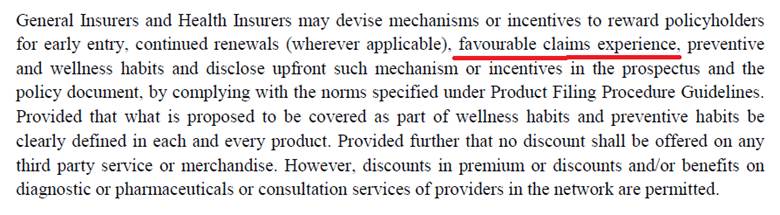
The crux of the issue lies in the "spirit versus the letter" of the regulations. Insurers are adhering to the letter by not explicitly labeling the premium increase as "claims-based loading." However, the underlying financial mechanism achieves the same outcome, leading to a "double whammy" for policyholders: potential increases in base premiums due to general revisions, coupled with a reduced discount if they have made a claim.
Implications for Policyholders and the Future of Health Insurance
The implications of this trend are significant for policyholders:
- Reduced Access to Healthcare: The fear of increased premiums might deter individuals from seeking timely medical attention, potentially leading to delayed diagnoses and more severe health conditions.
- Erosion of Trust: This subtle circumvention of regulations can erode trust between policyholders and insurance companies, creating a perception of unfair practices.
- Increased Financial Burden: Policyholders who genuinely need to claim their insurance can face a disproportionately higher financial burden during renewals, especially if they are not in a position to absorb such increases.
- Lack of Transparency: The opacity surrounding the calculation and application of these discounts leaves policyholders vulnerable and unable to make informed decisions about their insurance coverage.
A Call for Regulatory Clarity and Action
The current situation necessitates a clear and decisive intervention from the IRDAI. Consumer advocacy groups and policyholders are urging the regulator to:
- Clarify the intent behind "Favourable Claims Experience" incentives: The IRDAI must unequivocally define what constitutes a "favourable claims experience" incentive and how it should be applied. The current interpretation by insurers, which effectively penalizes claimants, needs to be addressed.
- Reconsider the permissibility of such discounts: Given their indirect impact, the IRDAI should re-evaluate whether these "favourable claims experience" discounts are indeed in line with the spirit of the regulations. Perhaps a blanket prohibition on any discount structure directly tied to claims history is warranted.
- Mandate greater transparency: Insurers should be compelled to clearly and prominently disclose the methodology behind such discounts in their policy documents, ensuring policyholders fully understand the potential impact on their premiums.
Consumer advocates argue that the original intent of rewarding good health should not be twisted into a mechanism for penalizing those who need to claim. If the goal is to encourage healthy living, this can be achieved through wellness programs, health check-up benefits, or other non-monetary incentives, rather than through premium adjustments that disproportionately affect vulnerable policyholders.
In conclusion, while the IRDAI has successfully prohibited direct claims-based loading, the emergence of the "Favourable Claims Experience Discount" signals a strategic shift by insurers. This subtle reintroduction of the practice poses a significant challenge to the accessibility and affordability of health insurance in India. A proactive and transparent regulatory response is crucial to ensure that the spirit of the regulations is upheld and that policyholders are not indirectly penalized for seeking essential medical care. The onus is now on the IRDAI to provide clarity and enforce measures that safeguard the interests of every policyholder.