
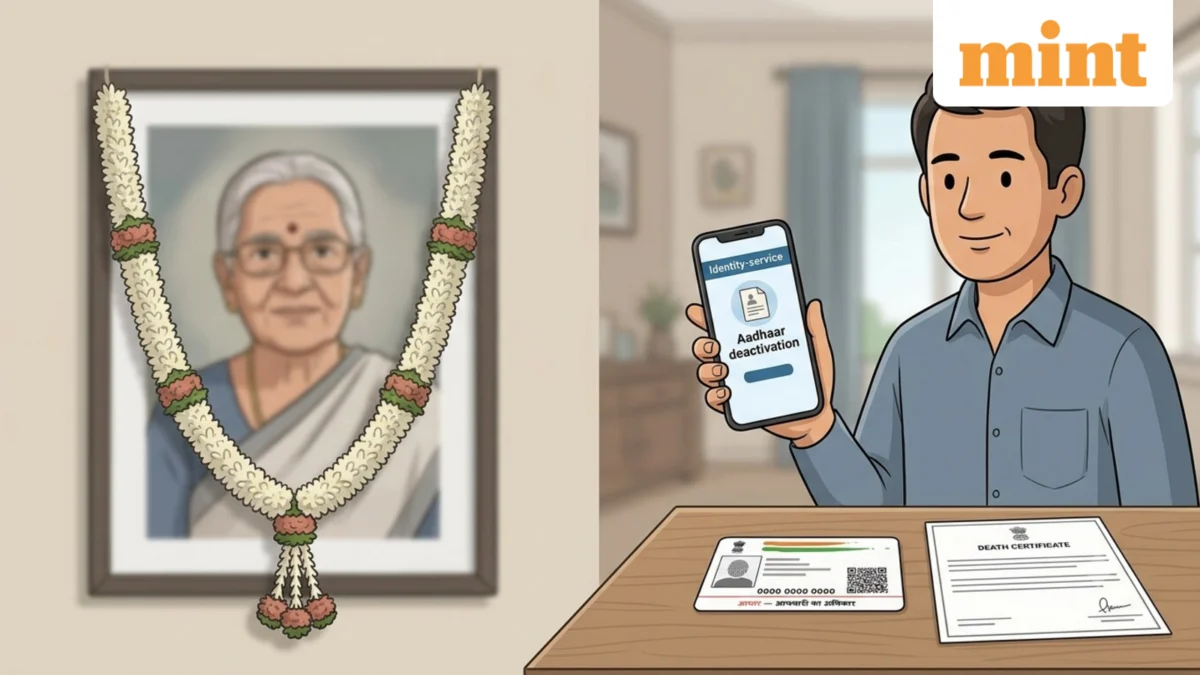
New Delhi, India – In an era where digital identity is paramount, the passing of an individual necessitates careful management of their online presence and crucial identification documents. Recognizing this critical need, the Unique Identification Authority of India (UIDAI) has introduced a vital online facility, enabling Aadhaar holders to report the death of a family member and initiate the deactivation of their deceased loved one’s 12-digit unique identification number. This proactive measure is designed to mitigate the risks of identity misuse, prevent fraudulent activities, and ensure the integrity of India’s vast digital infrastructure.
The new process, accessible through the myAadhaar portal, marks a significant step towards a more comprehensive digital estate management framework. It requires the reporting family member to undergo identity authentication, ensuring the legitimacy of the request, before submitting the deceased person’s details and necessary documentation. This initiative underscores UIDAI’s commitment to robust identity governance, extending its purview beyond the active lifespan of an individual’s Aadhaar to encompass its secure cessation.
This article delves into the intricacies of this new facility, outlining the procedural steps, essential documentation, and the broader implications for families, financial systems, and government services.
The Imperative of Aadhaar in Modern India
The Aadhaar card, with its unique 12-digit identification number, has become the cornerstone of identity verification in India. From accessing government subsidies and welfare schemes to opening bank accounts, filing taxes, and obtaining mobile connections, Aadhaar is intrinsically linked to almost every significant transaction and public service. Its pervasive integration into daily life has made it an indispensable tool for both citizens and institutions, fostering transparency, reducing corruption, and streamlining service delivery across the nation.
However, this very ubiquity also presents a unique challenge upon the death of an Aadhaar holder. An unmanaged or un-deactivated Aadhaar number belonging to a deceased individual can become a vulnerability, potentially exploited for various illicit purposes. The UIDAI’s new online facility directly addresses this concern, providing a structured and secure mechanism to manage the "digital afterlife" of a citizen’s primary identity document.
The Rationale Behind Aadhaar Deactivation Post-Demise
The decision to deactivate a deceased person’s Aadhaar is not merely a bureaucratic formality; it is a critical measure to protect against a range of potential abuses and ensure the sanctity of the identity ecosystem.
Safeguarding Against Identity Theft and Fraud
Perhaps the most significant reason to deactivate a deceased family member’s Aadhaar is to prevent identity theft. In the wrong hands, a deceased person’s Aadhaar number, especially when combined with other personal details that might be accessible, could be used to:
- Open fraudulent bank accounts: This can lead to financial crimes, money laundering, or even financing of illegal activities, with the deceased person’s identity unknowingly implicated.
- Avail loans or credit cards: Criminals could use the Aadhaar to apply for credit, leaving the family to deal with the financial and legal repercussions.
- Claim benefits or subsidies: Government welfare schemes, pensions, and other benefits linked to Aadhaar could be fraudulently claimed, leading to financial losses for the state and potentially denying genuine beneficiaries.
- Misuse property or financial assets: While Aadhaar itself doesn’t confer ownership, its misuse could complicate the legal transfer of assets or even facilitate their fraudulent acquisition.
- Obtain new SIM cards or other services: This could be used for further illicit activities, making it difficult to trace the actual perpetrators.
By formally deactivating the Aadhaar, families effectively shut down a potential avenue for criminals to exploit the identity of their loved one, offering peace of mind during a difficult time.
Ensuring Data Integrity and Preventing Misuse of Benefits
Beyond individual financial fraud, the deactivation of deceased Aadhaar numbers contributes to the overall data integrity of national databases. Keeping records of deceased individuals active within a system designed for living citizens can lead to:
- Inaccurate population statistics: This can affect planning and policy-making at various governmental levels.
- "Ghost beneficiaries" in welfare schemes: If a deceased person’s Aadhaar remains active, their identity could theoretically be used to continue drawing benefits from schemes like ration distribution, LPG subsidies, or pension programs, leading to significant leakages in public funds.
- Complications in record management: For banks, insurance companies, and other financial institutions, having a clear indication of a deceased customer’s Aadhaar status streamlines their own record-keeping and helps prevent errors in legacy systems.
The UIDAI’s initiative thus serves a dual purpose: protecting individuals from post-mortem identity theft and safeguarding the public exchequer by maintaining accurate and current identity records.
Navigating the Online Process: A Step-by-Step Guide
The UIDAI has designed the online reporting mechanism to be accessible and user-friendly, albeit with necessary security protocols. Family members initiating this process should approach it methodically, ensuring all prerequisites are met.
Pre-Requisites: Documents and Information You’ll Need
Before commencing the online submission, it is crucial to gather all necessary documents and information. This preparation will streamline the process and prevent delays.
- Deceased Person’s Aadhaar Number: The 12-digit Aadhaar number of the family member who has passed away is the primary identifier needed.
- Official Death Certificate: A legally recognized death certificate issued by a competent authority (e.g., municipal corporation, gram panchayat, registrar of births and deaths) is mandatory. This document serves as definitive proof of demise. Ensure it is clear, legible, and contains all essential details, including the name of the deceased, date of death, and place of death.
- Reporting Family Member’s Aadhaar Number: The individual initiating the request must also be an Aadhaar holder. Their Aadhaar number will be used for authentication.
- Proof of Relationship: Documents establishing the relationship between the reporting family member and the deceased are essential. This could include:
- Marriage certificate (for spouse)
- Birth certificate (for child/parent)
- Ration card (listing both individuals)
- Passport (if names are linked)
- Any other government-issued document clearly showing the familial connection.
- Contact Information: A valid mobile number and email address for the reporting family member are required for receiving updates and OTPs (One-Time Passwords) for authentication.
Having these documents scanned and ready for upload in a specified format (usually PDF or JPEG) will expedite the online submission.
The Online Submission Process on myAadhaar Portal
The process is initiated through the official UIDAI myAadhaar portal, a secure online platform designed for various Aadhaar-related services.
- Access the myAadhaar Portal: Begin by visiting the official UIDAI website and navigating to the myAadhaar portal.
- Login with Reporter’s Aadhaar: The reporting family member will need to log in to the portal using their own 12-digit Aadhaar number. This typically involves entering the Aadhaar number, a captcha code, and then verifying identity via an OTP sent to the registered mobile number.
- Locate the Deceased Aadhaar Reporting Section: Once logged in, search for a specific section or service related to "Report a Family Member’s Death," "Deactivate Deceased Aadhaar," or similar phrasing. UIDAI regularly updates its portal interface, so the exact wording may vary.
- Fill in Deceased Person’s Details: Carefully enter the deceased person’s Aadhaar number and other requested demographic details as they appear on their Aadhaar card (e.g., name, date of birth). Cross-verify these details to avoid errors.
- Upload Required Documents: Upload the scanned copies of the death certificate and proof of relationship as specified. Ensure the files meet the size and format requirements.
- Provide Reporter’s Details and Consent: Confirm your details as the reporting family member and provide explicit consent for UIDAI to process the request.
- Submit the Request: After reviewing all entered information and uploaded documents, submit the request. A Service Request Number (SRN) or acknowledgment number will be generated. It is crucial to save this number for future reference and tracking the application status.
Understanding the Verification and Deactivation Timeline
It is important for families to understand that submitting the request does not result in immediate Aadhaar deactivation. The process involves a multi-stage verification protocol to ensure authenticity and prevent malicious attempts.

- Initial Scrutiny: Upon submission, UIDAI’s backend systems will conduct an initial review of the provided information and documents.
- Verification by UIDAI Officials: The submitted death certificate and other proofs will be verified against official records where possible. This may involve cross-referencing with state death registration databases.
- Internal Processing: Once verification is complete, UIDAI will proceed with the internal processes required to mark the Aadhaar number as deceased and initiate deactivation from its active database.
- Confirmation: The reporting family member will likely receive a notification (via SMS or email) once the deactivation process is successfully completed. The exact timeline for this entire process is not rigidly defined but depends on the volume of requests and the efficiency of verification. Families should anticipate a reasonable processing period.
During this period, the Aadhaar number will remain in a "pending deactivation" status, preventing any new transactions while the verification is underway. This layered approach ensures both security and accuracy.
The Broader Context: UIDAI’s Mandate and Data Security
The introduction of this online deactivation facility is a natural extension of UIDAI’s overarching mandate to manage and secure the country’s unique identification system.
UIDAI’s Commitment to Secure Identity Management
Established under the Aadhaar Act, 2016, UIDAI is responsible for issuing Aadhaar numbers, performing authentication, and ensuring the security and confidentiality of identity information of individuals. Its commitment to data security is paramount, reflected in:
- Robust Security Architecture: UIDAI employs a multi-layered security system, including encryption, access controls, and regular audits, to protect resident data.
- Privacy by Design: Principles of privacy are integrated into the design and operation of the Aadhaar ecosystem.
- Continuous Improvement: The Authority constantly evaluates and updates its processes and technologies to counter emerging threats and enhance user experience, of which this new deactivation facility is an example.
By providing a formal channel for reporting deaths, UIDAI reinforces its role as a responsible custodian of identity data throughout an individual’s life cycle and beyond.
The Legal and Ethical Framework for Deactivating Deceased Records
While the Aadhaar Act primarily focuses on the issuance and authentication of Aadhaar for living individuals, the necessity of managing deceased records falls under broader principles of data governance, privacy, and public interest. Ethically, maintaining an active digital identity for a deceased person without a mechanism for its cessation could be seen as an oversight, potentially leading to identity fraud and compromising data integrity.
The legal framework supporting such a facility derives from the UIDAI’s general powers to manage the Aadhaar database effectively and securely. Although specific explicit provisions for "deactivation after death" might evolve, the current initiative operates within the spirit of safeguarding national identity infrastructure and preventing misuse, which are core tenets of the Aadhaar Act. It aligns with global best practices in digital identity management, where mechanisms for managing the "digital legacy" are increasingly becoming standard.
Implications of Proactive Aadhaar Deactivation
The ability to easily report a death and initiate Aadhaar deactivation carries significant positive implications across various stakeholders.
For Families: Peace of Mind and Streamlined Estate Management
For families grieving the loss of a loved one, the ability to address digital identity concerns without undue burden is invaluable.
- Reduced Stress: Knowing that their loved one’s identity is secure from misuse provides a measure of peace during an emotionally challenging period.
- Simplified Estate Planning: While Aadhaar deactivation doesn’t directly handle property transfer, it removes one layer of potential complexity or vulnerability that could arise from identity fraud during the estate settlement process. It ensures a clean break in the deceased’s digital footprint.
- Fulfilling Responsibility: For many, managing a deceased family member’s affairs, including their digital assets and identities, is a solemn responsibility. This facility empowers them to fulfill that duty comprehensively.
For the Financial System: Mitigating Risks and Enhancing Trust
Financial institutions are major beneficiaries of this streamlined process.
- Fraud Prevention: Banks, insurance companies, and other financial entities rely heavily on Aadhaar for KYC (Know Your Customer) and transaction authentication. Deactivating deceased Aadhaar numbers significantly reduces the risk of fraudsters using these identities to open accounts, apply for credit, or claim insurance benefits.
- Improved Data Hygiene: Financial institutions can better manage their customer databases by integrating with UIDAI’s updated status, ensuring that records of deceased individuals are correctly flagged, preventing errors in statements, communication, or even automatic renewals of services.
- Enhanced Trust: A secure and reliable identity system fosters greater trust in the financial ecosystem, benefiting both institutions and customers.
For Government Services: Preventing Leakages and Improving Governance
The government’s vast array of welfare schemes and public services are deeply intertwined with Aadhaar.
- Prevention of "Ghost Beneficiaries": By deactivating the Aadhaar of deceased individuals, the government can effectively eliminate "ghost beneficiaries" from schemes, ensuring that funds and resources reach only eligible living citizens. This translates into significant savings for the exchequer.
- Accurate Data for Policy Making: With cleaner, more accurate data on active Aadhaar holders, government agencies can make more informed decisions regarding policy formulation, resource allocation, and demographic planning.
- Streamlined Administration: The overall administration of government services becomes more efficient when the underlying identity data is current and verified. This reduces administrative overhead and enhances accountability.
The Future of Post-Demise Digital Identity Management
While the current online facility is a commendable step, the future holds potential for even more integrated and automated solutions for managing digital identities post-demise.
Potential for Enhanced Integration and Automation
One significant future development could involve closer integration between UIDAI’s system and the national death registration databases.
- Automated Flagging: Once a death certificate is officially registered with the state authorities, an automated flag could potentially be sent to UIDAI, initiating a preliminary review for Aadhaar deactivation, even before a family member manually reports it. This would require robust data sharing protocols and privacy safeguards.
- Centralized Digital Estate Management: Over time, a more centralized "digital estate management" portal could emerge, allowing authorized family members to manage all digital assets and identities (including Aadhaar, bank accounts, social media, email) from a single interface, simplifying a complex and often distressing task.
- Leveraging Technology: Advanced analytics and AI could potentially be used to identify suspicious patterns of Aadhaar usage for deceased individuals, triggering proactive investigations.
Such advancements would further solidify India’s position as a leader in digital governance, ensuring that the benefits of digital identity extend securely even beyond the physical presence of an individual.
Conclusion: A Step Towards Comprehensive Digital Estate Planning
The UIDAI’s new online facility for reporting a family member’s death and initiating Aadhaar deactivation represents a crucial evolution in India’s digital identity management landscape. It addresses a critical vulnerability, safeguarding against identity theft and fraud while simultaneously enhancing the integrity of national databases and government service delivery.
By empowering families with a secure and accessible mechanism to manage the digital legacy of their loved ones, UIDAI is not only protecting individuals and the state but also fostering a greater sense of trust in the digital ecosystem. As India continues its journey towards comprehensive digitalization, initiatives like these underscore the importance of robust, life-cycle management for foundational identity documents, paving the way for a more secure and efficient digital future. This move marks a significant stride towards comprehensive digital estate planning, ensuring that even in loss, the digital footprint of a citizen is handled with dignity, security, and precision.