For decades, the “unwritten rule” of Silicon Valley venture capital was treated as gospel: a firm does not back two companies that compete head-on. This foundational pillar of trust—designed to prevent conflicts of interest and ensure that an investor’s loyalty remains undivided—is now showing severe structural cracks. As the artificial intelligence boom accelerates, the boundaries of startup "territory" are becoming increasingly fluid, forcing even the most traditional firms to confront a new, uncomfortable reality.
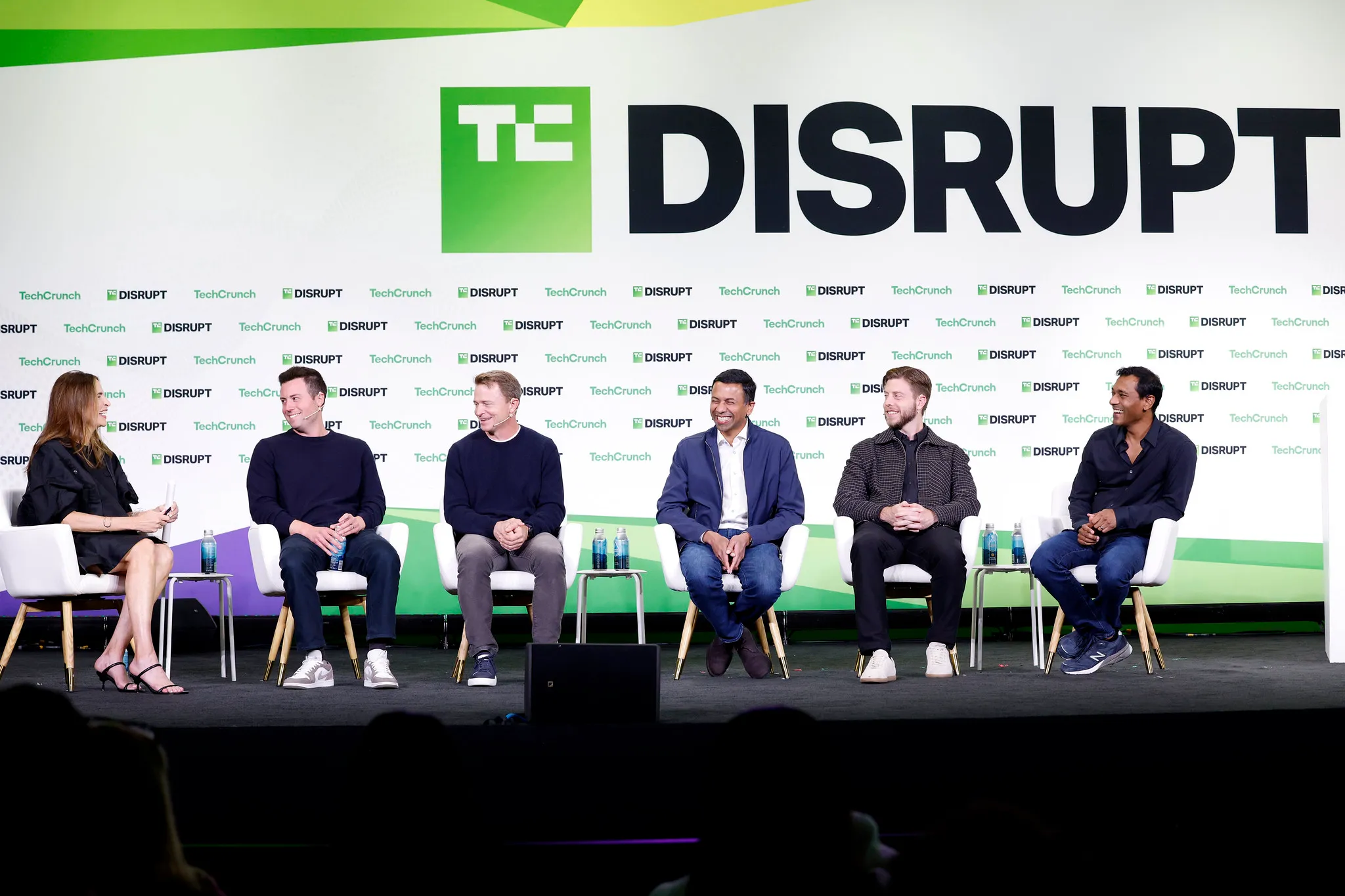
At the recent TechCrunch Disrupt summit, partners from Benchmark—a firm synonymous with high-touch, long-term commitment to early-stage founders—admitted that the era of strict exclusivity is under immense pressure. The promise of the AI revolution is so vast, and the speed of development so rapid, that the traditional VC mandate against backing rivals is becoming a relic of a slower, less competitive era.
The Chronology of a Conflict: From Ideals to Reality
The erosion of the exclusivity rule did not happen overnight, but it has reached a boiling point in recent months. The industry has been trending toward "portfolio sprawl" for years; high-profile AI labs like OpenAI and Anthropic, for instance, share dozens of common investors. However, the theoretical risk of conflict recently turned into a public, acrimonious confrontation.
In late September, Factory—a startup focused on building AI agents for software development—publicly severed ties with board observer and adviser Chris Degnan. The catalyst? An allegation of “unethical conduct” involving Cognition, the creator of the competing “Devin” coding agent. Factory’s CEO alleged that Degnan was in discussions for a senior role at Cognition while simultaneously participating in Factory’s confidential board-level strategy sessions.
Degnan, who subsequently joined Cognition as Chief Revenue Officer, denied the accusations, asserting that he had already resigned his position at Factory before the conflict could materialize. The incident turned into a public spectacle when powerhouse investor Vinod Khosla—whose firm, Khosla Ventures, counts both Factory and Cognition as portfolio companies—intervened on X (formerly Twitter). Khosla publicly rebuked Factory’s leadership, labeling the company a “struggling second-tier competitor” and throwing his weight behind his new executive hire.
This public clash served as a wake-up call for the venture ecosystem, highlighting the volatility that arises when a firm bets on two horses in the same race.
The "Kryptonite" of Venture Capital: Benchmark’s Perspective
Benchmark has long held a reputation as the gold standard for founder-aligned investing, often sticking with companies for 10 to 15 years. Their partners—Eric Vishria, Chetan Puttagunta, and Peter Fenton—offered a candid assessment of this shifting landscape during their Disrupt panel.
Peter Fenton, a long-time partner at the firm, did not mince words, describing the conflict-of-interest dilemma as “kryptonite.” Fenton positioned the role of a venture capitalist on a spectrum. At one end, you have the “co-founder,” who is intimately involved in strategy and execution, and thus cannot work with competitors. At the other end is the “public-market stock picker,” whose duty is merely capital allocation rather than active stewardship.
“Benchmark sits closer to the co-founder end of that spectrum,” Fenton noted. For the firm, transparency is the “golden rule.” According to Fenton, if a conflict emerges, the firm’s responsibility is to ensure that no founder feels blindsided or shortchanged. However, he admitted that the firm is grappling with how to maintain that standard in a world where AI innovation is moving at breakneck speeds.
The Drivers of Change: Why AI Makes Everything Complicated
Chetan Puttagunta pointed to the fundamental economics of the AI boom as the primary catalyst for the blurring of these lines. As the cost of developing sophisticated software “effectively goes to zero,” the barrier to entry has lowered, leading to a surge of incredibly ambitious founders.
“Because founders see a massive surface area and want to claim all of it, we are going to see more of these overlaps,” Puttagunta explained. He distinguished between two types of conflicts:
- Direct Initial Competition: Where an investor knowingly backs two companies doing the exact same thing (which he described as an “easy answer” to avoid).
- Feature Creep/Expansion: Where two portfolio companies that began with different focuses eventually pivot into each other’s territory as they scale.
This second category is where the real friction lies. In the AI era, a company that starts as a coding assistant might quickly expand into automated testing, documentation, or deployment, eventually running headlong into another startup that the same VC firm funded months earlier.
Eric Vishria added that, for Benchmark, the decision to work with companies that eventually collide is often a “matter of necessity, not preference.”
“The harsh reality of this world is every company is evolving very quickly,” Vishria stated. “Companies pivot, they change, and you are going to get conflicts. That is just the reality of the current dynamic.”
Downplaying the "Expert" Role
A significant part of Benchmark’s defense against the accusation of "sharing secrets" between portfolio companies is the firm’s own self-assessment regarding its expertise. Vishria downplayed the idea that VCs are conduits for proprietary technical data.
“We are not product or technology experts,” Vishria said. “We are partners to the founders.”
By positioning themselves as financial and strategic counselors rather than technical consultants, Benchmark argues that the risk of them accidentally or intentionally passing "trade secrets" from one competitor to another is overstated. They emphasize that the focus remains on the individual founder’s vision. While Benchmark noted that they have been fortunate enough to avoid the “insane direct conflict” seen in the Factory-Cognition dispute, they acknowledged that the old, rigid model of exclusivity is undergoing a quiet, inevitable evolution.
Implications for the Future of Startups
What does this mean for the next generation of founders? The implications of this shifting landscape are profound.
1. The Death of "Handshake" Exclusivity
Founders can no longer assume that a VC firm’s investment is an exclusive commitment to their specific product roadmap. As the "surface area" of AI companies grows, founders must be more rigorous during due diligence. They should explicitly ask potential investors about their current portfolio and how the firm handles future "pivot conflicts."
2. A Rise in Disclosure and Recusal
As conflicts become more frequent, the "rules of engagement" within boardrooms will become more formalized. We are likely to see an increase in recusal clauses, where investors are legally or ethically required to step out of meetings if a topic touches upon a competitor’s proprietary technology.
3. The Power Shift Toward Multi-Stage Firms
Firms with larger, diversified portfolios have a structural advantage in the AI era. They are already managing complex, overlapping interests. For boutique firms, however, the inability to manage these conflicts could lead to a loss of trust—a firm’s most valuable currency.
4. Transparency as a Competitive Advantage
If traditional firms like Benchmark are being forced to acknowledge these tensions, founders will naturally migrate toward those who are the most transparent. Firms that offer clear, written policies on how they handle "crossover" competition will likely attract better founders than those who hide behind vague promises of loyalty.
Conclusion: A New Era of Venture Logic
The “unwritten rule” of venture capital was born in an era where software was slow to build, markets were siloed, and pivots were rare. AI has fundamentally disrupted that ecosystem. As Benchmark partners have candidly admitted, the sheer ambition of AI founders to capture entire markets makes the collision of portfolios inevitable.
The industry is moving toward a model where “conflict management” replaces “conflict avoidance.” For founders, the lesson is clear: the venture capital landscape is becoming more complex and less protected. Trust is still essential, but it must now be accompanied by explicit agreements, a deep understanding of investor portfolios, and a realistic expectation that in the high-stakes game of AI, the only constant is change.
While Benchmark isn’t declaring the death of the pact, their candor suggests that the old ways are fading. In the new economy, the value of a VC will be measured not by their exclusivity, but by their ability to navigate the messy, overlapping reality of the companies they back.