In the high-stakes environment of startup growth, founders are perpetually locked in a cycle of immediate priorities: building pipeline, optimizing retention, and managing the relentless pressure of the next 90 days. Amidst this operational intensity, a profound shift in consumer behavior is unfolding—one that threatens to render traditional search strategies obsolete. Buyers are no longer merely "Googling" solutions; they are querying AI-powered answer engines to curate their vendor shortlists.
For many founders, the question of how AI engines describe their company is an afterthought. However, ignoring this digital narrative is no longer a passive choice—it is an active gamble. As the market transitions toward AI-first research, the brands that remain invisible to these engines are effectively ceding their market share to competitors who have mastered the art of Answer Engine Optimization (AEO).
The Evolution of Discovery: From Search to Synthesis
For decades, Search Engine Optimization (SEO) was the gold standard for digital visibility. It was a game of keywords, backlink profiles, and domain authority. Today, that paradigm is shifting. Answer engines—the AI models powering the next generation of discovery—do not simply list links; they synthesize complex information into actionable summaries.
When a potential buyer asks an AI tool for the "best project management software for scaling teams," they aren’t looking for a list of ten blue links. They are looking for a definitive, trusted recommendation. If your brand is not integrated into the knowledge base of these engines, you are not just losing a click; you are being excluded from the buyer’s initial consideration set.
Founders who assume that high SEO rankings automatically translate to AI visibility are working with outdated assumptions. Answer engines construct responses using vastly different logic, weighing intent, sentiment, and authoritative citation over traditional ranking factors. Operating without visibility into how your brand appears in these AI-generated responses is akin to flying blind in a market that is rapidly moving toward automated, AI-led procurement.

Establishing the Baseline: Knowing Where You Stand
The first step in addressing the AEO gap is visibility. Without data, a founder cannot determine if their brand is being positioned as a market leader, a secondary option, or, in many cases, if it is being ignored entirely in favor of a competitor.
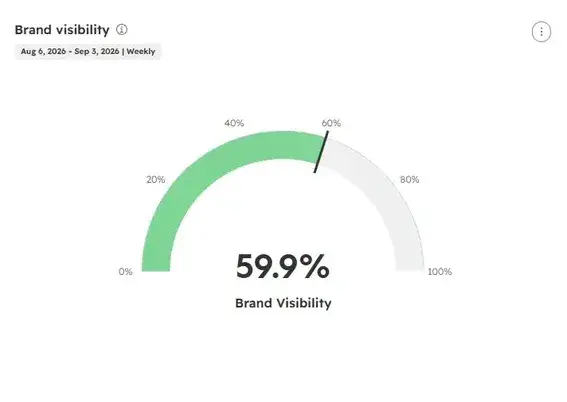
The complexity of AI algorithms often creates a "black box" effect. To combat this, platforms like HubSpot’s AEO tool are providing a transparent look into the AI ecosystem. By utilizing a Brand Visibility Dashboard, founders can access key performance indicators (KPIs) such as their AI visibility score, share of voice, and citation frequency.
Key Metrics for the AI Era:
- AI Visibility Score: A weighted measurement of how frequently and prominently your brand appears in relevant category queries.
- Share of Voice: A comparative analysis showing how often your brand is mentioned in relation to your primary competitors.
- Citation Mapping: Identifying the specific sources (white papers, news articles, reviews) that AI engines trust when recommending your brand.
By establishing this baseline, founders can move from uncertainty to strategy. It allows for the identification of critical gaps: Is your brand failing to appear because of a lack of authoritative content? Or are your competitors dominating the conversation by consistently appearing in the citations that AI engines prioritize?
The Strategic Shift: Actionable Intelligence Without the Agency
Historically, the expertise required to navigate search algorithms was gated behind expensive agencies and specialized teams. For a bootstrapped or Series A startup, this was often a luxury they couldn’t afford. The current movement in AEO technology is designed to break that barrier, empowering founders to take ownership of their AI presence without needing to hire a dedicated consultant.
The modern AEO approach is built on a "prioritized action" model. Rather than providing a deluge of abstract data, the goal is to provide a roadmap of specific, high-impact tasks. This includes:

- Content Gap Identification: Discovering the questions your buyers are asking that you aren’t yet answering.
- Source Targeting: Identifying which high-authority industry publications need to feature your brand to boost your AI "trust factor."
- Real-time Optimization: Updating landing pages to mirror the natural language patterns that AI engines prefer.
By streamlining these processes, founders can delegate tasks to existing team members—such as content writers or product marketers—without the need for a complex, multi-month strategy overhaul.
The Data-Driven Advantage: Why AEO Matters for the Bottom Line
The business case for AEO is not merely about brand vanity or "being present"; it is fundamentally about conversion. According to recent internal data from HubSpot, organizations that actively optimize for AI-driven discovery see a significant uptick in performance, with AEO-focused users generating 82% more deals.
This correlation between AI visibility and revenue highlights a critical shift in the sales funnel. When a buyer enters a conversation with a sales representative already informed by an AI-generated summary of your company, the sales process is significantly shortened. The buyer arrives with higher trust and a better understanding of the value proposition, allowing the sales team to move directly into solution-fit discussions rather than educational discovery.
Integrating AEO into the Smart CRM
The most common failure in modern marketing is the disconnect between brand awareness and revenue tracking. Many businesses treat AI visibility as a "top-of-funnel" metric that sits in a silo, separate from their actual sales operations. This fragmentation makes it impossible to calculate the true Return on Investment (ROI) of an AEO strategy.
To solve this, AEO efforts must be deeply integrated into the company’s CRM. When AI visibility metrics are synthesized with CRM data, the insights become hyper-contextual. Instead of relying on generic industry benchmarks, a founder can see how their AI presence is specifically impacting the leads within their own pipeline.

By leveraging tools that connect directly to a Smart CRM, companies can:
- Track Attribution: Link specific AI-generated recommendations to the creation of new opportunities in the sales pipeline.
- Analyze Sentiment: Understand the context in which your brand is being mentioned—are you being positioned as a premium solution, a budget-friendly alternative, or a legacy player?
- Personalize Outreach: Equip sales reps with data on exactly what the buyer has been reading and how the AI has introduced them to your brand.
The Future of Market Discovery: Implications for Founders
As AI continues to mature, the "Answer Engine" will become the primary interface for B2B procurement. We are moving toward an era where the first interaction a buyer has with your brand will be mediated by a machine. This does not mean the human element is lost; rather, it means that the human element must be curated and "fed" to the machines to ensure the correct narrative is served.
Strategic Implications:
- The End of Passive Marketing: Founders can no longer rely on brand recognition to carry them. If your brand is not "AI-literate," you are invisible.
- Content as Infrastructure: Content is no longer just for human consumption. It is the data set from which AI models build their understanding of your industry. High-quality, original, and authoritative content is the foundational infrastructure for AI visibility.
- Speed to Adapt: The advantage will go to founders who treat AEO as an operational pillar rather than a marketing experiment.
The question for every founder today is not whether they have the time to focus on AI engines, but whether they can afford the cost of being absent when their next major deal is being researched. The market is shifting toward AI-assisted discovery. The brands that secure their place in those answers will define the next generation of industry leaders.
Conclusion
As we look toward the future, the integration of AEO into the broader sales and marketing ecosystem is not just a competitive advantage—it is a requirement for survival. By understanding where the brand stands in answer engines, taking targeted actions to fill visibility gaps, and linking those efforts directly to the CRM, founders can ensure that their company remains a top contender in the minds of the next generation of AI-assisted buyers.
The era of manual, search-first discovery is fading. The era of AI-driven, intent-based discovery is here. Founders who act now to align their brand narrative with the logic of these new engines will find themselves at the center of the conversation, while those who wait will find themselves searching for a way back into the conversation.