Introduction: The Strategic Pivot of a State-Owned Giant
In an era where the Indian telecommunications landscape is dominated by aggressive private players and shifting tariff structures, Bharat Sanchar Nigam Limited (BSNL), the state-owned telecommunications behemoth, has made a significant strategic move. By introducing the new ₹202 Special Tariff Voucher (STV) and reinforcing the value proposition of its ₹247 plan, BSNL is not merely competing on price; it is integrating essential financial services—specifically insurance—into the core of its mobile offerings.
This move comes at a critical juncture for the Indian telecom sector, which has recently witnessed a general upward trend in tariffs. BSNL’s latest offerings are designed to cater to a demographic that seeks not only connectivity but also a safety net, effectively positioning the provider as a "pro-people" alternative to the profit-driven private sector.
Main Facts: Breaking Down the New Offerings
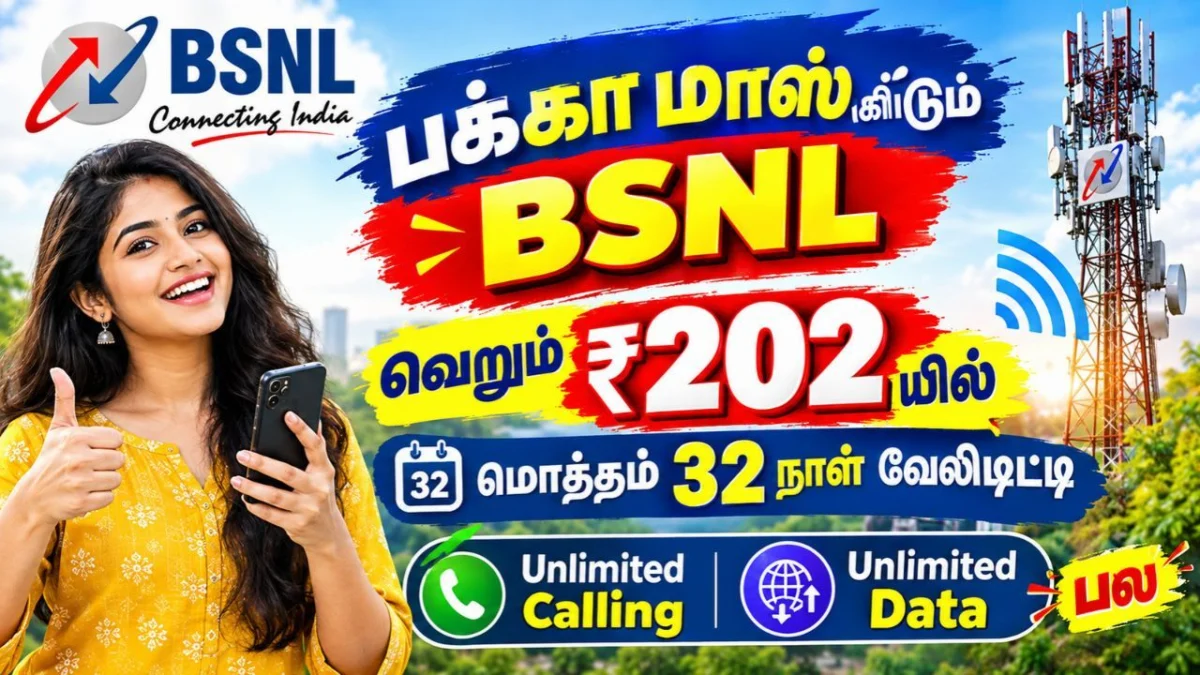
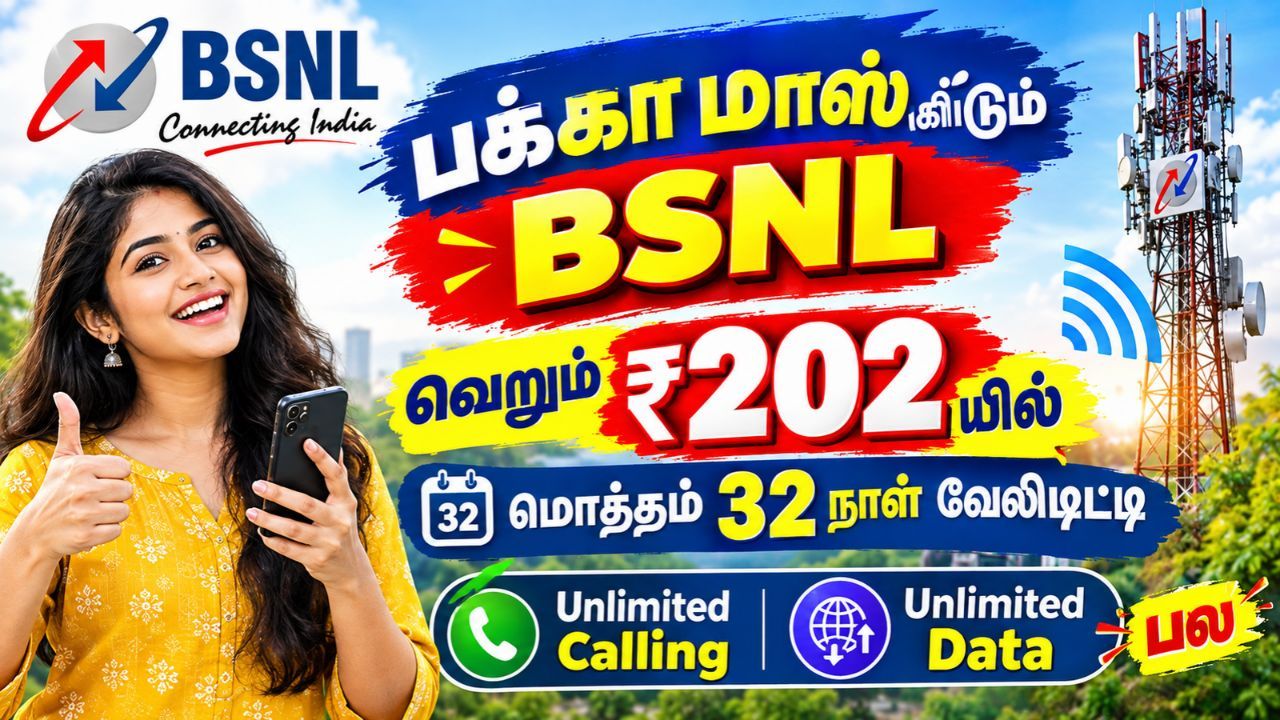
The centerpiece of BSNL’s recent announcement is the ₹202 Special Tariff Voucher (STV), a plan that challenges the industry standard of 28-day validity cycles by offering a unique 32-day window.
The ₹202 STV: Connectivity Meets Security
The ₹202 plan is specifically engineered for the budget-conscious user who requires a balance of talk time, data, and extended validity. The key features include:
- Voice Benefits: 300 minutes of local and national voice calling.
- Data Allocation: 5GB of high-speed data for the duration of the plan.
- Post-FUP Speed: Once the 5GB limit is reached, users remain connected at a reduced speed of 40 Kbps, ensuring that basic messaging services remain functional.
- SMS Benefits: 100 SMS included.
- Validity: An industry-defying 32 days.
- Insurance Integration (The USP): In a groundbreaking move, BSNL has bundled this plan with a ₹1 lakh Personal Accident Cover and a ₹10,000 Cyber Insurance Cover, provided in collaboration with the Oriental Insurance Company Limited (OICL).
The ₹247 Plan: The Data-Heavy Alternative
For users with higher data requirements, BSNL continues to promote its ₹247 plan, which serves as a robust "bulk data" option. Its features include:
- Voice Benefits: Truly unlimited local and national voice calls.
- Data Allocation: 50GB of high-speed data. Unlike daily-limit plans, this allows users to consume data as needed throughout the month.
- Post-FUP Speed: Speed throttled to 40 Kbps after the 50GB limit.
- SMS Benefits: 100 SMS per day.
- Monetary Benefit: Includes ₹10 of talk time credited to the main account.
- Validity: 30 days.
Chronology: BSNL’s Journey Toward Revitalization
To understand the significance of these plans, one must look at the timeline of BSNL’s evolution over the last three years.
2022-2023: The Foundation of Survival
During this period, BSNL was largely seen as a legacy carrier struggling to keep pace with the 4G deployments of Reliance Jio and Bharti Airtel. The government of India intervened with massive revival packages totaling over ₹1.64 lakh crore, aimed at de-stressing the balance sheet, allocating 4G/5G spectrum, and funding the indigenous development of a 4G stack.
Early 2024: The Rise of the Indigenous 4G Stack
Under the "Atmanirbhar Bharat" (Self-Reliant India) initiative, BSNL began the rollout of its 4G services using technology developed by a consortium led by TCS (Tata Consultancy Services) and C-DOT. This was a pivotal moment, as it marked the first time a major Indian carrier deployed a completely home-grown core network.
Mid-2024: The Private Tariff Hike
In July 2024, the private telecom trio—Jio, Airtel, and Vi—implemented a significant tariff hike, increasing prices by 10% to 25%. This created a vacuum in the "ultra-affordable" segment, which BSNL immediately sought to fill.
October 2024: The Introduction of the Insurance-Linked STVs
Recognizing that price alone might not be enough to lure customers back from 5G-ready networks, BSNL pivoted toward "Value-Added Services." The launch of the ₹202 plan with bundled insurance signifies a shift from being a "commodity provider" to a "service ecosystem provider."
Supporting Data: Market Analysis and Consumer Demographics
The strategic logic behind the ₹202 and ₹247 plans is supported by several key data points regarding the Indian mobile market.
The Validity Gap
Most private operators structure their monthly plans around a 28-day cycle. Over a calendar year, this forces consumers to recharge 13 times rather than 12. By offering 32 days in the ₹202 plan and 30 days in the ₹247 plan, BSNL provides a tangible "validity bonus" that resonates with rural and lower-middle-class consumers who track every rupee spent.
The Rise of Cyber Threats
According to recent NCRB (National Crime Records Bureau) reports, cyber fraud in India has seen a sharp increase, particularly targeting first-time internet users in Tier-2 and Tier-3 cities. BSNL’s inclusion of a ₹10,000 cyber insurance cover is a direct response to this data, providing a psychological and financial safety net for users who may be wary of digital transactions.
Data Consumption Patterns
While the national average for data consumption is approximately 20GB per month per user, there is a significant segment of "prosumers" (professional consumers) who do not want the restriction of daily 1.5GB or 2GB limits. The ₹247 plan’s 50GB bulk allocation caters specifically to this segment, which includes small business owners and students.
Official Responses: A Commitment to "Digital Life"
BSNL’s corporate communication regarding these plans has been uncharacteristically modern and aggressive. In an official statement shared via their social media handles, BSNL India emphasized that their mission extends beyond mere connectivity.
"Recharge with BSNL and enjoy more than just connectivity! Get added protection with ₹1 lakh Personal Accident Cover and ₹10,000 Cyber Insurance Cover with the ₹202 STV plan. Stay connected, stay secure, stay BSNL!" the company stated.
The partnership with the Oriental Insurance Company Limited (OICL) highlights a synergy between two state-owned entities to provide a holistic "Digital Life" experience. BSNL officials have noted that these vouchers are available through multiple channels, including the BSNL website, the "BSNL Self Care" mobile app, and authorized retail outlets, ensuring ease of access for their vast rural subscriber base.
Furthermore, BSNL has clarified that the ₹247 plan is not a "new" introduction but a "re-energized" offering intended to provide long-term value. This distinction is important as the company seeks to stabilize its portfolio and avoid the "plan-of-the-month" churn that often confuses elderly or less tech-savvy users.
Implications: Reshaping the Competitive Landscape
The introduction of these plans carries profound implications for the future of the Indian telecom market and BSNL’s role within it.
1. Bridging the Digital and Financial Divide
By bundling insurance with a mobile recharge, BSNL is facilitating "micro-insurance" penetration in India. For many rural users, this might be their first encounter with a formal insurance product. This "telco-insurance" model could become a blueprint for other public sector services, integrating health or crop insurance into essential utilities.
2. Pressure on Private Margins
While Jio and Airtel are currently focused on monetizing their 5G investments, BSNL’s aggressive pricing in the 4G/entry-level segment prevents the private players from completely abandoning the low-ARPU (Average Revenue Per User) segment. BSNL acts as a "price stabilizer" in the market, ensuring that mobile connectivity remains a right rather than a luxury.
3. Strengthening the "Atmanirbhar" Narrative
The success of these plans is intrinsically tied to the performance of BSNL’s indigenous 4G network. If BSNL can deliver consistent speeds on these value-rich plans, it will validate the Indian government’s decision to invest in local technology stacks, potentially opening doors for BSNL to export its 4G/5G solutions to other developing nations in Africa and Southeast Asia.
4. Retention and Churn Management
BSNL has historically struggled with "churn"—users leaving for private networks due to better data speeds. By offering 32-day validity and insurance, BSNL is creating "sticky" features. A user is less likely to switch SIM cards if they know their accident insurance is tied to their active BSNL recharge.
Conclusion: A New Chapter for BSNL
The launch of the ₹202 and ₹247 plans represents a sophisticated evolution in BSNL’s market strategy. No longer content with being the "provider of last resort," BSNL is actively carving out a niche as the most value-oriented and socially responsible carrier in India.
For the consumer, the choice is becoming clearer: while private operators offer the cutting-edge speeds of 5G, BSNL offers a comprehensive package of connectivity, extended validity, and financial security. As the 4G rollout continues to expand across the country, these plans may well be the catalyst that allows the "People’s Network" to reclaim its former glory in the hearts and pockets of the Indian public.
In the final analysis, BSNL’s latest move is a reminder that in a developing economy like India, the most successful technology is often the one that provides the most utility for the lowest cost, while simultaneously protecting the user from the risks of a digital world. BSNL hasn’t just sold a recharge; it has sold peace of mind.