In a landmark moment for neuro-engineering, Science Corporation—the venture led by former Neuralink president Max Hodak—has confirmed a major milestone in its mission to redefine the human-machine interface. During a keynote presentation at TechCrunch Disrupt, Hodak announced that the company has successfully implanted its proprietary "PRIMA" vision-restoring chip into its first patient suffering from Stargardt disease.
This development marks a significant shift in the landscape of brain-computer interfaces (BCIs), moving beyond the realm of speculative sci-fi and into the pragmatic, life-changing territory of restorative medicine. While many industry peers focus on controlling external hardware, Science Corporation is betting on a future where BCIs are viewed as essential medical prostheses, capable of bypassing damaged biological pathways to restore human function.
The Core Innovation: PRIMA and the Vision of Sight
At the heart of this achievement is the PRIMA system, a sophisticated implant designed to tackle conditions that have long been considered irreversible. Stargardt disease is a devastating inherited condition that leads to the gradual degradation of photoreceptors in the central retina, effectively creating a persistent, expanding blind spot in a patient’s field of vision.
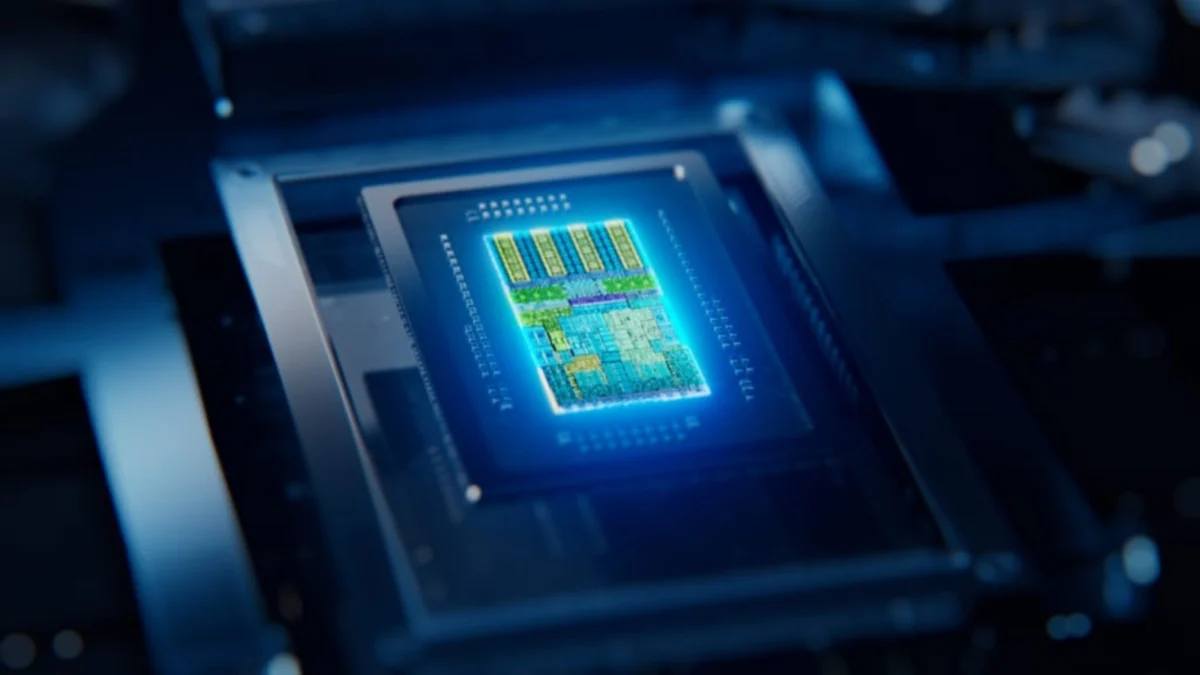
The PRIMA implant operates on a principle of biological bypass. By placing a two-millimeter-by-two-millimeter chip directly beneath the degenerated photoreceptors, Science Corporation essentially introduces an artificial "bridge." Patients pair this implant with specialized camera-equipped glasses that capture visual data, convert it into electrical signals, and transmit those signals to the chip. The chip then stimulates the surviving inner retinal cells, which pass the information along the optic nerve to the brain.
"The retina is part of the central nervous system," Hodak explained during his keynote. "We consider cochlear implants, retinal prostheses, and motor prostheses as different types of BCIs. Vision is simply electrical potential—it’s electrical activity traveling down the optic nerve. If you can get the optic nerve to signal the rest of the brain correctly, you can provide vision to it."
Chronology of a Medical Breakthrough
The path to this announcement has been marked by rigorous clinical testing and steady, incremental progress.
- 2021: Max Hodak founds Science Corporation, signaling a departure from the invasive, direct-tissue approach favored by companies like Neuralink. The company’s stated goal is to advance neural engineering with a focus on commercial viability and clinical utility.
- Late 2025: Science Corporation begins making waves in the BCI community by articulating its unique approach to sensor placement—resting on the surface of the brain rather than penetrating deep into brain tissue.
- Early 2026: The PRIMA system receives regulatory approval in Europe for treating geographic atrophy, the advanced stage of age-related macular degeneration.
- May 2026: The company performs its first implantation of the PRIMA device in a Stargardt disease patient at the Sydney Eye Hospital in Australia.
- October 2026: At TechCrunch Disrupt, Hodak shares the initial successes of the trial, revealing that the patient has already progressed from perceiving simple light to identifying letters and, subsequently, reading whole words.
Technical Hurdles and Clinical Data
Despite the enthusiasm surrounding the project, Hodak remains grounded about the current limitations of the technology. The current iteration of the device, while successful, provides a narrow field of vision.

"The device is like looking through a straw," Hodak admitted. "It is not a high-resolution, full-color field of view. It is a patch of black-and-white, high-contrast vision. But it is sharp."
For a patient who has experienced near-total central vision loss, that "patch" of sharp vision is revolutionary. However, the engineering team is already looking toward the next generation of the hardware. To expand the field of view, the company must overcome the technical challenge of the eye’s natural curvature, which makes large, flat silicon chips difficult to integrate. Additionally, the quest for "native acuity"—vision that mimics the natural clarity of a healthy human eye—requires shrinking the electrodes on the chip to allow for much higher pixel density.
"We have a clear path," Hodak stated, forecasting that a next-generation device will enter human trials within the next year. He projects that within five years, the company will achieve visual fidelity that approaches natural levels.
Beyond the Eye: The Broader BCI Ecosystem
While PRIMA is the current face of the company, it serves a strategic purpose: proving that Science Corporation’s methods are both safe and effective. By establishing a foothold in restorative ophthalmology, the company is building the infrastructure and credibility needed for more ambitious neural interventions.
Unlike the deep-brain penetration methods employed by some competitors, Science Corporation’s BCI sensor is designed to be placed inside the skull but rest atop the brain. This "subdural" approach is intended to mitigate the risks associated with tissue damage while maintaining the connectivity required for high-bandwidth neural signaling.
The potential applications for this technology are vast. Hodak hinted at upcoming clinical indications for neurodegenerative diseases—conditions that are currently household names—as well as rehabilitation protocols for stroke victims.
"If you have lost part of your brain due to a stroke," Hodak theorized, "and you can establish connections into the deep brain in two distinct areas, you could theoretically add new cortical areas. It’s like adding new brain regions entirely—a feat impossible with conventional electrodes."

The Philosophical and Ethical Implications
The ultimate mission of Science Corporation is perhaps the most ambitious in the field: to understand how the brain constructs the mind and, eventually, to develop "engineered brains."
This mission brings with it a complex set of ethical considerations. As BCI technology migrates from restorative medicine to potential cognitive enhancement, the boundary between "treating" a patient and "upgrading" a human becomes blurred. Hodak, however, frames this in the context of human longevity and "health span."
"We aren’t designing for healthy 40-year-olds today," he noted. "But we believe that as people reach 60 or 70, they will increasingly need some form of BCI technology to maintain their quality of life. We want to figure out how to extend not just the lifespan of the human body, but the health span of the mind."
The societal impact of such a shift could be profound. If the brain can be interfaced with, monitored, and supported via silicon, the traditional definitions of disability and cognitive decline may fundamentally change. By focusing on the "computer-like" nature of the brain, Science Corporation is positioning itself as a leader in a future where the distinction between biological and digital cognition is no longer a hard line, but a bridge.
Conclusion: A New Frontier
The success of the PRIMA implant in a Stargardt patient is not just a triumph of engineering; it is a signal that the era of the practical, clinical BCI has arrived. While challenges in field-of-view, electrode density, and long-term biocompatibility remain, the progress reported by Max Hodak and his team at Science Corporation provides a roadmap for the next decade of medical innovation.
As the company transitions from these initial clinical trials toward wider applications in neuro-rehabilitation and beyond, the world will be watching. For those suffering from currently incurable conditions, the "straw-sized" patch of light provided by the PRIMA chip is not just a technical achievement—it is the first flickering promise of a world where sight and neural function can be recovered, restored, and perhaps, one day, augmented.