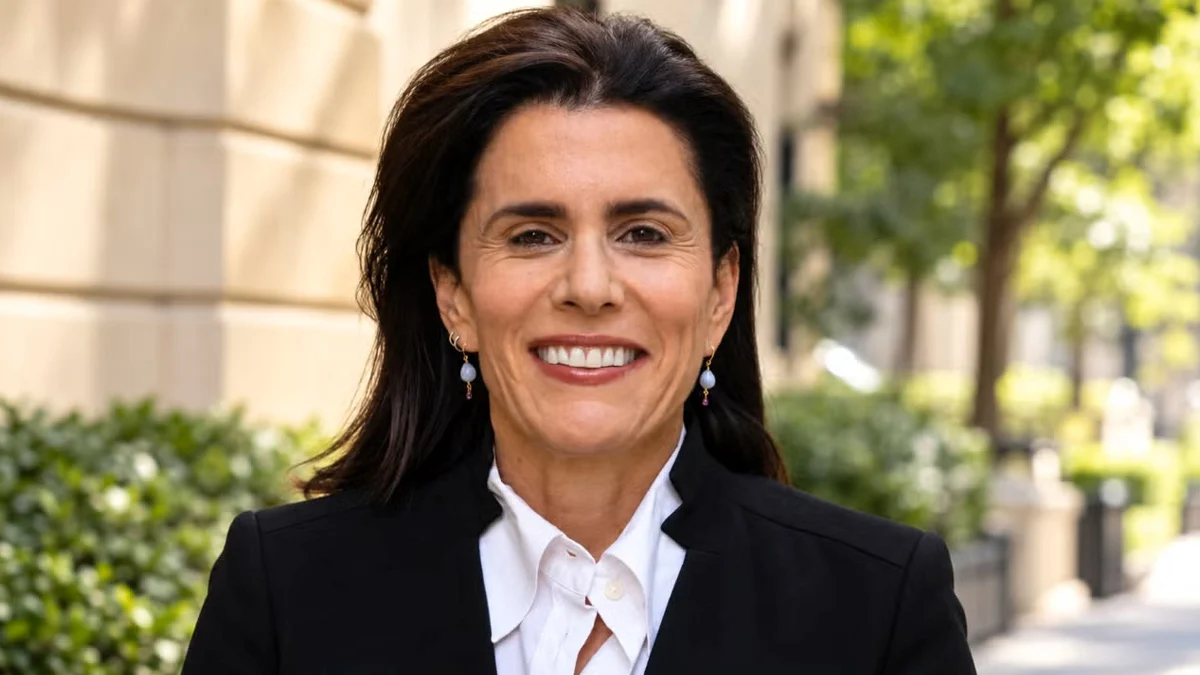

In an era defined by hyper-partisan echo chambers and the erosion of civil discourse, Fox News’ The Five offers a daily masterclass in friction. Among its high-profile cast, liberal co-host Jessica Tarlov has carved out a distinct niche—not through volume or performative outrage, but through a strategy of tactical silence and intentional engagement.
During a recent appearance at ADWEEK House during Advertising Week, moderated by ADWEEK’s Chief Content Officer Zoë Ruderman, Tarlov pulled back the curtain on her methodology. Whether she is sparring with her conservative colleagues on cable news or promoting her new bestselling book, Disagree: Winning Arguments Without Losing Friends, Tarlov’s philosophy remains consistent: silence is a tool, and the goal of debate should never be victory, but rather the opening of minds.
The Strategic Silence: A New Approach to Media Punditry
For many, the instinct in a heated debate is to fill the air with counterarguments. Tarlov, however, has found that the most powerful moments often occur when she says nothing at all. She describes a unique ability to savor the silence that follows when her points are validated—or when an opponent inadvertently undermines their own argument.
This "strategic silence" is more than a rhetorical flourish; it is a diagnostic tool. By listening intently rather than preparing a rebuttal, Tarlov claims she can distinguish between those engaging in "good faith"—people who are genuinely interested in a clash of ideas—and those operating in "bad faith," whose primary objective is to score points or shut down discourse.
"I think that there is so much bad-faith debate or conversation going on that people are actually driven towards the conversations where they can tell that people are being very intentional about having them," Tarlov told the ADWEEK audience.
Chronology of a Career: From Research to the Primetime Stage
Tarlov’s ascent to one of the most recognizable voices on television was not a linear path of political punditry. Before becoming a permanent fixture on the top-rated The Five, she spent years in the trenches of data and research, including a notable stint at the digital media outlet Bustle.
The Transition to Cable News
- Early Career: Tarlov began her professional journey as a researcher and analyst, honing the skills of data interpretation that would later define her on-air persona.
- The Fox News Era: Joining The Five placed her in the most challenging environment for a liberal commentator: a show where she is consistently outnumbered four-to-one by conservative co-hosts.
- The Trump Factor: Her tenure on the show has inevitably put her in the crosshairs of former President Donald Trump, who has frequently targeted her in public statements and social media posts.
- The Authorial Pivot: With the release of Disagree, Tarlov has transitioned from a television personality into a thought leader on communication, codifying her experiences into a roadmap for the general public.
The Philosophy of "Disagree": Principles for Modern Discourse
The central thesis of Tarlov’s new book, published by Penguin Random House, is that the modern American obsession with "winning" arguments is exactly what has poisoned our social fabric.
Rule One: Abandon the Goal of Conversion
Tarlov argues that attempting to change someone’s mind in the heat of a debate is a fool’s errand. Instead, she posits that the objective should be more modest: to introduce an alternative viewpoint as something worthy of consideration. By lowering the stakes, the conversation becomes less about combat and more about intellectual exchange.
The Vulnerability Factor
Tarlov shared a deeply personal anecdote during the ADWEEK session regarding a past attack from Donald Trump. She admitted that the personal nature of the critique broke her down at the time. However, this moment of vulnerability served as a turning point. It taught her a vital lesson about the nature of opposition: "When someone is attacking you on style, you have won on substance."
This realization allowed her to reframe her approach to televised debates. If an opponent resorts to ad hominem attacks, it is a tacit admission that they have lost the argument on the merits.
Supporting Data: Why Intentionality Matters
Tarlov’s success on The Five is empirical evidence that audiences are hungry for authentic, intentional dialogue. Despite the noise of social media, which often rewards the most inflammatory takes, The Five consistently ranks as a juggernaut in the cable news ratings.
Tarlov attributes this to the fact that viewers can intuitively sense when a conversation is "real." In a landscape filled with performative vitriol, the sight of a commentator who is prepared, curious, and human—and who refuses to descend into bad-faith mockery—provides a form of relief to the viewer.

Data-Driven Insights for Brands
Drawing on her background as a researcher, Tarlov also offered a warning to brands and advertisers. She suggested that many companies rely too heavily on algorithmic shopping patterns to understand their consumers, thereby missing the human element.
"People are more tolerant, more politically diverse, kinder, and more open than you may think," she noted. She encouraged brands to engage in more on-the-ground, real-world outreach rather than relying on digital echo chambers, which often exaggerate the polarization of the population.
Official Responses and Industry Reception
The response to Tarlov’s approach has been polarized, reflecting the very divide she seeks to bridge. Critics of the current media environment have lauded her book as a necessary corrective to the "outrage machine" that defines modern cable news.
However, some industry observers point to the inherent contradictions of her position. Can a show like The Five truly be a platform for "good faith" debate when it is designed for entertainment and viewership, or is her intentionality merely a brand strategy within a larger, adversarial system?
Tarlov maintains that the format of the show is less important than the individual’s approach. By staying prepared and maintaining her humanity, she argues that she can exert influence even within a system that is often set up to reward the opposite.
Implications: The Future of Political Discourse
The implications of Tarlov’s methodology extend far beyond the television studio. As the American electorate becomes increasingly siloed, the ability to "disagree without losing friends" is becoming a critical social skill.
1. The Death of the "Bad Faith" Industry
If audiences continue to favor "intentional" conversations, there may be a market shift away from inflammatory punditry toward more nuanced, long-form, and civil engagement.
2. The Power of Vulnerability
Tarlov’s admission that she was once deeply affected by a public attack highlights a broader trend: the move toward authenticity. Audiences are increasingly rejecting the "unflappable" robotic persona of the traditional pundit in favor of someone who shows the toll that public discourse takes.
3. Bridging the Gap in Branding
For brands, the lesson is clear: do not mistake the vitriol of the comment section for the sentiment of the customer. There is a vast, quiet middle ground of consumers who are tired of the culture wars and are looking for brands that reflect a more tempered, human, and open-minded reality.
Conclusion
Jessica Tarlov’s career is a study in navigating the extremes of the modern media landscape. By prioritizing intentionality over victory, and substance over style, she has managed to remain relevant and respected even in the most polarized environments.
As she continues her work on The Five and promotes the lessons in Disagree, her trajectory serves as a reminder that discourse does not have to be a battlefield. If we approach our conversations with the curiosity and the "good faith" she advocates, we might find that the common ground is much larger—and much more accessible—than it appears from the depths of our digital echo chambers. The path forward, according to Tarlov, is not to shout louder, but to listen with the intent to understand, and to know exactly when to let the silence do the work.