As the work week draws to a close, the pace of innovation in the artificial intelligence sector shows no signs of slowing. From the creative studios of digital marketers to the high-stakes world of search engine optimization and the rapid deployment of autonomous personal agents, the landscape is shifting beneath our feet. For businesses, the question is no longer whether to adopt AI, but how to integrate it into the bedrock of their daily operations.
Main Facts: The Evolving AI Ecosystem
The current AI zeitgeist is defined by three primary vectors: Generative consistency, AI-first search visibility, and Agentic autonomy.
Creative teams are discovering that the "one-and-done" approach to product photography is obsolete. By utilizing single source images as "seed" assets, brands can now generate massive, high-fidelity visual libraries that maintain strict brand consistency. Simultaneously, the SEO paradigm is undergoing a fundamental revolution. As consumers increasingly turn to AI chatbots for product recommendations, businesses must pivot their content strategies to satisfy both human readers and algorithmic entities. Finally, the hardware-software integration—exemplified by Google’s new Windows desktop application and Meta’s agentic AI "Muse"—signals a shift toward a future where AI does not just answer questions; it executes tasks.
Chronology: A Week of Breakthroughs
The industry has experienced a flurry of major releases over the past several days:
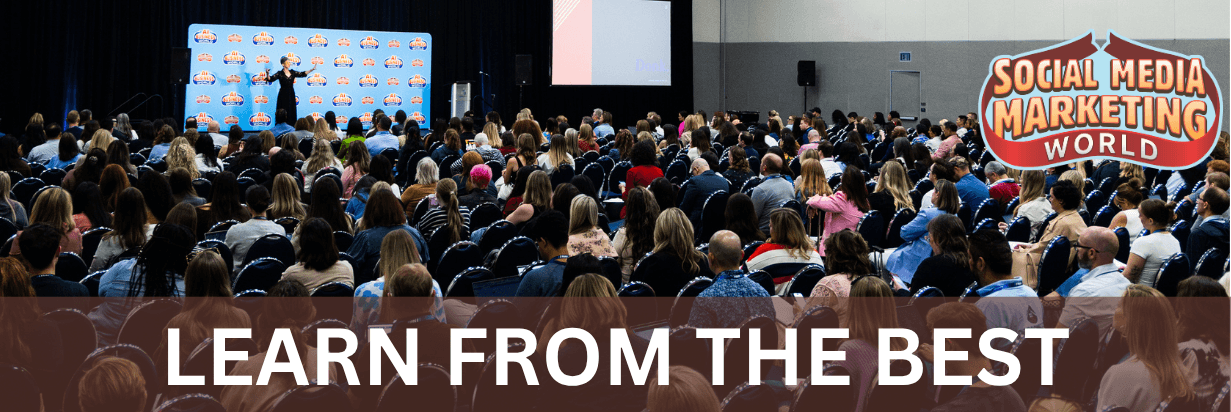
- Monday: The focus shifted toward the professional implementation of AI, as Social Media Marketing World announced its 2027 speaker lineup, prioritizing pitch-free, tactical sessions designed for immediate business application.
- Tuesday: Google officially launched its dedicated Gemini app for Windows 10 and 11, embedding the assistant directly into the OS through system-wide shortcuts.
- Wednesday: Meta unveiled "Muse," a personal AI agent capable of web browsing, form filling, and task execution, positioning itself as a direct competitor to future agentic models from OpenAI and Google.
- Thursday: OpenAI expanded its API capabilities with the release of GPT-Live-1, a full-duplex voice model designed for natural, low-latency conversational dynamics.
- Friday: Google rounded out the week by pushing its "Gemini 3.8" series, including the Extended Thinking model, which enables real-time, multi-step reasoning during voice interactions.
Supporting Data: Strategic Shifts in Marketing
The shift in how we handle visual media is perhaps the most immediate opportunity for small-to-midsize businesses. Traditional creative workflows often result in a 90% waste rate—where only one out of ten photoshoots is deemed "final."
Under the new AI-driven model, these "rejected" drafts are no longer liabilities; they are assets. Because AI image generators can be trained on a single source image, the lighting, color temperature, and texture of the original photo are preserved across thousands of variations. A "discarded" close-up of a product from a primary campaign can now serve as high-quality B-roll for a social media story six months later, effectively increasing the ROI of a single photoshoot by an order of magnitude.
Furthermore, the rise of "AI-cited" content is creating a new demand for technical accessibility. Data suggests that if a website’s architecture—specifically its crawlability and structured data—is not optimized for AI, it is effectively invisible to the growing demographic of users who bypass search results in favor of chatbot-provided summaries.
Official Responses and Industry Outlook
Industry leaders are taking a cautious but optimistic approach to these developments. Michael Stelzner, founder of Social Media Examiner, notes that the "AI gap"—the disconnect between daily AI usage and actual business efficiency—is the primary hurdle for organizations today.
"You’re using AI every day, but something still feels off," Stelzner observes. "The difference between those who thrive and those who struggle is the shift from using AI to architecting AI workflows."
Regarding the release of autonomous agents like Meta’s Muse, privacy advocates and tech executives are in a delicate dance. Meta has emphasized that Muse operates within a "Secure VM" (Virtual Machine), featuring audit trails and granular permissions. This is a direct response to enterprise concerns regarding data leakage. Similarly, OpenAI’s pricing of its voice layer at $0.05 per minute underscores the commoditization of AI interaction, making high-level voice agents affordable for mid-market customer support applications.
Implications: The New Marketing Playbook
1. The Death of Single-Use Assets
Brands must stop treating images as static files and start treating them as "seeds." The future of brand identity relies on a cohesive visual language generated through consistent prompting workflows. If your marketing collateral looks disjointed, you are likely failing to use a unified reference sheet. By building a library of "brand-consistent" images, businesses can ensure that every AI-generated asset feels like it belongs to the same parent campaign.
2. The Second Audience: The AI "Bot"
Your content strategy now has a dual audience: the human reader and the AI engine.

- Human-Centric: Focuses on emotion, storytelling, and conversion.
- AI-Centric: Focuses on logical structure, clear entity identification, and technical accessibility (schema markup).
To show up in AI recommendations, your content must be structured to answer specific "how-to" and "what-is" queries directly. The technical barrier—often a simple robots.txt or sitemap issue—can mean the difference between being a cited source in an AI summary or being ignored entirely.
3. The Era of Action-Oriented AI
With the launch of Muse (Meta) and Gemini 3.8 (Google), we are moving away from the "Chatbot" era and into the "Agent" era. Previously, AI was a tool for generating text. Now, AI is a tool for delegation.
For marketers, this means the nature of work will shift from "doing" to "approving." As agents begin to handle multi-step processes—such as coordinating schedules, filling out forms, and initiating purchases—the value of a marketer will lie in their ability to set high-level goals and audit the actions taken by their digital agents.
4. Real-Time Reasoning and Voice
The release of Gemini 3.8’s "Extended Thinking" and OpenAI’s "GPT-Live-1" signals that voice interaction will become the primary interface for customer service. Businesses that fail to optimize their FAQ databases and support documentation for conversational, spoken-word queries will find themselves unable to integrate into the voice-first future of search.
Final Insights: Bridging the Gap
As we look toward 2027, the divide between companies that have "AI-enabled" their infrastructure and those that have merely "AI-augmented" their tasks will continue to widen.

The successful implementation of these technologies requires a systematic approach:
- Audit your visual assets: Are you wasting potential content?
- Review your technical SEO: Can the bots actually read your content?
- Adopt an agentic mindset: What tasks are currently taking up your team’s time that could be delegated to an agent with a set of clear permissions?
The tools are ready. The integration is the next frontier. Whether you are a solopreneur or an enterprise leader, the key is to stop treating AI as a novelty and start treating it as a foundational component of your business architecture.
For those looking to dive deeper, the industry is moving rapidly. Engaging with specialized resources—like the AI Business Society or the upcoming 2027 industry conferences—will be essential for staying ahead of the technical and strategic curve. The goal is clear: build once, reuse forever, and ensure your business is the one the AI chooses when the user asks, "Who should I hire for this?"