Every monsoon season, a high-stakes ritual plays out in the command centers of Pune, Maharashtra. As the Khadakwasla Dam reaches critical capacity, engineers face a harrowing, time-sensitive calculation: how much water can the Mutha River accommodate before the streets of Pune are submerged? It is a precarious balancing act between preserving the city’s drinking water reserves for the dry months and preventing the catastrophic flooding of downstream neighborhoods like Ekta Nagari.
For the residents of these riverbank communities, the consequences of a miscalculation are not theoretical. In July 2024, the release of 35,000 cubic feet of water per second from the dam displaced over 4,000 people. Residents were alerted in the dead of night, scrambling to move belongings to higher ground just hours before the sluice gates opened. It is a recurring trauma, one that the promise of modern technology was supposed to solve.
Enter the "Digital Twin"—a sophisticated, 3D virtual replica of a physical city, fueled by real-time data and predictive analytics. On paper, these digital models are the silver bullet for urban disaster management. Yet, as Indian cities like Pune, Mumbai, and Varanasi pour over Rs 500 crore into these high-tech systems, a jarring reality has emerged: the technology meant to save lives from the wrath of climate change is being repurposed as a glorified tool for tax collection.
The Promise of the Digital Twin
A digital twin is more than just a 3D map. It is a dynamic, living simulation that integrates Geographic Information Systems (GIS), IoT sensors, and historical weather patterns to run "what-if" scenarios. In the context of disaster management, a functional twin should theoretically tell city engineers exactly which streets will flood, which drainage systems will fail, and how to optimize dam discharge to minimize human impact.
In April 2024, the Pune Municipal Corporation (PMC) engaged Mumbai-based Genesys International to construct such a twin. The vision was clear: a high-fidelity model capable of simulating rainfall scenarios to guide emergency response. In a demonstration viewed by The Ken, the model vividly illustrated how rising water levels would swallow specific city blocks. It offered the potential to move from reactive crisis management to predictive, data-driven governance.
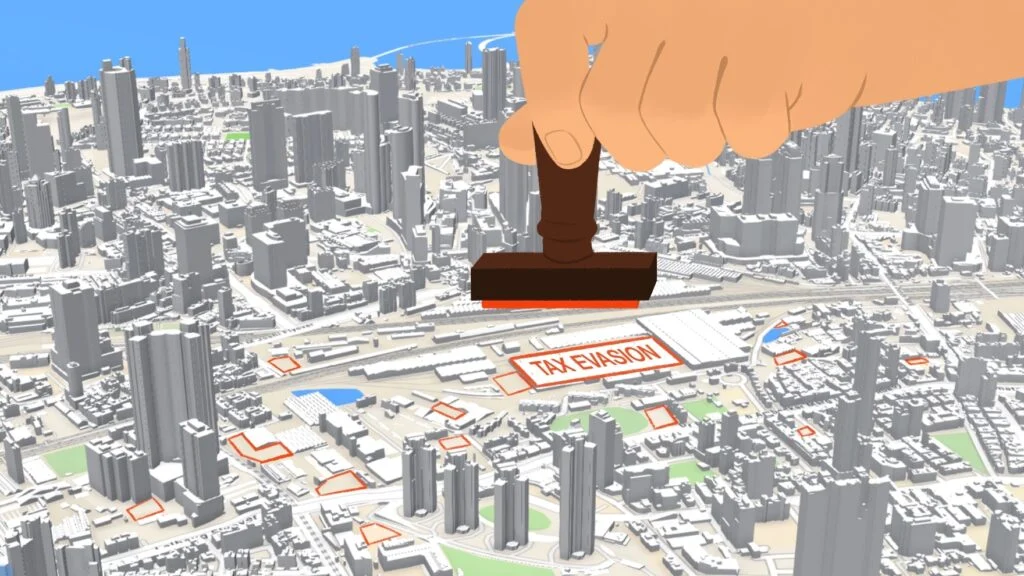
However, the transition from "what-if" simulations to real-world deployment has been anything but seamless. Instead of prioritizing flood mitigation, municipal authorities have pivoted the technology toward revenue generation—specifically, the identification of property tax defaulters.

Chronology of a Shifting Mandate
The push for digital twins in India began in earnest around 2018. As cities grappled with rapid, often chaotic urbanization, the central and state governments sought tools to bring administrative order to the sprawl.
- 2018–2021: The conceptual phase. Several Tier-1 cities began scouting for vendors capable of building comprehensive 3D city models. The goal was twofold: urban planning and disaster resilience.
- 2022–2023: Procurement and Pilot. Companies like Genesys International secured multiple contracts across India, covering cities such as Mumbai, Ahmedabad, and Varanasi.
- Early 2024: The "Pune Pivot." As the monsoon approached, the PMC finalized its digital twin with the promise of flood protection.
- May 2024: The Revenue Realization. With the system operational, the city shifted its focus. By utilizing the granular 3D data to cross-reference property records with actual structural footprints, the PMC identified massive discrepancies in tax filings.
- Late 2024: The current status. While the technology successfully brought in Rs 75 crore from just 90 properties in a single month of scrutiny, the promised predictive flood-modelling features remain secondary to the administration’s bottom line.
Supporting Data: The Cost of Disconnection
The numbers behind these projects are staggering. Indian cities have committed over Rs 500 crore to building ten such digital twins. Genesys International, a leader in the space, currently holds eight of these high-value contracts.
The financial incentive for municipal corporations to prioritize tax over safety is rooted in the "fiscal deficit" trap. Municipalities in India are chronically underfunded, often struggling to provide basic services. When a technology that costs millions can identify millions more in lost tax revenue, the temptation to prioritize the treasury over the environment is overwhelming.
Consider the case of Mumbai. The city’s Rs 155-crore digital twin project was touted as a breakthrough for infrastructure planning. Yet, internal reports and municipal priorities indicate that the system is primarily being "plugged into" property tax modules, building approval workflows, and estate management systems. The logic is simple: the return on investment (ROI) for tax recovery is immediate and tangible, whereas the ROI for flood prevention is measured in "avoided losses"—a metric that rarely makes it onto a balance sheet until a disaster actually strikes.
Official Responses and Administrative Rationale
Municipal officials argue that the dual-use nature of digital twins is a necessity. "We need to ensure the financial viability of the corporation to even fund the infrastructure required for flood management," says one civic official, speaking on condition of anonymity. "If we can identify 90 properties that have been evading taxes to the tune of Rs 75 crore, that is money that can eventually be reinvested into better drainage and riverbank reinforcement."
However, this rationale is met with skepticism by urban planners. "The technology is not the problem," says an independent consultant who has worked on smart city projects. "The problem is the administrative philosophy. A digital twin is designed to simulate complex systems. By using it primarily as a tax-collection tool, the city is effectively ignoring the ‘smart’ aspect of the ‘Smart City’ initiative, reducing a complex, multi-dimensional tool into a simple audit program."

The Implications: A False Sense of Security
The implications of this shift are profound. By prioritizing revenue over disaster resilience, municipal bodies are creating a false sense of security. When the next major deluge hits Pune, the citizens of Ekta Nagari will not be protected by a more efficient tax audit system. They will be looking for the same predictive, real-time flood warnings that the digital twin was originally commissioned to provide.
Furthermore, there is a technical risk. Digital twins require constant, high-quality data ingestion to remain accurate. If the focus of the engineering team is diverted toward auditing building floor-space indices (FSI) for tax purposes, the maintenance of the environmental data layers—such as river bed topography, soil absorption rates, and meteorological sensors—will inevitably suffer.
The Erosion of Public Trust
The public perception of "Smart City" initiatives is already fragile. Many residents view these projects as expensive, high-tech vanity programs that fail to address the fundamental issues of urban living, such as potholes, water logging, and sewage management. When the narrative shifts from "we built a tool to save your home from flooding" to "we built a tool to find your tax errors," the gap between the government and the governed widens.
A Path Forward: Realigning the Vision
For digital twins to reach their potential, the mandate must be decoupled from revenue generation. Municipal corporations should adopt a "safety-first" policy for these models:
- Mandatory Disaster Simulation Protocols: Every digital twin should have a non-negotiable, government-mandated dashboard for disaster management that is updated and stress-tested before the start of every monsoon season.
- Transparency in Funding: If tax revenue from digital twin audits is being used to fund city infrastructure, that link must be transparently communicated to the public. The citizens need to see that the "tax squeeze" is directly translating into safer, more resilient neighborhoods.
- Independent Oversight: An external committee of urban planners, environmentalists, and meteorologists should oversee the development of these twins to ensure they are not solely utilized for administrative convenience at the expense of public safety.
Conclusion: The Reality Check
The digital twin represents the pinnacle of urban planning technology, capable of transforming how cities breathe, grow, and survive in the face of climate change. But technology, no matter how advanced, is only as good as the intent behind its implementation.
Pune, Mumbai, and other cities across India stand at a crossroads. They have the tools to anticipate the future and protect their citizens from the volatility of nature. However, by turning these high-tech mirrors toward the taxpayer rather than the horizon, they risk missing the point entirely. A city is not just a balance sheet; it is a community. And as the monsoons continue to intensify, the cost of prioritizing taxes over lives may prove to be the most expensive calculation of all.