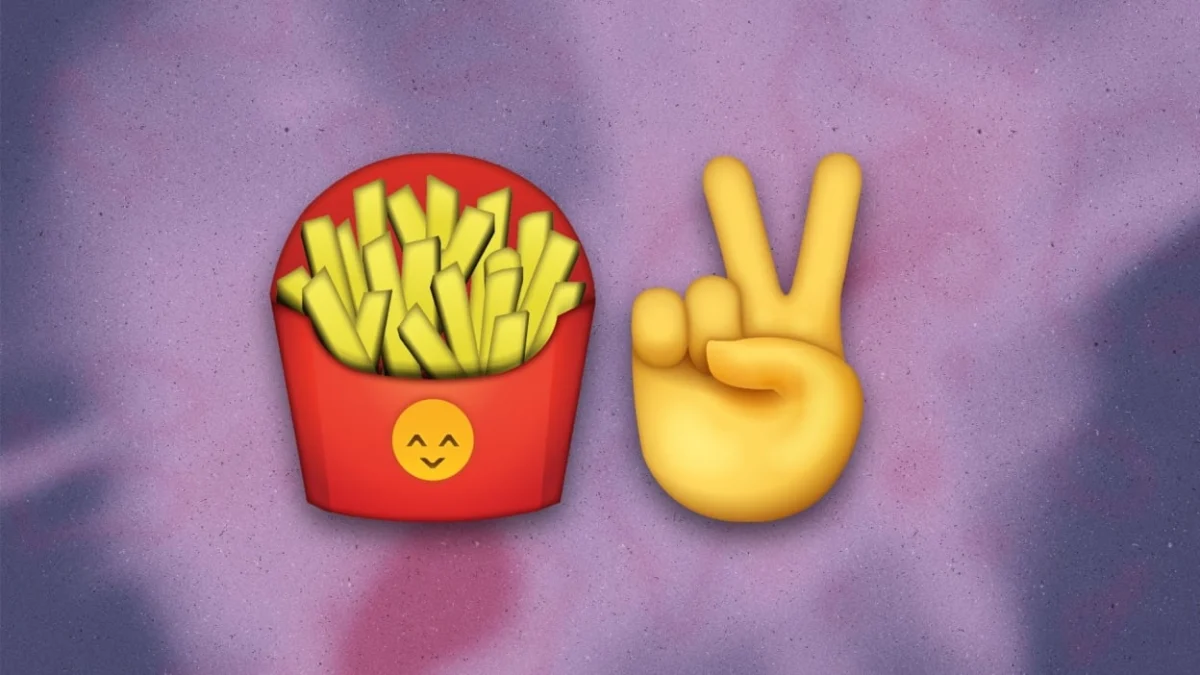
If you have spent any significant time in the comment sections of TikTok or Instagram Reels lately, you may have noticed a peculiar trend. Amidst the sea of GIFs, reaction videos, and standard text-based banter, a singular, seemingly innocuous emoji—the French fries (🍟)—has emerged as a weapon of mass dismissal.
When a user drops a fry emoji into a thread, they are rarely expressing a craving for fast food. Instead, they are delivering a digital cold shoulder. It is the latest linguistic shorthand in the ever-evolving lexicon of Generation Alpha, serving as a blunt, dismissive command for a creator or commenter to "wrap it up."
The Evolution of the Digital "Wrap It Up"
To understand why a humble side dish has become the internet’s most efficient insult, one must look at the rapid-fire evolution of online vernacular. Language on the internet does not merely change; it compresses. What began as a multi-word, sarcastic imperative has been distilled into a single, graphical character.
In the current digital climate, the fries emoji, often accompanied by a peace sign (✌️), serves as a symbolic translation of the phrase, "Just put the fries in the bag, bro." This shorthand is the pinnacle of what sociolinguists call "semantic bleaching"—where the original, literal meaning of a phrase is entirely stripped away, leaving behind only the pragmatic, social function of the utterance.
The Mechanics of the Insult
The emoji usage typically falls into two categories:

- The "Cringe" Indicator: When used alone, the 🍟 serves as a label for content that the user deems "corny," "cringe," or performative. It is a way of signaling that a video has failed to resonate or that the creator is trying too hard to capture attention.
- The "Dismissal" Command: When paired with the ✌️, the meaning sharpens into a direct instruction to cease speaking. It is the digital equivalent of a "talk to the hand" gesture, implying that the recipient is boring, repetitive, or irrelevant.
A Chronology of the "Fries" Meme
The journey of the French fry from a menu item to a social media slur is a fascinating case study in meme lifecycles.
2022: The "Ketchup" Precursor
The linguistic roots of this phenomenon can be traced back to 2022, when the phrase "just put the ketchup in my bag, bro" began circulating on Facebook. At the time, it was a niche, cynical comment directed at service workers or people deemed to be acting in a subordinate manner. It was a classist, albeit relatively contained, joke that lived in the darker corners of social media comment sections.
2024: The TikTok Explosion
By 2024, the phrasing migrated to TikTok and underwent a transformation. The "ketchup" was replaced by the more universal "fries," and the target shifted. The meme became a weaponized tool used to heckle creators who were seen as "yap-heavy"—a Gen Alpha term for people who talk excessively without providing value. The phrase became a staple of viral videos, often used in stitches or duets to mock individuals who were delivering unsolicited monologues or oversharing personal details.
2026: The Emoji Reduction
By late 2026, the phrase reached a point of saturation where typing it out became unnecessary. In a culture driven by short-form video and high-speed scrolling, efficiency is king. The reduction of the sentence to the 🍟 emoji allowed users to lob the insult without even pausing the video or interrupting their scroll. It is a frictionless form of social policing.
Supporting Data: The Speed of Slang Adoption
Digital culture researchers have noted that Gen Alpha’s adoption of these symbols is faster than any preceding generation. According to recent internal platform analysis, the "half-life" of a slang term—the time it takes for a word or symbol to go from niche subculture to mainstream oversaturation—has dropped from approximately 18 months in the early 2010s to just over four months in 2026.

The fries emoji is a prime example of this acceleration. Because it relies on a pre-existing, well-understood meme ("put the fries in the bag"), it bypassed the typical "learning curve" that accompanies new slang. Users did not need a definition; the context was already embedded in the cultural ether.
The Uncomfortable Implications of the Meme
While the reduction of the insult to an emoji feels lighthearted, critics and digital anthropologists point to the darker, underlying connotations of the "fries" meme.
The Classist Undertone
The phrase "put the fries in the bag" is inherently rooted in the devaluation of service-industry labor. When used as a pejorative, it relies on the punchline that the person being addressed is a fast-food worker, and therefore, their voice is worth less than the person critiquing them.
"The danger of this kind of shorthand," says Dr. Elena Vance, a digital culture researcher, "is that the user forgets the human element of the insult. By turning a person into a ‘fry-flipper’ as a way to tell them to ‘shut up,’ you are weaponizing economic status as an insult. When you turn that into just an emoji, the cruelty becomes abstract. It’s a way of bullying that feels consequence-free because you’re just tapping a picture on a screen."
The "Echo Chamber" Effect
The prevalence of the 🍟 insult also highlights the increasingly performative nature of social media engagement. When thousands of users comment the same emoji on a creator’s video, it creates a "pile-on" effect. This contributes to a digital environment where the most "effective" way to interact with content is to tear it down rather than engage with its substance.

Official Responses and Platform Governance
Social media platforms have not issued formal policies regarding the "fries" emoji, largely because emojis are context-dependent and difficult to moderate through automated systems. However, trust-and-safety experts at major platforms are keeping a close eye on how such symbols are used in bullying campaigns.
"We look for patterns of harassment," a spokesperson for a major video-sharing platform noted in a recent briefing. "While a single emoji is rarely a violation of terms of service, when it is used in a coordinated effort to silence or harass a specific individual, it falls under our policies against brigading and targeted bullying. We encourage users to report patterns of behavior, not just individual symbols."
Implications for the Future of Digital Communication
As we look toward the remainder of 2026 and beyond, the rise of the fries emoji offers a glimpse into the future of human interaction. We are moving toward a highly symbolic, almost hieroglyphic form of communication where intent is conveyed through visual shorthand rather than explicit text.
This trend has significant implications for:
- Content Moderation: How do you moderate an insult when the insult is a food item? AI-driven moderation tools are currently struggling to keep up with the rate at which innocuous symbols are being co-opted for hostile purposes.
- Cross-Generational Divides: The gap between Gen Alpha and previous generations is widening. Parents and educators are often left confused by these interactions, creating a "digital literacy gap" that can lead to isolation or misunderstandings.
- The Future of "Yapping": The popularity of this insult suggests that digital audiences are increasingly intolerant of long-form, unedited content. Creators who wish to remain relevant in the age of the "fry" must master the art of brevity, or risk being silenced by a single, yellow, deep-fried symbol.
Ultimately, the fries emoji is more than just a passing fad. It is a reflection of a generation that values speed, irony, and the ability to define the "cool" factor on their own terms. Whether you find it clever or cruel, one thing is certain: if you find yourself on the receiving end of a 🍟, it is time to stop talking. The audience has spoken, and they have already moved on to the next video.