For decades, the bedrock of brand marketing has been the "controlled narrative." Companies spent millions of dollars crafting mission statements, tone-of-voice guidelines, and perfectly polished ad campaigns to ensure that when a customer thought of their product, they heard the company’s chosen story. Today, that foundation is shifting. The rise of Artificial Intelligence (AI) answer engines—platforms that synthesize information from across the web to provide direct, conversational answers—has fundamentally disrupted how brands are perceived.
In this new era, companies are no longer the sole architects of their brand identity. Instead, their reputation is being actively curated by algorithms that pull from disparate sources: Reddit threads, third-party review sites, comparison articles, and editorial coverage. For many organizations, the version of their brand presented by AI does not align with the narrative they have worked so hard to build. As a result, "Brand Visibility Management" has become the latest high-stakes battleground for marketing teams.
The Shift in Consumer Discovery: How Answer Engines Operate
The fundamental challenge lies in how AI models construct reality. Unlike traditional search engines, which offer a list of links for users to evaluate themselves, answer engines perform the heavy lifting of synthesis. They ingest vast amounts of data and output a concise, definitive summary.
When a potential buyer asks an AI tool, "Which CRM is best for mid-sized tech companies?" the machine scans the web for consensus. If your company is frequently mentioned in negative forum threads or overshadowed by competitors in industry roundups, the AI will internalize that sentiment and echo it back to the user. This creates a "black box" of reputation where inaccuracies or outdated information can gain authoritative weight simply by existing in the digital ether.
For brand teams, this necessitates a move away from passive observation. If you are not actively managing how AI describes you, you are effectively letting the internet—and your competitors—define your market position for you.

Chronology: The Evolution of Search to Answer Engines
To understand the urgency, one must look at the rapid evolution of search behavior:
- The Keyword Era (Pre-2015): Brand marketing was dominated by SEO. If you ranked for specific keywords, you controlled the narrative by ensuring your website was the first result a user saw.
- The Social Proof Era (2015–2022): The rise of G2, Capterra, and influencer marketing meant that third-party validation became just as important as company-owned content. Brand teams scrambled to manage their reputation on these external platforms.
- The Answer Engine Era (2023–Present): With the integration of Large Language Models (LLMs) into search experiences, the "click" is becoming less frequent. Users increasingly trust the AI’s summary. This is the current, critical phase where the brand narrative is no longer a destination; it is a summary generated in real-time.
The Cost of Visibility Gaps: Why "Wait-and-See" Fails
The most dangerous approach to AI-generated branding is the "wait-and-see" method. When brand teams lack visibility into what AI is saying about them, they remain oblivious to inaccuracies until a stakeholder or prospect points them out.
By the time a brand team realizes that an AI model is mischaracterizing their pricing, core value proposition, or competitor landscape, the damage is already done. The AI has already shaped the buyer’s perception, potentially steering them toward a competitor before they even visit the company’s website. This gap between the "intended brand" and the "AI-generated brand" is where market share is being lost today.
Empowering the Brand: The Role of AEO (Answer Engine Optimization)
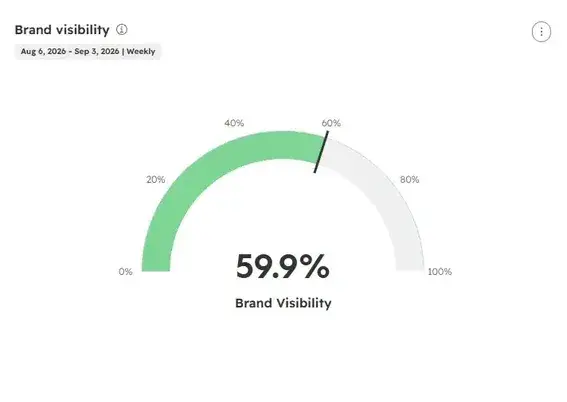
To combat this, leading organizations are adopting the practice of Answer Engine Optimization (AEO). Tools like HubSpot’s AEO suite have emerged to bridge the visibility gap. These dashboards provide a "Brand Visibility Score," which quantifies how a company appears in AI responses, tracks share of voice against competitors, and identifies the specific citations driving those appearances.
Case Study: A Rapid Turnaround
The efficacy of proactive AEO is already manifesting in real-world data. HubSpot’s own internal marketing team recently applied these strategies to address a lack of brand presence in European markets. By monitoring their AI visibility, they identified content gaps and adjusted their messaging to better align with the intent of AI algorithms. Within a single month, their mention rate skyrocketed—moving from 0% to 33.5% in France and 17.1% in Germany. This success highlights that AI models are not immutable; they are responsive to authoritative, well-structured content.

Strategies for Shaping the AI Narrative
Once a brand gains visibility into its AI presence, the focus must shift to tactical execution. Shaping the AI narrative requires a two-pronged approach:
1. Auditing Owned Content
Many companies have robust blogs and help centers, but that content was often optimized for human readers or traditional keyword-based SEO. To influence an AI, content must be structured to answer the specific, high-intent questions that buyers are asking. This includes creating "Category Explainers" and "Comparison Guides" that are clear, concise, and easy for an AI to parse.
2. Identifying and Filling Knowledge Gaps
If an AI consistently fails to mention your brand in a specific category, it is likely because the current source material is thin or fragmented. By identifying which citations the AI uses, teams can create new, high-authority content that bridges these gaps. HubSpot’s AEO tool, for instance, provides actionable recommendations, allowing teams to prioritize content updates based on their direct impact on AI visibility.
The Metrics of the Future: Connecting Visibility to Revenue
Traditional brand marketing has long relied on lagging indicators: awareness surveys, brand search volume, and earned media mentions. While these remain important, they are insufficient for the AI era.
The new metric is AI-Driven Awareness. This measures how a brand appears at the earliest stages of the buyer’s journey—when they are still defining their needs and researching the category. By integrating AEO data with standard marketing metrics, companies can draw a direct line between their content strategy and their presence in AI answers. When these metrics move in tandem, it provides the "smoking gun" evidence that leadership teams require to justify increased investment in brand-led content.

Implications: The Future of Brand Integrity
The rise of AI answer engines does not mean the end of brand marketing; it means the end of passive brand management. The narrative a company has built over decades is a valuable asset, but it is currently at risk of dilution by the automated synthesis of the web.
The implications for the next three to five years are profound:
- Content as Infrastructure: Content will no longer be seen as "collateral," but as the foundational data infrastructure that powers the AI-driven market.
- The Death of Generic Copy: Generic, filler-heavy marketing copy will likely be ignored by AI, which prioritizes dense, factual, and authoritative content. Brands will need to be more precise and informative.
- Cross-Departmental Collaboration: AEO will force closer collaboration between SEO teams, product marketing, and public relations, as all three contribute to the "source of truth" that AI models consume.
Conclusion: Turning AI into an Asset
The challenge posed by AI answer engines is significant, but it is not insurmountable. The same work that brand teams have always done—communicating value, differentiating from competitors, and building authority—is still the key to success. The only change is the channel.
By deploying the right tools to monitor, respond, and improve, brands can ensure they aren’t just "in the conversation"—they are leading it. As we move further into this new landscape, those who treat their brand’s presence in AI as a primary, manageable channel will define the next generation of market leadership. The narrative is yours to control, provided you are willing to step into the engine room and steer it.