
By Global Health Correspondent
September 26, 2026
The Democratic Republic of the Congo (DRC) is facing a critical escalation in its ongoing battle against the Bundibugyo strain of the Ebola virus. On Friday, September 25, 2026, the World Health Organization (WHO) confirmed that the outbreak has expanded into two additional health zones, bringing the total number of affected regions to 63 across seven provinces. As the humanitarian situation worsens, health officials warn that a dangerous intersection of armed conflict and public health infrastructure strain is hampering containment efforts.
The Current Landscape: A Expanding Crisis
The latest data from the WHO, current as of September 23, reveals a harrowing toll: 7,890 confirmed cases and 3,799 deaths. The geographical reach of the virus has now extended to the Bulu health zone in Sud-Ubangi province and the Dungu health zone in Haut-Uele province. The inclusion of Dungu is particularly concerning for epidemiologists, given its proximity to the border with South Sudan, raising fears of cross-border transmission in a region already grappling with instability.
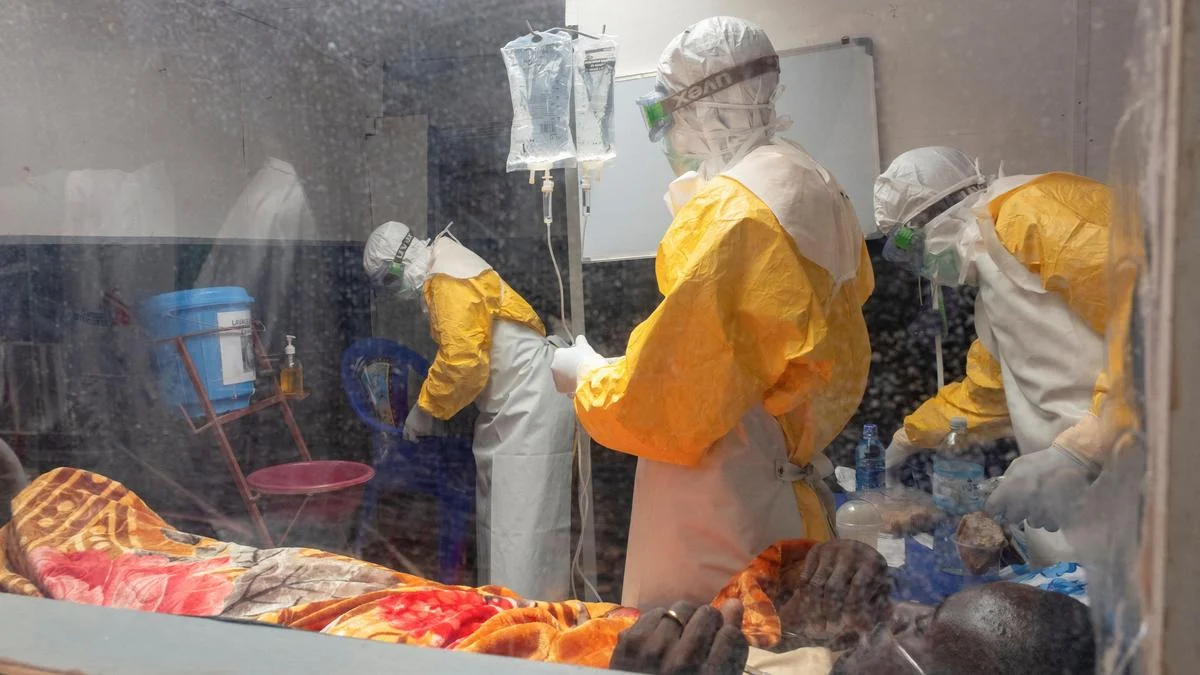
This surge comes at a time when health workers, including teams from Medecins Sans Frontieres (MSF), are stretched to their absolute limits. Inside facilities like the Kitatumba Ebola treatment center, staff are working under intense pressure, balancing the clinical demands of patient care with the logistical nightmare of tracing contacts in active conflict zones.

Chronology of the 2026 Outbreak
The current crisis did not emerge in a vacuum. The Bundibugyo strain, while historically less frequent than the Zaire strain, has proven particularly difficult to manage due to the unique socioeconomic conditions of the regions it currently occupies.
- Early 2026: Initial clusters of the virus were identified in isolated rural communities, initially causing confusion and delayed reporting due to limited diagnostic capacity.
- Mid-2026: The outbreak began to migrate toward more densely populated transit hubs, facilitated by internal displacement caused by local militia activity.
- August 2026: The WHO declared a regional emergency as case numbers began to climb exponentially, signaling a failure in early containment strategies.
- September 25, 2026: Official WHO confirmation of expansion into the Bulu and Dungu health zones, marking a significant setback in the containment roadmap.
The Convergence of Conflict and Contagion
WHO Director-General Dr. Tedros Adhanom Ghebreyesus, speaking during a press briefing, emphasized that the Ebola crisis cannot be viewed in isolation. "It is very difficult to see Ebola in isolation because even our response is affected by the conflict," Dr. Tedros stated.
The security situation in the eastern DRC has created a "perfect storm" for the virus. Armed groups often control territory that health teams must traverse to conduct contact tracing or safe, dignified burials. When conflict forces thousands of civilians to flee their homes, they often congregate in overcrowded camps for the internally displaced (IDPs). These high-density, low-sanitation environments are ideal breeding grounds for viral transmission.
Furthermore, the displacement of populations means that people who were potentially exposed to the virus move across regional and provincial lines, making it nearly impossible for surveillance teams to maintain a comprehensive "contact map." Each untraced contact represents a potential new chain of transmission, threatening to turn localized outbreaks into regional epidemics.

Clinical Challenges: The Vaccine Gap
A primary point of frustration for the medical community is the current lack of approved, readily available vaccines and targeted treatments for the Bundibugyo strain. Unlike the Zaire strain, for which effective preventative measures have been refined over years of research, the Bundibugyo variant presents unique immunological challenges.
"The lack of approved vaccines is complicating the response," Dr. Tedros acknowledged. "It makes people reluctant to seek care at treatment centers, as they perceive the facilities as places where they go to die rather than receive effective treatment."
The WHO is currently working with international research partners to accelerate clinical trials, hoping to fast-track an effective vaccine rollout. However, the logistical difficulty of maintaining a "cold chain" (refrigerated supply lines) in remote, conflict-torn regions remains a significant barrier to implementation.
Global Implications and Pandemic Preparedness
While the current Ebola outbreak is a regional emergency, Dr. Tedros used the press conference to pivot toward the broader, existential threat of future global pandemics. He was careful to distinguish the current Ebola threat from a potential global respiratory pandemic, noting, "Ebola will not be a pandemic, but there could be a respiratory pathogen that can become a pandemic. Before that hits, we need to prepare."

The discourse around pandemic preparedness has become increasingly polarized. In May 2025, the World Health Assembly adopted a landmark Pandemic Agreement, designed to formalize international cooperation, data sharing, and resource allocation during health crises. However, this agreement has become a lightning rod for misinformation.
"We continue to see significant mis- and disinformation about the WHO Pandemic Agreement," Dr. Tedros noted, addressing claims that the treaty serves as a "power grab" designed to cede national sovereignty to the WHO. "This is completely untrue. The agreement is about strengthening global prevention and ensuring that no country is left to face a global threat alone."
The Road Ahead
As of late September 2026, the overall trajectory of the Ebola outbreak shows a nuanced picture. While the virus has expanded into new territory, Dr. Tedros noted that there are signs of declining transmission in certain established zones. This success is largely attributed to improved community engagement strategies—such as working with local leaders to ensure that safe burial practices are culturally respected—and more efficient contact tracing in stable areas.
However, the uneven nature of this progress is a cause for concern. The WHO’s response strategy moving forward will focus on three core pillars:

- Diplomatic Mediation: Working with regional authorities to secure humanitarian corridors in conflict-affected zones.
- Clinical Acceleration: Intensifying research and development efforts to bring Bundibugyo-specific therapeutics to the field.
- Communication and Trust-Building: Countering the tide of misinformation that continues to undermine public health initiatives in the DRC.
For the people of the Democratic Republic of the Congo, the coming months will be a test of resilience. The international community, led by the WHO, remains committed to the response, but as Dr. Tedros warned, the success of these efforts hinges on the world’s ability to move past political division and prioritize the scientific and logistical realities of global health security.
As the sun sets on the Kitatumba treatment center, the work of the doctors continues—a stark reminder that in the fight against a highly infectious virus, every minute, every contact traced, and every dose of vaccine matters. The global community watches closely, knowing that the lessons learned in these 63 health zones will inevitably inform the world’s preparedness for the next inevitable pandemic.