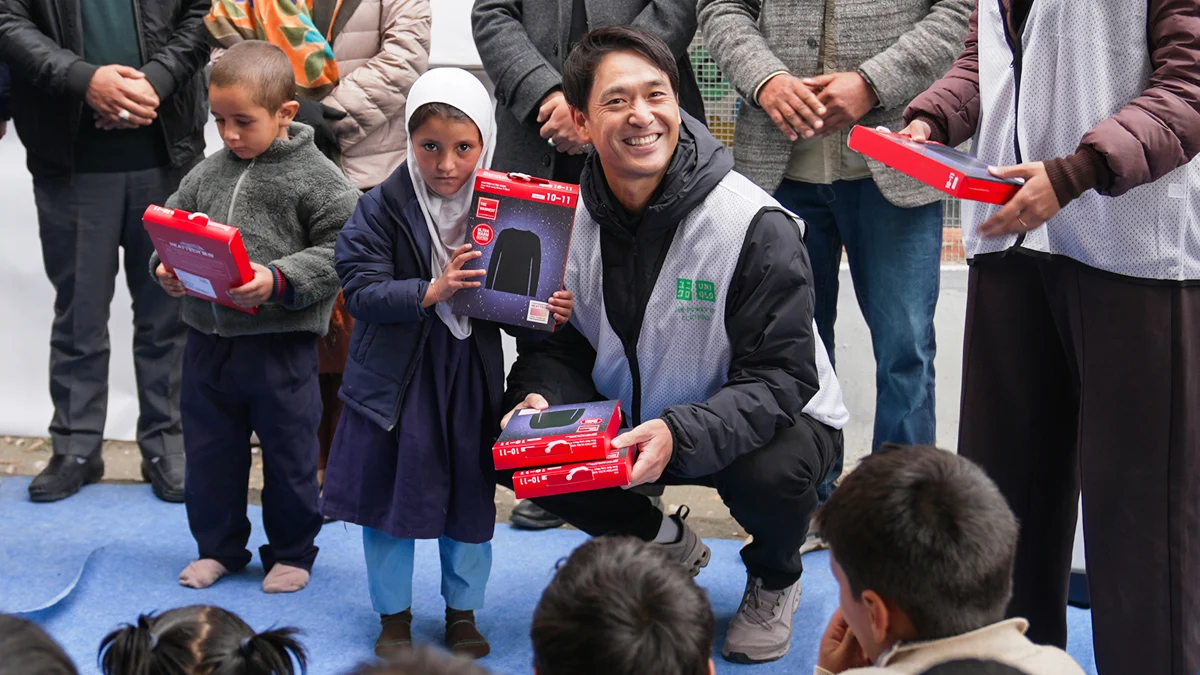
NEW DELHI – In a significant humanitarian gesture aimed at mitigating the harsh realities of life in high-altitude environments, Japanese global apparel giant UNIQLO has successfully completed a massive donation drive in Ladakh, one of India’s most unforgiving climates. Under its flagship global social responsibility program, The Heart of LifeWear, the retailer has distributed 4,000 units of its signature HEATTECH thermal wear to students and local residents in the Drass region—a town famously known as the "Gateway to Ladakh" and one of the coldest inhabited places on Earth.
This initiative, executed in close coordination with the 17000 ft Foundation, represents more than a simple corporate donation; it is a strategic effort to integrate innovative textile technology into the lives of those who need it most, bridging the gap between cutting-edge retail solutions and essential human survival in extreme weather.
The Core Facts: Bridging Technology and Survival
The donation drive focused on the Government High School in Salampora, Drass, where the arrival of UNIQLO representatives signaled a welcome relief for a community that braces for sub-zero temperatures for the better part of the year.
HEATTECH, UNIQLO’s proprietary bio-warming fabric, was the centerpiece of this effort. Unlike traditional bulky woolens, this lightweight, moisture-wicking technology is designed to convert body moisture into heat, providing a thermal barrier that is both efficient and comfortable for daily activities. By equipping students and villagers with these garments, UNIQLO aims to ensure that education and daily life in the region are not hindered by the plummeting mercury, which often drops well below -20°C during the winter months.
Chronology: From Concept to Community Impact
The logistical undertaking of reaching a remote high-altitude location like Drass requires months of coordination. The project followed a structured timeline:
- Needs Assessment: UNIQLO and the 17000 ft Foundation conducted a preliminary survey of the region’s demographics, identifying schools and vulnerable pockets where the impact of extreme winter would be most detrimental to academic attendance and community well-being.
- Strategic Deployment: The logistics of transporting 4,000 units to such an isolated region required specialized planning. The shipment arrived in the Kargil district, with final distribution coordinated to coincide with the onset of the severe winter season.
- The Distribution Event: The program reached its peak at the Government High School in Salampora. Beyond the physical handover, UNIQLO representatives conducted educational sessions, teaching local children and community members about the science of HEATTECH, how to layer clothing effectively for maximum heat retention, and how to maintain the garments for long-term use.
- Local Integration: The initiative was bolstered by the presence of key local stakeholders, including Drass Deputy Commissioner Imteeaz Kacho and Ladakh Autonomous Hill Development Council (LAHDC) Councillor Abdul Samad, ensuring that the distribution was transparent and reached the intended beneficiaries.
Supporting Data: Why Ladakh?
The choice of Drass was not arbitrary. Located at an altitude of approximately 10,800 feet, the town serves as a critical junction on the Srinagar-Leh highway. During the winter, the region is often cut off from the rest of the country due to heavy snowfall at the Zoji La pass.
For the local population, the cost of high-quality thermal gear is often prohibitive. According to regional health reports, consistent exposure to extreme cold contributes to respiratory issues, frostbite, and decreased school attendance during winter months. By providing 4,000 pieces of HEATTECH, UNIQLO is effectively providing a high-performance, cost-free solution to a fundamental climate-based challenge.
On a global scale, The Heart of LifeWear program has scaled significantly. In 2025 alone, the company reported the distribution of over one million HEATTECH items across 28 countries and regions. This data reflects a shift in corporate social responsibility (CSR) from monetary donations to "utility-based" philanthropy—donating products that the company actually manufactures, thereby ensuring quality and relevance.
Official Perspectives: Aligning Corporate Values with Community Needs
The initiative drew praise from both corporate leadership and local government officials, highlighting a rare synergy between private enterprise and regional administration.
Kenji Inoue, Chief Financial Officer and Chief Operating Officer of UNIQLO India, emphasized the philosophy behind the move:
"Through The Heart of LifeWear, we are pleased to bring HEATTECH to local students and extend our support to the wider community through the colder months. This initiative reflects UNIQLO’s commitment to creating a positive impact through our business and contributing meaningfully to the communities we serve."
The sentiment was echoed by Nidhi Rastogi, Director of Marketing and CSR at UNIQLO India, who underscored the strategic selection of the region:
"We chose Drass for The Heart of LifeWear initiative because of the extreme weather conditions the region faces. Through our partnership with 17000 ft, we reached out to the students and community in Drass to provide warmth during the winter months, reflecting the power of clothing to make a difference in people’s everyday lives."
Local officials, including DIET Kargil Principal Khurshida Bano, noted that such partnerships are vital for the development of the border regions, as they bring global standards of support to the doorsteps of the most remote citizens.
Implications: The Future of Apparel-Driven Philanthropy
The success of the Drass initiative carries several implications for the future of corporate involvement in India’s mountainous regions:
1. The "LifeWear" Philosophy
UNIQLO’s core business model is based on "LifeWear"—simple, high-quality, and functional clothing. By donating these specific items, the company reinforces its brand identity while performing a tangible act of kindness. This creates a sustainable model where CSR is not a separate entity but an extension of the product’s intended purpose.
2. Long-term Partnerships with NGOs
The collaboration with the 17000 ft Foundation demonstrates the importance of "boots-on-the-ground" partners. Large corporations often struggle with the "last-mile" delivery of goods in regions like Ladakh. By leveraging the expertise of an organization deeply embedded in the local education and social ecosystem, UNIQLO ensured that the donation reached the students who needed it most, rather than being lost in the logistics of the supply chain.
3. Setting a Benchmark for CSR in High-Altitude Zones
With climate change increasingly impacting the Himalayan belt, the need for adaptive clothing is rising. UNIQLO’s initiative sets a benchmark for how apparel companies can contribute to the resilience of mountain communities. It moves beyond the traditional donation of heavy, often uncomfortable blankets or coats, offering a lightweight, modern technological solution that aligns with the needs of an active, school-going population.
4. Educational Impact
By educating students on the technology behind their garments, the program also provides a brief lesson in material science. For children in rural Drass, understanding that their clothing is a result of advanced engineering can be an inspiring moment, potentially sparking an interest in innovation and science.
Conclusion: A Warmth Beyond the Fabric
As the winter settles over the peaks of Ladakh, the 4,000 pieces of HEATTECH distributed in Drass serve as a reminder that commerce and compassion can coexist. UNIQLO’s initiative is a testament to the fact that when corporations leverage their specific strengths—in this case, thermal apparel technology—they can address the specific, localized hardships of the communities they operate in.
For the students of Salampora and the residents of Drass, the initiative offers more than just a layer of clothing; it offers the ability to go about their lives with a bit more comfort and dignity during one of the most challenging winters in the world. As The Heart of LifeWear continues to expand globally, its work in India stands as a high-water mark for how global brands can contribute to the resilience of the world’s most vulnerable populations.