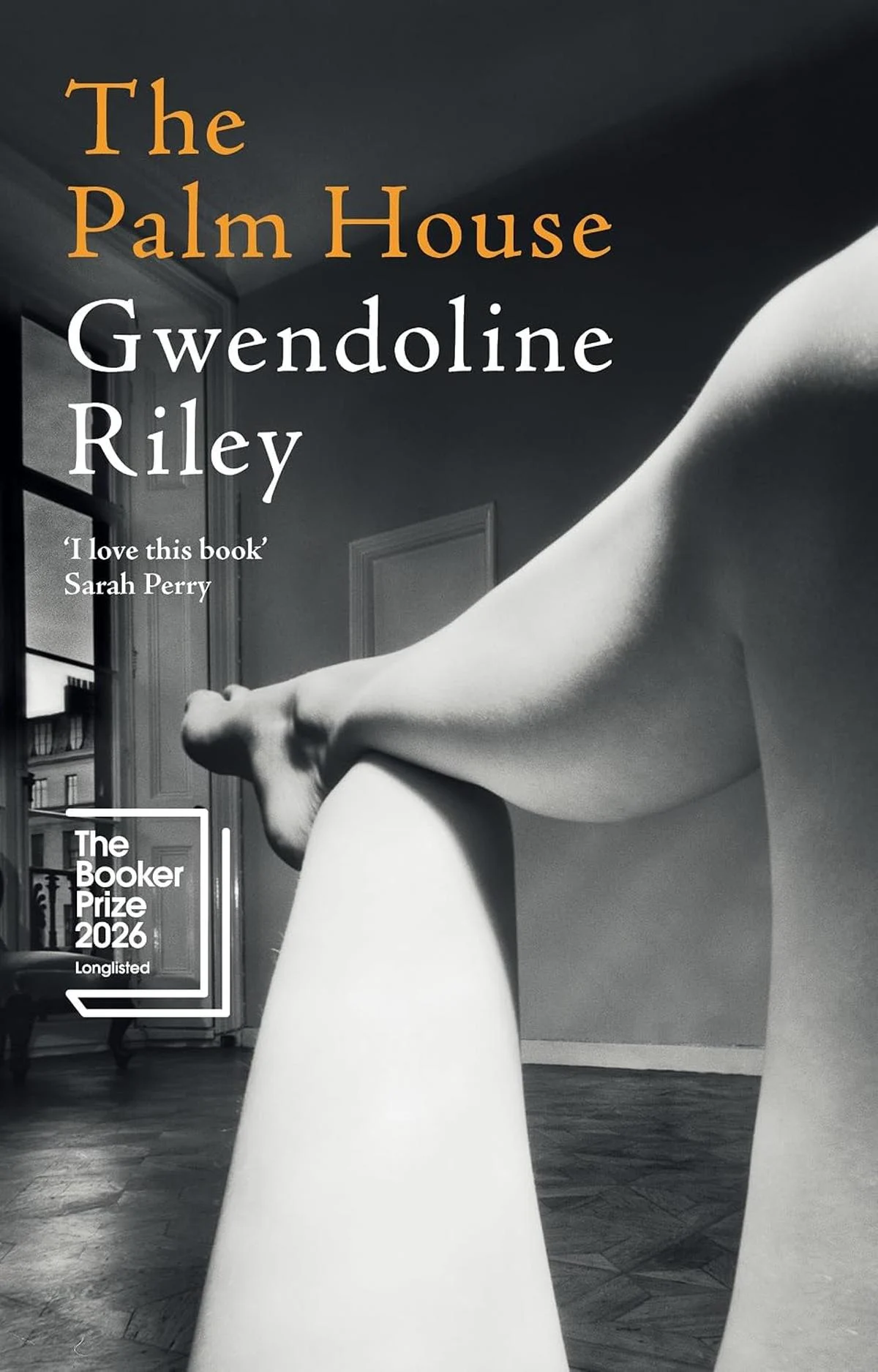
In the opening pages of Gwendoline Riley’s Booker Prize-longlisted novel, The Palm House, the atmosphere is less a backdrop and more a sentient, suffocating presence. The skies over London are not merely gray; they are ashen, granular, and stained with the yellow-brown hues of Saharan sand and wildfire debris blown in from Spain and Portugal. This unnatural weather forces the premature ignition of streetlamps on Southwark Bridge, casting a jaundiced light on a city that feels as displaced as the characters inhabiting it.
Riley, a master of the interior landscape, uses this environmental distortion to mirror the emotional malaise of her protagonists. In this novel, loneliness is not a fleeting state but a permanent climate. Relationships are described as “murky,” conversations are stripped of sincerity, and the characters move through their lives with a deadpan detachment, their true emotional intentions buried beneath layers of everyday banality.
The Protagonists: Edmund Putnam and Laura Miller
The narrative is anchored by the shifting, often fraught, friendship between Edmund Putnam and the novel’s first-person narrator, Laura Miller. We first encounter them in a pub—a quintessential setting for Riley’s characters—where they consume crisps and wine, shielded from the external gloom by the performative nature of their social interaction.
Laura, who is nearly a decade younger than the 49-year-old Putnam, observes the world with an acute, often detached gaze. She describes the “funny, sallow atmosphere” of the city with a sense of “peaceful quiescence,” yet the reader is immediately aware that this peace is a fragile construct. Beneath the surface of their wine glasses and their sharp, derisive wit, there is an ever-present hum of agitation—a seething discontent that threatens to unravel the carefully maintained composure of their lives.

Putnam represents the existential crisis of the middle-aged intellectual. A veteran of the literary world, he has recently resigned from his long-standing role as an editor at Sequence, a journal where he dedicated 25 years of his life. His departure is precipitated by the arrival of Simon “Shove” Halfpenny, a younger, trend-chasing editor with designs on transforming the publication into a British iteration of The New Yorker. Putnam’s disgust is palpable: “And forgive me, but people who want to read the New Yorker can read the New Yorker, can’t they?”
For Putnam, this professional displacement is compounded by a profound personal loss: the death of his father, Martin, from pancreatic cancer. He drifts through the latter half of the book in a state of nihilistic brooding, convinced that his obsolescence is not just a professional reality, but a fundamental truth of his existence.
Chronology: A Tapestry of Memory and Displacement
The structure of The Palm House does not follow a linear progression but rather unfolds through a series of impressionistic vignettes. These snapshots of life allow Riley to weave together the past and present, creating a mosaic of character development that feels startlingly real.
- The Early Years (Liverpool): Laura’s internal monologue frequently retreats to her upbringing in Liverpool. She recalls her mother with a mixture of affection and detached observation, noting her mother’s penchant for mimicking 1970s sitcom tropes—such as the bizarrely affected, “Speak-a to Charlie!”
- The Adolescence of Obsession: At age 15, Laura becomes infatuated with a television comedian, Chris Patrick. Her methods of connection—sending C30 cassettes of her own voice discussing the mundanity of school and home life—foreshadow her later struggles to form authentic, non-performative relationships in adulthood.
- The London Transition: As an adult, Laura navigates the city with an observer’s eye. Whether she is noting the discarded newspapers on a train seat or the specific cadence of a lover’s movements, she is constantly building a cityscape defined by objects and gestures. Her stay in Kensal Green with TV producer Mitch Seiler marks a pivot point, where she experiences a sudden, heightened awareness of the contingency of human connection.
Supporting Data: The Theatricality of Existence
A recurring theme in The Palm House is the necessity of performance. Riley suggests that in the modern, often isolating urban environment, her characters are compelled to behave with “actorly deliberation.” They are constantly on display, navigating precarious social and professional circumstances where failing to play one’s part can lead to total emotional exposure.

This theatricality extends to the inanimate world. The settings themselves act as stage sets:
- The Domestic Space: A dusty bathroom is compared to the decaying grandeur of Miss Havisham’s Satis House.
- The Urban Landscape: Paper gift bags on station platforms are described as “jinking like fish,” suggesting a world where even the debris has a performative life of its own.
Critics have drawn comparisons between this staged, highly aestheticized atmosphere and other contemporary works, such as Katie Kitamura’s Audition. Both novels feature narrators who are profoundly alienated, using their internal abstractions as a defense mechanism against a world that demands they perform roles they no longer believe in.
Implications: The Search for Tenderness
Despite the bleak weather, the professional disillusionment of Putnam, and the emotional distance maintained by Laura, The Palm House is not a work of total nihilism. Riley effectively argues that genuine tenderness is not absent; it is simply buried deep within the “arid landscapes of make-believe.”
The most poignant example of this is the revelation regarding Putnam’s father. In a rare moment of vulnerability at a cafe named Milano’s, Putnam recounts that his late father used to frequent the establishment while he was still physically capable. He developed a genuine, unpretentious crush on a Polish waitress there—a woman who, unlike the characters in their social circle, was consistently and authentically pleased to see him.

This detail serves as the emotional anchor for the entire novel. It suggests that while the characters may be trapped in a cycle of cynicism and performative wit, the capacity for simple, unadorned human connection remains the only viable antidote to the “murky” reality of their lives.
Conclusion: A Masterclass in Atmospheric Prose
The Palm House is, ultimately, a meditation on the persistence of friendship in the face of shifting circumstances. It challenges the reader to look past the “thick-skinned philistines” of the world—like the insufferable Shove—and find the value in the small, seemingly mundane gestures that constitute human life.
Gwendoline Riley has crafted a novel that is as intellectually rigorous as it is emotionally devastating. By refusing to offer easy catharsis or sentimental resolution, she compels the reader to inhabit the same “sallow atmosphere” as her characters. Yet, in that very discomfort, she finds a kind of truth. As we watch Putnam and Laura flounder through the haze, we are reminded that even in the most distressed, ash-filled skies, the light—no matter how faint—is still there, provided one is willing to look for it.
Publication Details:
- The Palm House
- Author: Gwendoline Riley
- Publisher: Picador
- Price: ₹750
- Reviewer Status: The reviewer is an author of two critically acclaimed novels, offering a professional perspective on the craft and thematic depth of Riley’s work.