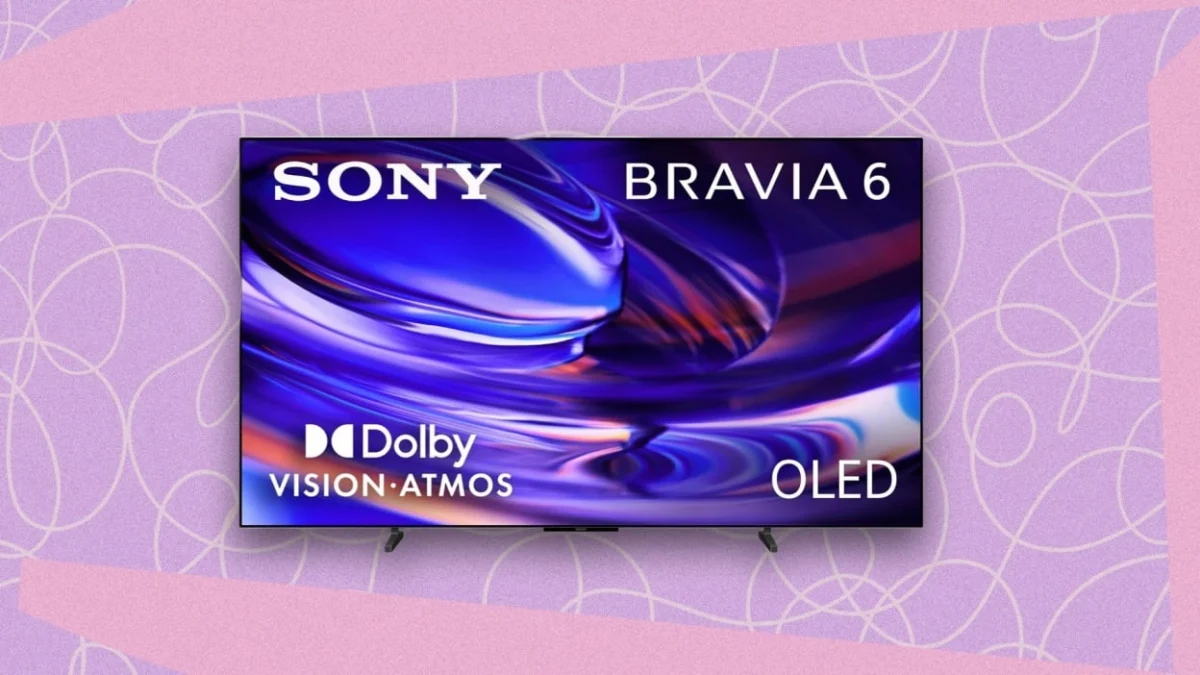
In the rapidly evolving landscape of home entertainment, the pursuit of the "perfect" television often feels like a moving target. However, for those balancing the desire for premium OLED picture quality with the practical demands of modern gaming, the market has recently shifted in a favorable direction. Sony’s Bravia 6, a standout release from the summer of 2026, has just seen a significant price adjustment, making it one of the most compelling value propositions in the current high-end display market.
With discounts reaching up to 40% across the entire lineup, the Bravia 6 is challenging the dominance of mid-range rivals from LG and Samsung. As consumers look to maximize their hardware investments, this price drop positions the Bravia 6 as the primary contender for anyone seeking a sophisticated, high-performance display without the premium cost of flagship models.
Main Facts: A Powerhouse at a Fraction of the Cost
The core appeal of the Sony Bravia 6 lies in its departure from the standard "premium-only" feature set that has historically defined Sony’s OLED catalog. While the Bravia 8 and flagship models often capture the headlines, the Bravia 6 quietly introduced a level of connectivity that had long been requested by the gaming community.
Currently, the 55-inch Sony Bravia 6 OLED TV is priced at just $998, a sharp reduction from its original retail price of $1,499. This 40% discount extends across the larger models in the series as well, including the 65-inch, 77-inch, and 83-inch variants.
Technical Specifications at a Glance:
- Resolution/Refresh: 4K at 120Hz.
- Audio: Native support for DTS:X surround sound.
- Gaming Features: Full support for Variable Refresh Rate (VRR), Auto Low Latency Mode (ALLM), and Enhanced Audio Return Channel (eARC).
- Processing: Powered by the MediaTek Pentonic 800 chipset.
- Connectivity: Four dedicated HDMI 2.1 ports.
The inclusion of the MediaTek Pentonic 800 chipset is arguably the most significant hardware upgrade for this generation. It allows the Bravia 6 to offer four full-bandwidth HDMI 2.1 ports—a feature that was previously reserved for the highest-end, most expensive Sony displays.
Chronology: From Summer Debut to Autumn Value
The release of the Bravia 6 in the summer of 2026 was met with cautious optimism. Industry analysts noted that Sony was attempting to capture a broader segment of the market that had previously been priced out of their ecosystem.
- June 2026: Sony officially launches the Bravia 6 series, positioning it as the "best budget OLED" option. Early reviews praised its picture processing but noted the premium pricing compared to budget-focused competitors like Hisense or TCL.
- August 2026: Following initial market feedback, Sony began optimizing its distribution channels, ensuring better availability for the Bravia 6 in major retail outlets.
- October 2026: The current promotional window opens. By slashing prices by 40%, Sony has effectively pivoted the Bravia 6 from a "mid-range" option to a "high-end value" champion, directly competing with the LG C-series and Samsung’s OLED offerings.
Supporting Data: The Gaming Advantage
To understand why the Bravia 6 is a game-changer, one must look at the historical limitation of Sony TVs. For years, the brand’s OLED panels—despite offering industry-leading motion processing and color accuracy—were often criticized for their connectivity constraints. Many of Sony’s top-tier TVs shipped with only two HDMI 2.1 ports, forcing gamers with a PS5, an Xbox Series X, and a high-end soundbar to choose which device received the full-bandwidth treatment.
The Bravia 6 removes this bottleneck. By providing four HDMI 2.1 ports, the TV allows users to connect multiple next-generation consoles and sound systems simultaneously without sacrificing image quality or refresh rates.
Brightness vs. Versatility
Critics have pointed out that the Bravia 6 does not reach the same peak brightness levels as the Bravia 8. However, for the average consumer, this difference is often negligible in anything other than a laboratory environment. In well-lit living rooms, the Bravia 6 maintains deep blacks and exceptional contrast ratios—the hallmark of OLED technology. The color reproduction, aided by Sony’s proprietary processing, remains superior to most LED-backlit alternatives in the same price bracket.
Official Responses and Market Positioning
While Sony has not released a specific statement regarding the price cut, company representatives have previously emphasized a "customer-first" approach to the 2026 product cycle. By making the Bravia 6 more accessible, Sony is signaling a long-term commitment to maintaining market share against aggressive competition from Korean manufacturers.

"We recognize that modern consumers are not just watching content; they are interacting with it," a spokesperson noted during the initial summer launch. "The Bravia 6 is designed for the hybrid user—the person who wants the best of cinema, but also the full capabilities of modern gaming."
The current deal is being facilitated through major retailers, including Amazon, which suggests a coordinated effort to clear inventory ahead of the end-of-year holiday shopping surge.
Implications: The Future of Mid-Range OLEDs
The current discount on the Sony Bravia 6 has several implications for the television industry at large.
1. The Death of the "Limited Connectivity" Era
By including four HDMI 2.1 ports on a non-flagship model, Sony has effectively set a new standard for what consumers should expect from a television priced near the $1,000 mark. Future iterations of mid-range TVs from other brands will likely be forced to match this connectivity, or risk being perceived as obsolete by the gaming demographic.
2. Market Saturation and Consumer Benefit
The aggressive pricing of the Bravia 6 suggests a highly competitive market. As panel production costs stabilize and OLED becomes more mainstream, the "premium tax" on high-quality displays is shrinking. This is a massive win for consumers, who can now access high-end picture quality that was previously locked behind a $2,000+ price tag.
3. The "Smart" Ecosystem
The inclusion of Google TV provides a level of streaming flexibility that is hard to ignore. With access to almost every major streaming service and a user interface that is both responsive and customizable, the Bravia 6 is more than just a monitor; it is a central hub for home media consumption.
Conclusion: Should You Make the Leap?
If you are currently using an aging LED panel or a base-level 4K TV, the transition to the Bravia 6 will feel like a generational leap. The combination of deep blacks, infinite contrast, and the inclusion of four HDMI 2.1 ports makes this one of the most versatile TVs on the market today.
While the Bravia 8 may offer slightly higher brightness, the price-to-performance ratio of the Bravia 6 at the current $998 price point is difficult to beat. Whether you are a competitive gamer looking for a lag-free experience, or a cinephile who values accurate color reproduction and motion handling, this deal represents the rare moment where a top-tier brand offers a product that truly feels like a bargain.
As always with high-demand electronics, pricing and availability are subject to change. For those currently shopping for an upgrade, the Sony Bravia 6 offers a rare opportunity to secure future-proof hardware at a price that respects both the user’s wallet and their high standards for performance.