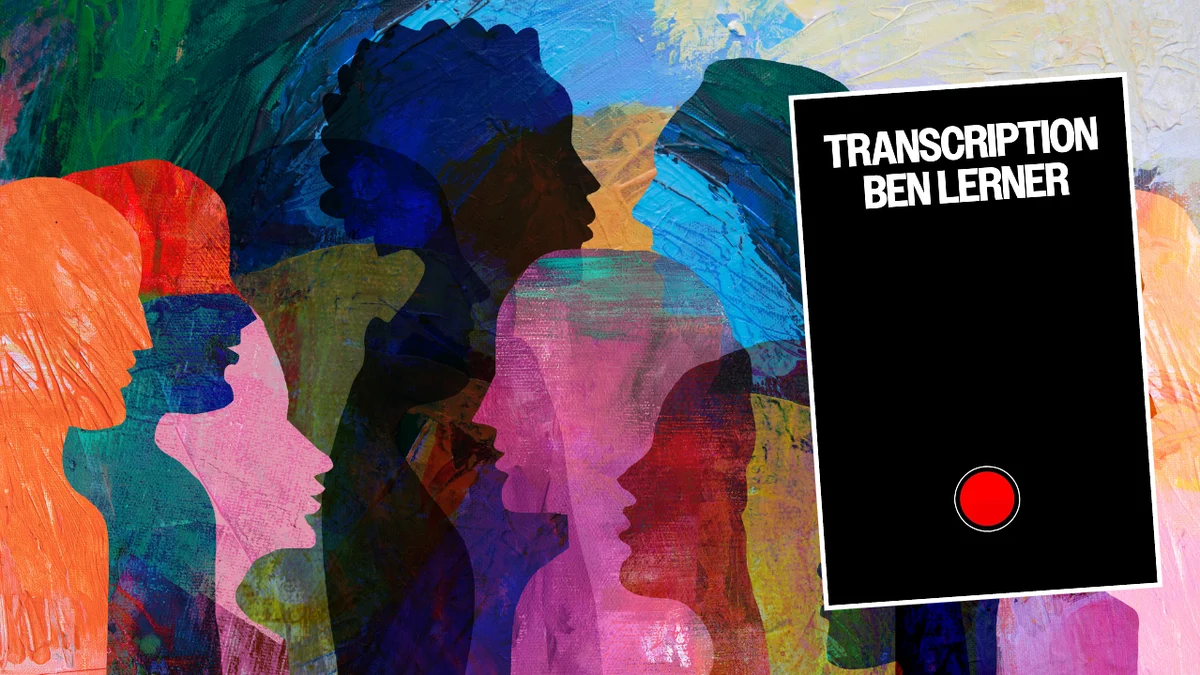
In an era defined by the seamless, algorithmic preservation of our lives, the act of forgetting has become a luxury—or perhaps a terror. Ben Lerner, the acclaimed American poet and novelist, confronts this modern paradox in his latest work, Transcription. Winner of this year’s Orwell Prize for Political Fiction, the novel is a slim, deceptively quiet volume that functions less like a traditional narrative and more like a structural interrogation of how we document, remember, and distort reality. Through the lens of a narrator stripped of his digital tether, Lerner invites readers into a labyrinthine exploration of the fragility of truth in an age dominated by Artificial Intelligence and the pervasive shadow of the smartphone.
The Digital Fracture: A Narrative Framework
The story opens in the historic, shadow-dappled streets of Providence, Rhode Island. The narrator, a 45-year-old journalist and former student, is en route to interview Thomas, a nonagenarian titan of the arts and culture world. The setup is simple, almost banal, until disaster strikes: the narrator drops his smartphone into water, rendering his sole recording device useless minutes before the interview begins.
This incident is the catalyst for the entire narrative arc. Suddenly deprived of the "crutch" of digital capture, the narrator finds himself thrust into a state of heightened, uncomfortable sensory perception. The world becomes sharper—the architecture of the Athenaeum, the specific interplay of light and shadow, the faces of passersby—but this clarity is inextricably linked to a profound sense of anxiety.
For the contemporary reader, this experience is visceral. We have all become accustomed to the "outsourcing" of our memory to cloud servers and voice memos. By removing the device, Lerner forces the narrator—and by extension, the reader—to confront the terrifying fallibility of the human mind. The heaviness mentioned early in the book is the weight of being "offline" in a world that assumes constant connectivity.

Chronology of a Disconnected Encounter
The narrative unfolds in three distinct sections, moving from the physical act of walking to the house of his mentor, through the unrecorded interview, and finally into the reflective aftermath.
- The Prelude of Anxiety: Before the phone even hits the water, the narrator is already haunted by the fear of technical failure. This pre-emptive dread characterizes the modern condition: we no longer trust our own capacity to witness, requiring the constant validation of a recording device to guarantee that an event has "actually" happened.
- The Unrecorded Dialogue: The interview with Thomas is the heart of the book. At 90, Thomas is a repository of stories—theatre, radio, dreams, and personal histories—that the narrator cannot capture in real-time. As Thomas speaks, the reader is gripped by a secondary anxiety: will the narrator remember the nuance? Why does he not resort to the archaic but reliable pen and paper? This tension highlights the narrator’s complex relationship with his own past and his desire to escape it.
- The Musing Aftermath: Post-interview, the narrator writes the conversation from memory. This leads to the central, uncomfortable question of the novel: How much of what we call "nonfiction" is simply a creative reconstruction of events we wish to believe occurred?
The Obsolescence of the Writer in the Age of AI
As Artificial Intelligence tools begin to promise the perfect, verbatim transcription of every spoken word, the role of the writer is increasingly scrutinized. If a machine can capture the "what," what remains for the writer to do?
Lerner’s Transcription suggests that the writer’s value lies not in the mere reproduction of facts, but in the art of interpretation and the ability to describe the "unsaid." The narrator’s struggle is a poignant critique of our current obsession with data over depth. When the narrator goes offline, he does not just remember the interview; he begins to see the faces and moments of his own past that he had long suppressed.
The book argues that by relying on AI to "guess every word," we may be losing the ability to filter experience through the prism of human empathy and imagination. The writer is not a sounding board; they are a prism. Without that human element, the documentation of history risks becoming a sterile, albeit accurate, void.

Supporting Data and Thematic Complexity
While Transcription is a work of fiction, it operates with the precision of a sociological study. Lerner explores the blurred lines between reality and fiction—a theme that becomes increasingly difficult to navigate when the narrator is revealed to be unreliable.
Intriguingly, the narrator remains unnamed throughout the book. This lack of identity, combined with the fact that Thomas has a son named Max (who is the same age as the narrator), creates a hall-of-mirrors effect. The reader is left to wonder: Is the narrator real? Is he a manifestation of Max’s psyche? Or is the entire interview a projection of a shared, imagined past?
This complexity is the hallmark of Lerner’s prose. He is a poet first, and his sentences possess a rhythmic, surgical beauty that demands the reader slow down. He utilizes the small, seemingly insignificant details—the mismatched couches in a hotel, the fake flowers, the piano music—to anchor the reader in a reality that is constantly threatening to dissolve into abstraction.
Implications for the Future of Literature
The critical reception of Transcription has been overwhelmingly positive, particularly regarding its commentary on the intersection of technology and human identity. By winning the Orwell Prize for Political Fiction, the book has been positioned as a seminal text in the "Post-Truth" era.

The implications are clear: we are entering a phase where the "truth" is becoming a collaborative fiction between humans and the machines we use to archive our existence. Lerner challenges us to reclaim our memories from our devices. He suggests that if we cannot sit in a room with a 90-year-old mentor and trust our own brains to synthesize the experience, we have lost something fundamentally human.
The novel acts as a "snapping finger"—a wake-up call to the reader to notice the world before it is mediated, digitized, and ultimately erased by the very tools we use to preserve it.
Conclusion: The Necessity of Musing
Transcription is not a book to be read once and shelved; it is a book that demands to be carried, thought about, and debated. It is a profound meditation on the necessity of the writer in a world that is rapidly automating the act of storytelling.
In the final assessment, Ben Lerner does not offer easy answers. Instead, he offers a series of existential questions about who we are when the battery dies. If the narrator is indeed an unreliable vessel for these memories, then the reader is forced to become the co-author of the truth. It is a demanding, beautiful, and occasionally maddening experience—a perfect reflection of the act of writing itself.

As we move further into an era where AI can synthesize speech and predict language, the "familiar heaviness" Lerner describes will only increase. Transcription serves as a vital reminder that while machines may be able to transcribe our words, only a human can understand what those words actually mean.
Book Details:
- Transcription
- Author: Ben Lerner
- Publisher: Granta Books
- Price: ₹1,790
- Category: Literary Fiction / Political Fiction