For the modern mother, the traditional boundaries between "homemaker," "career professional," and "entrepreneur" have blurred into a complex, high-stakes balancing act. Today’s mothers are navigating an economy defined by rising living costs and the persistent "motherhood penalty," yet they are simultaneously armed with an unprecedented array of digital tools.
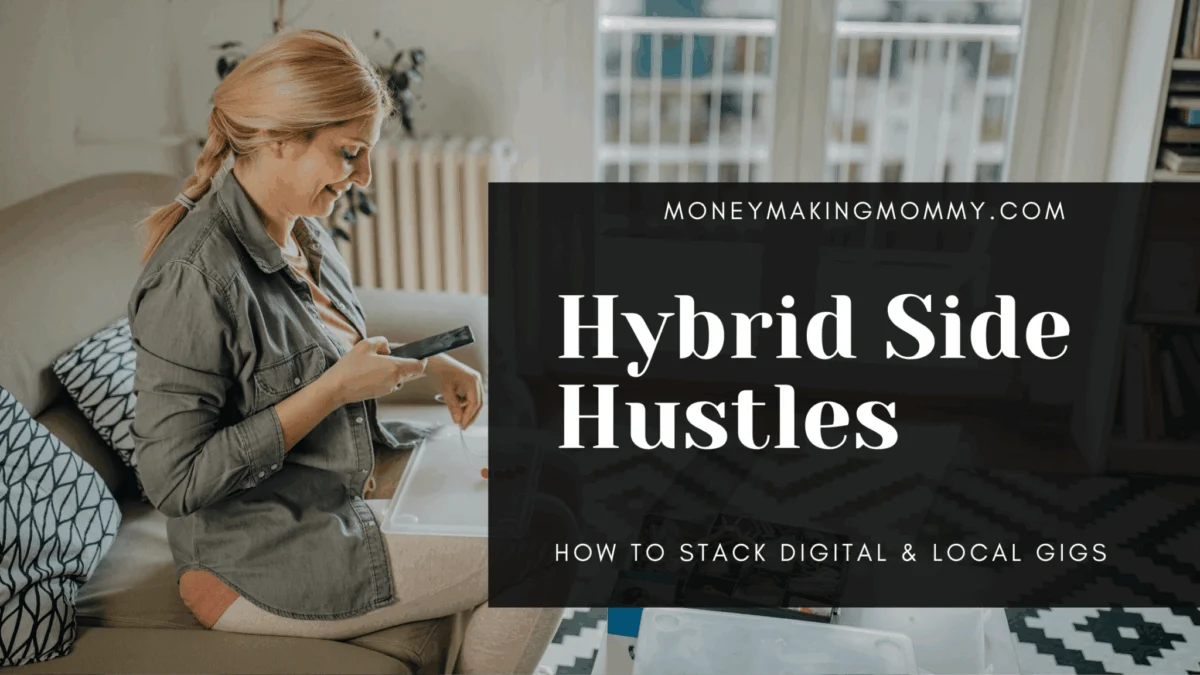
The emergence of the "Hybrid Side Hustle"—a strategic blend of high-margin digital labor and high-convenience local services—has become the gold standard for those seeking to bridge the gap between financial independence and the demands of family life. This article explores the mechanics, the data, and the practical implementation of this burgeoning economic trend.
Part 1: The Anatomy of the Hybrid Hustle
The hybrid approach is not merely about "doing more work"; it is about diversifying income streams to hedge against economic volatility. By combining the scalability of the digital economy with the immediate, cash-flowing potential of the local service economy, mothers are creating personal financial ecosystems that are resilient, flexible, and scalable.
Leveraging AI for Passive Digital Income
The integration of Artificial Intelligence, specifically Large Language Models (LLMs) like ChatGPT, has fundamentally lowered the barrier to entry for digital entrepreneurship.
The Mechanics of Digital Products:
- Instructional Guides and E-books: Using AI to structure niche expertise—such as meal planning for neurodivergent children or budget-friendly home organization—into downloadable PDFs.
- Templates and Worksheets: Creating digital planners, habit trackers, and educational flashcards that can be sold on platforms like Etsy or Creative Fabrica.
- Workflow Optimization: Utilizing Canva’s intuitive design interface to transform AI-generated text into visually appealing digital assets.
Data Insight: Research indicates that the digital product market is expected to reach a valuation of over $300 billion by 2026. For a mother, the benefit is clear: the initial time investment is heavy, but once the product is listed, the marginal cost of reproduction is effectively zero, creating a scalable, "set-it-and-forget-it" revenue stream.
Part 2: High-Yield Local Services
While digital products provide long-term passive potential, local services offer immediate liquidity. In an era where convenience is the ultimate commodity, families are increasingly willing to pay a premium for personalized, community-based services.
The "Car-Sitting" Phenomenon and Beyond
In dense urban centers, the "car-sitting" gig—a niche service where a provider moves or monitors a vehicle during street-sweeping hours—has gained viral traction. However, the logic applies far beyond metropolitan hubs:
- Hyper-Local Errands: Utilizing platforms like Nextdoor or Facebook Groups to offer grocery delivery, dry cleaning drop-offs, or school pickup services.
- The Trust Premium: The core value proposition here is trust. Parents are historically more likely to outsource tasks to a fellow community member or "neighbor-mom" than to an anonymous app-based contractor.
The Pet Care and Laundry Economy
The "gig economy" has moved into the household. Platforms such as Rover or Wag have normalized the outsourcing of pet care, while services like SudShare have brought the "laundry-as-a-service" model into the mainstream. For a mother, these tasks can often be integrated into existing routines—such as walking a dog during a school-run route or processing laundry while supervising homework.
Part 3: Chronology of the Modern Side Hustle
The shift toward this hybrid model did not happen overnight. Its trajectory can be mapped through three distinct phases:
- The Pandemic Catalyst (2020–2021): The normalization of remote work and the explosion of the "Creator Economy" taught a generation of women that income could be generated from a laptop.
- The Inflationary Pivot (2022–2023): As the cost of living surged, the necessity for supplemental income moved from "aspirational" to "essential." The focus shifted from creative hobbies to high-utility services.
- The AI Integration (2024–2025): The current era is defined by the use of AI tools to collapse the time required to start a business. Where a digital product might have taken 40 hours to produce in 2020, it now takes approximately four to six hours.
Part 4: Supporting Data and Economic Implications
The economic implications of this shift are profound. According to recent labor market reports, the number of multi-hyphenate workers (those holding a primary job and at least one side hustle) has increased by 18% among women aged 25–45.
Why Diversification Matters
- Financial Hedging: By maintaining both a digital and a local income stream, mothers create a buffer. If a local service is disrupted by weather or scheduling, digital sales continue. If digital trends shift, local service remains a constant.
- The "Burnout" Guardrail: The hybrid model allows for seasonality. A mother can dial up local services during summer break when she has more flexibility and focus on digital product creation during the school year when time is fragmented.
Part 5: Case Study – The "Erica" Model
To understand the viability of this lifestyle, we examine the case of "Erica," a mother of two in Chicago.
- The Setup: Erica spends 5 hours a week managing an Etsy store selling educational printables (Digital). She also manages the dog-walking schedules for three neighborhood families (Local).
- The Result: She generates between $500 and $1,200 monthly.
- The Implication: This income does not replace a corporate salary, but it serves as a "freedom fund"—covering extracurricular activities, insurance deductibles, or emergency savings. By automating the Etsy store and keeping the dog walking to a specific, manageable radius, she maintains her primary role as a parent without sacrificing her mental health.
Part 6: Expert and Community Perspectives
Critics often argue that "hustle culture" puts undue pressure on mothers to be constantly productive. However, the consensus among participants is that the hybrid model is not about more work, but about autonomy.
- Official Response: Many economic sociologists note that these gig-based systems provide a "safety valve" for women in the workforce who have been historically marginalized by rigid 9-to-5 structures.
- The Reality Check: While the potential is real, the "scam" factor remains a concern. Experts warn against "get-rich-quick" schemes on social media. Legitimate side hustles, such as those mentioned in this article, require a tangible exchange of value—whether that is a product, a service, or academic survey data.
Part 7: Your 5-Step Strategic Action Plan
If you are ready to integrate a hybrid hustle into your life, follow this structured roadmap:
- Audit Your Time: Track your "dead time"—those 30–60 minute pockets during the day when you are waiting or performing routine tasks.
- Identify the "High-Trust" Skill: What do your neighbors already ask you for help with? Whether it’s pet care, organizing, or tech support, your existing reputation is your greatest marketing asset.
- Select Your AI Tool: Choose one platform (ChatGPT for content, Canva for design, or Prolific for data entry) and commit to learning it for 30 days.
- Validate Locally: Before investing money in a business, pitch your service to three neighbors. If you get three "yeses," you have a viable business.
- Reinvest and Scale: Use your first $100 of earnings to purchase better equipment or tools to increase your efficiency.
Final Thoughts: The Path Forward
The landscape of work is changing, and the "hybrid mom" is at the forefront of this evolution. You do not need to launch a six-figure conglomerate to find value in these endeavors. The goal is to stack income streams that work with the rhythms of your life, not against them.
As you navigate the complexities of 2025, remember that your capacity to manage a household is, in itself, a masterclass in logistics, crisis management, and resource allocation. By applying those same skills to the digital and local markets, you are not just "side-hustling"—you are building a custom-tailored financial future. You have the tools, you have the talent, and most importantly, you have the hustle.