At the 2026 Advertising Week in New York, Meta took center stage to unveil a comprehensive suite of artificial intelligence-powered tools designed to fundamentally reshape how brands interact with consumers. As Meta continues to pivot toward an “agentic” future, the company is moving beyond simple generative text and images, pushing into the territory of autonomous campaign management, sophisticated video production, and seamless in-stream commerce.
These updates, which span across Meta’s Business Assistant, Ads Creative Studio, and its burgeoning e-commerce integrations, signal a significant shift in the digital marketing landscape. For advertisers, the message is clear: Meta is building a platform where AI doesn’t just suggest strategies—it executes them.
Main Facts: The New Agentic Landscape
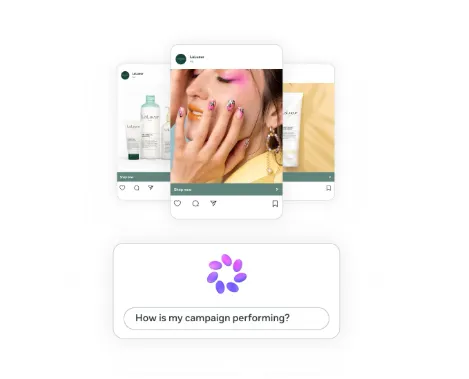
The core of Meta’s announcement centers on the evolution of the Meta Business Assistant. No longer just a chatbot for troubleshooting, the assistant is transitioning into a proactive partner capable of handling complex administrative and creative tasks.
Meta is imbuing the tool with "memory" and "contextual awareness." By analyzing past performance—such as quarterly results, seasonal trends, and specific brand goals—the AI can now provide tailored recommendations that align with a company’s unique history. Perhaps most significantly, the assistant is gaining “agentic” capabilities. Advertisers can now use conversational prompts to instruct the AI to generate creative assets, adjust targeting parameters, or modify ad budgets in real-time.
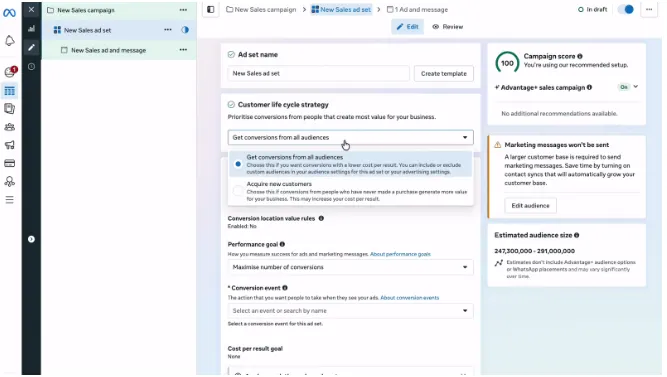
Furthermore, Meta is democratizing access to its Ads Creative Studio, allowing more brands to leverage data-driven insights to refine their campaign aesthetics and messaging. By integrating the Customer Lifecycle Strategy for all advertisers, Meta is ensuring that ad spend is not just optimized for clicks, but for long-term customer value.
A Chronology of Meta’s AI Pivot
Meta’s journey toward an AI-first advertising ecosystem has been a methodical, multi-year rollout.
- Early 2026: Meta launches the initial version of the Ads Creative Studio, focusing on performance-based insights.
- Mid-2026: Meta’s "Muse" AI application sees a surge in popularity, crossing 5 million downloads and 3 million weekly active users, proving that consumers are increasingly comfortable interacting with AI-driven discovery engines.
- Late 2026 (Today): During Advertising Week, Meta unveils the next generation of its business suite. This includes the integration of "agentic" capabilities in the Business Assistant, the opening of the Ads Creative Studio to a wider array of brands, and the testing of direct checkout integrations via Shopify and other payment partners.
- The Future: Meta has signaled that the next phase involves "scheduled tasks," where the AI will autonomously monitor ad performance, generate recurring reports, and issue alerts to advertisers before potential issues impact ROI.
Supporting Data: The Power of AI-Generated Creative
The push toward AI-driven video is perhaps the most ambitious aspect of the announcement. Recognizing that static images are no longer sufficient to capture the attention of modern scrollers, Meta has rolled out new tools within the Advantage+ suite.
Video Generation Capabilities
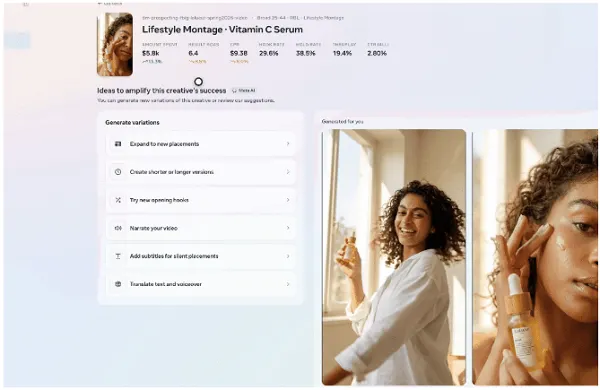
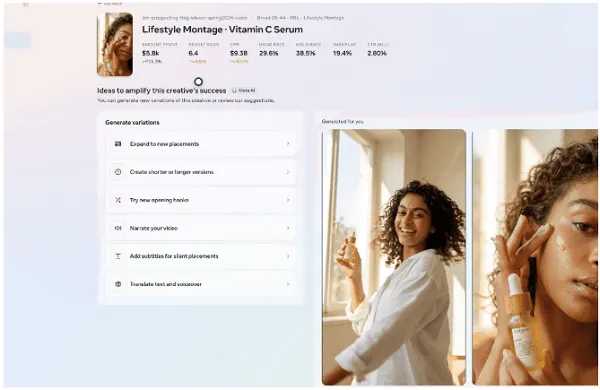
- Static-to-Video: Advertisers can now generate dynamic video content directly from existing static assets. This removes the barrier to entry for small-to-medium businesses (SMBs) that lack large production budgets.
- Creative Studio Refinements: Within the Ads Creative Studio, marketers can now generate brand-new video concepts, adjust audio tracks, edit clip lengths, incorporate text overlays, and even change end scenes to A/B test conversion triggers.
- Catalog Integration: Meta is simplifying video generation from product catalogs, which will now include automated upsell recommendations, encouraging users to discover related products without requiring manual input from the advertiser.
These tools are not just about convenience; they are about performance. Meta’s internal data suggests that as consumers move away from traditional search and toward AI-driven discovery, brands that fail to adapt their creative formats will lose out on vital real estate within the feed and the Muse ecosystem.
Official Responses and Strategic Vision
Meta’s leadership team emphasized that the company’s vision is centered on meeting the user where they are—which is increasingly inside an AI conversation.
“People discover brands and products through creators they trust, communities they belong to, and AI that understands what they are looking for,” a Meta spokesperson noted during the presentation. “Increasingly, this is happening in Meta AI, Muse, and the Meta Business Agent, where people ask, compare, and decide what to buy. So, we’re building partnerships with retailers to offer new ways to directly complete a purchase without leaving the conversation.”
This "conversational commerce" is the cornerstone of their new partnership with Shopify. By enabling direct checkout via Messenger and testing similar capabilities within Meta AI (with partners like Adyen, PayPal, and Stripe), Meta is effectively shortening the path from "discovery" to "purchase" to mere seconds.
Implications for the Industry: What This Means for You
1. The Rise of the "Strategic Marketer"
With the Business Assistant taking over the heavy lifting—budgeting, targeting, and routine reporting—the role of the human marketer is changing. The focus shifts from manual data entry and ad set configuration to "strategic prompting." Marketers will now need to be adept at providing the AI with clear brand voice guidelines and long-term strategic context to ensure the AI’s output remains on-brand.
2. The Death of the "One-Size-Fits-All" Campaign
By leveraging the Customer Lifecycle Strategy, Meta is pushing advertisers to segment their audience more effectively. The days of running a generic campaign are over. AI will now help segment audiences into acquisition, retention, and loyalty tiers, serving distinct creative and messaging to each group automatically.
3. Frictionless Commerce as the New Standard
The integration of direct checkout via Shopify and Stripe is a massive disruption for e-commerce brands. When a customer can finalize a purchase within a chat interface, the "add to cart" friction is almost entirely eliminated. This creates an immediate need for brands to ensure their inventory management and fulfillment systems are fully synced with Meta’s API, as "in-stream" sales will likely become a primary revenue driver.
4. The "Agentic" Feedback Loop
Perhaps the most significant implication is the "memory" feature. If the AI knows what you tried last quarter and why it failed, it effectively acts as a persistent institutional memory for the brand. This is particularly beneficial for agencies with high turnover or brands scaling their marketing teams, as the AI becomes the source of truth for historical performance.
Conclusion: Adapting to the AI-Powered Feed
As Meta integrates its Ads Creative Studio, business agents, and direct commerce tools, the barrier between "social networking" and "social shopping" continues to dissolve. For the modern advertiser, these tools are not optional enhancements; they are the new infrastructure of digital marketing.
The shift toward agentic AI—where the software is empowered to make decisions on behalf of the user—is a bold move that will reward brands that lean into automation. However, it also demands a higher level of oversight. As Meta’s AI begins to control more of the dial, the human element must remain focused on creative strategy, brand ethics, and ensuring that the AI’s "memory" is consistently refreshed with accurate data.
With Meta’s Muse app and other AI discovery tools gaining significant traction, the ecosystem is rapidly evolving. Brands that choose to adopt these tools early will likely gain a competitive advantage, turning the AI’s speed and efficiency into a powerful engine for growth. The future of advertising is no longer about "managing" campaigns; it is about "guiding" intelligent systems toward your desired business outcomes.