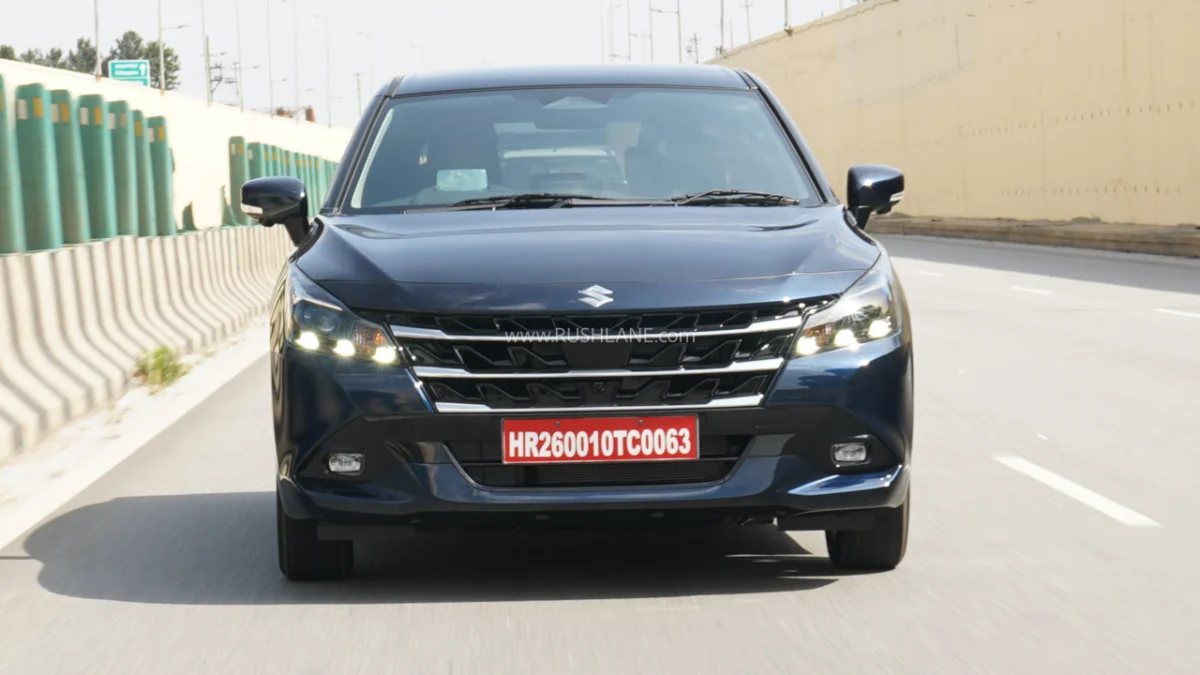
The Indian automotive landscape experienced a significant shift in September 2026, as consumer preferences coalesced around the newly launched Maruti Suzuki Baleno facelift. With a staggering 25,392 units sold, the Baleno not only claimed the top spot in the monthly sales charts but also served as the primary engine driving growth for the top 10 best-selling vehicles in the country.
Data released for the month indicates that the collective sales of the top 10 models reached 1,91,332 units, marking a robust 15.45% increase compared to the 1,65,725 units recorded during the same period in 2025. This growth represents a volume expansion of 25,607 units year-on-year (YoY). On a month-on-month (MoM) basis, the segment demonstrated resilience, climbing 4.53% over the 1,83,037 units sold in August 2026.
Maruti Suzuki’s Continued Market Supremacy
Maruti Suzuki solidified its position as the market leader, securing six out of the top 10 spots in September. This performance underscores the manufacturer’s deep penetration into the Indian consumer base, particularly through its premium retail chain, NEXA, and its extensive Arena network.
While Maruti dominated the volume game, the competitive intensity remained high. Tata Motors secured two spots in the top 10 with the Nexon and Punch, while Hyundai and Mahindra each maintained a singular presence with the Creta and the Scorpio range, respectively. Notably, the figures for the Nexon, Punch, and Creta encompass both their internal combustion engine (ICE) variants and their high-growth electric counterparts, reflecting the evolving powertrain mix in the Indian market.
Chronology of Market Dynamics
The growth trajectory in September 2026 was largely dictated by the arrival of updated models. The Baleno, which had been generating significant anticipation, saw its sales nearly double compared to September 2025. The 92.76% growth—a volume gain of 12,219 units—stands as the most significant upward shift for any single model in the top 10.
Year-on-Year (YoY) Performance Breakdown
The YoY analysis reveals a market divided between established winners and models facing saturation.

- Maruti Suzuki Baleno: With 25,392 units, it led the charts, showing that the facelift’s design and feature upgrades resonated strongly with buyers.
- Tata Nexon: Recording 20,456 units, it faced a slight decline of 9.38% YoY, likely due to increased competition in the sub-compact SUV segment.
- Tata Punch: With 20,333 units, the micro-SUV maintained its momentum, posting a 27.95% growth over the previous year.
- Maruti Suzuki Fronx: Continuing its successful run as a crossover, it reached 19,282 units, a 40.06% increase.
- Maruti Suzuki WagonR: A staple in the top five, it grew 22.40% to hit 18,835 units.
- Maruti Suzuki Dzire: The sedan saw a 11.40% decline, finishing at 17,754 units.
- Hyundai Creta: Despite a 6.38% dip to 17,657 units, it remained the sole representative for Hyundai in the elite list.
- Maruti Suzuki Swift: The perennial favorite saw 17,399 units, a modest 11.91% gain.
- Mahindra Scorpio: Combining sales of the Classic and the N variants, it recorded 17,313 units, a 5.76% contraction.
- Maruti Suzuki Ertiga: Ending the list on a high note, the MPV surged 39.59% to 16,911 units.
Month-on-Month (MoM) Volatility
The MoM comparison highlights the immediate impact of the new Baleno launch. While five models saw growth, the other half of the list faced minor corrections. The Baleno alone added 9,646 units compared to August, representing a 61.26% MoM increase. This surge effectively masked the stagnation or minor declines seen in other high-volume models like the WagonR (-6.67%) and the Swift (-12.27%).
The Mahindra Scorpio showed positive momentum, growing 11.15% MoM, indicating that demand for rugged, ladder-frame SUVs remains steady despite the shift toward urban crossovers. The Hyundai Creta also rebounded with an 8.40% increase over August, signaling a recovery in retail demand as the festive season approached.
Official Perspectives and Market Sentiment
Industry analysts suggest that the dominance of the Baleno is not merely a result of a new launch, but a testament to Maruti Suzuki’s aggressive pricing strategy and the expansion of the "feature-per-rupee" value proposition. By integrating advanced connectivity and safety features into the facelift, the manufacturer effectively addressed the primary concerns of the modern Indian buyer.
A spokesperson for the company noted during a post-sales brief, "The record-breaking performance of the Baleno reflects our commitment to bringing global-standard technology to the mass market. The overwhelming response in September demonstrates that when product updates are aligned with consumer feedback, the market responds with significant enthusiasm."
Conversely, the slight dip in models like the Nexon and Dzire suggests that the "SUV-ification" of the market is continuing to exert pressure on traditional sedan segments, while the micro-SUV and crossover segments—led by the Punch and Fronx—are cannibalizing sales from traditional hatchbacks.
Implications for the Future
The September 2026 data carries several critical implications for the Indian automotive sector:

1. The Consolidation of Power
The fact that 10 models accounted for 1,91,332 units highlights the growing consolidation in the Indian market. Smaller manufacturers are finding it increasingly difficult to compete with the economies of scale enjoyed by Maruti Suzuki, Tata Motors, and Mahindra. The "top-heavy" nature of these sales statistics suggests that market share is migrating toward brands that can offer a diverse portfolio of powertrain options, particularly electric and CNG.
2. The Shift to Premiumization
The success of the Baleno and the Fronx indicates that Indian consumers are moving away from entry-level, "bare-bones" vehicles. They are willing to pay a premium for better aesthetics, infotainment systems, and advanced safety features. Even in the entry-level segments, the trend is toward higher trim levels rather than base variants.
3. The EV Catalyst
With the inclusion of electric versions of the Nexon, Punch, and Creta in these sales figures, it is clear that the electric transition is no longer a niche phenomenon. The inclusion of EV sales in the headline numbers of these top-selling models proves that mainstream buyers are now considering electric propulsion as a viable primary vehicle option.
4. Infrastructure and Utility Trends
The continued high ranking of the Ertiga—a three-row MPV—highlights the enduring preference for family utility in India. Despite the craze for compact SUVs, the demand for vehicles that offer more space and seating capacity remains robust, pointing to a need for manufacturers to continue innovating in the multi-utility segment.
Conclusion
September 2026 will likely be remembered as the month the Baleno redefined the potential for the premium hatchback segment. By outperforming established SUVs and crossovers, it proved that the hatchback form factor remains highly relevant in India, provided it is packaged with the right blend of style and substance.
As we look toward the final quarter of the year, the competition is expected to intensify. With manufacturers likely to offer significant incentives and festival-season discounts, the race for the top spot will depend on supply chain management and the ability to convert bookings into deliveries during the peak buying season. For now, Maruti Suzuki holds the crown, but with Tata and Mahindra aggressively expanding their portfolios, the landscape remains as dynamic as ever.